












Canva
Company Details
Linkedin ID:
canva
Website:
Employees number:
12,281
Number of followers:
2,424,997
NAICS:
5112
Industry Type:
Homepage:
canva.com
IP Addresses:
0
Company ID:
CAN_1761655
Scan Status:
In-progress


Canva Vendor Cyber Rating & Cyber Score
canva.comWe're a global online visual communications platform on a mission to empower the world to design. Featuring a simple drag-and-drop user interface and a vast range of templates ranging from presentations, documents, websites, social media graphics, posters, apparel to videos, plus a huge library of fonts, stock photography, illustrations, video footage, and audio clips, anyone can take an idea and create something beautiful on Canva on any device, from anywhere in the world. Since our launch in 2013, we’ve had the crazy big goal of making design accessible to everyone. We were founded on the belief that people shouldn't need to understand complex software to unlock their creativity. We’re leveling the playing field and democratizing access to design and visual communication by empowering 100% of the world to communicate in a way that was once limited to the 1%. We've always had a deeper mission surrounding Canva — which we talk about as our 'simple' two-step plan: to build one of the world’s most valuable companies, and to do the most good we possibly can. We're committed to our core value of Being a Force for Good, so as the value of our company grows, so too does our ability to have a positive impact on the world.
Company Details
canva
12,281
2,424,997
5112
canva.com
0
CAN_1761655
In-progress
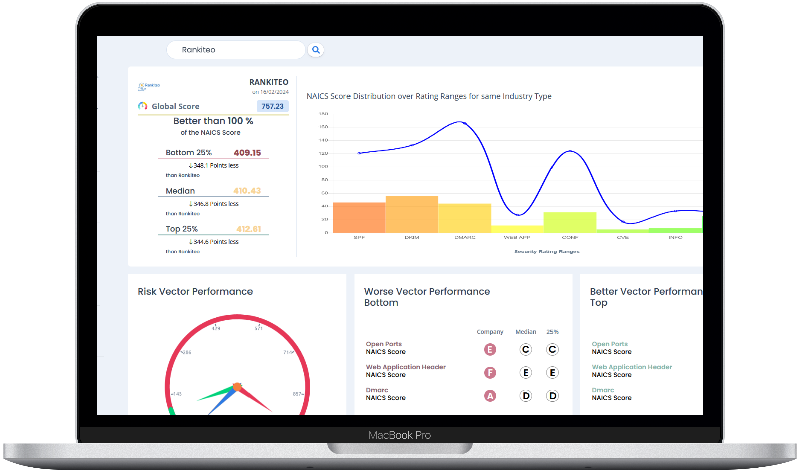
 Canva Risk Score (AI oriented)
Between 550 and 599
 Canva Global Score (TPRM)
XXXX
Description: ShinyHunters-Linked Cybercrime Campaign Targets Over 100 Major Organizations A recent cybercrime campaign attributed to the ShinyHunters group has targeted at least 100 organizations across multiple sectors, including software, finance, healthcare, and energy, according to cybersecurity firm Silent Push. Over the past 30 days, threat actors registered fake domains impersonating high-profile companies such as Atlassian, Adyen, Canva, Epic Games, HubSpot, Moderna, ZoomInfo, GameStop, WeWork, Halliburton, Sonos, and Telstra. The attackers employed voice phishing (vishing) tactics to compromise single sign-on (SSO) accounts, particularly those using Okta and other identity platforms. Using specialized phishing kits, they intercepted credentials and manipulated victims into bypassing multi-factor authentication (MFA) by convincing them to approve push notifications or submit one-time passcodes (OTPs). Okta described the attacks as involving real-time session orchestration, where threat actors guided victims through the authentication process via verbal instructions. While Silent Push identified the infrastructure used in the campaign, it remains unclear whether the attacks successfully breached any systems. However, ShinyHunters has claimed responsibility for data breaches at companies like Betterment, Crunchbase, and SoundCloud, all of which confirmed incidents. The group allegedly stole millions of records from these organizations as part of the Okta SSO vishing campaign. Silent Push attributes the campaign to Scattered LAPSUS$ Hunters, a collective formed last year by members of Lapsus$, Scattered Spider, and ShinyHunters, based on observed tactics, techniques, and procedures (TTPs). The incident follows recent warnings from Google and others about rising vishing and phishing attacks targeting identity platforms.
Description: Canva experienced a critical security incident caused by a leaked hardcoded secret, leading to days of downtime across multiple engineering teams. The breach diverted critical resources originally allocated for product development toward incident containment and remediation. The exposed secret enabled potential lateral movement risks, though no large-scale data exfiltration was publicly confirmed. The financial and operational impact included lost productivity, delayed projects, and reputational harm, compounded by the strain on an already lean security team. The incident highlights the cascading effects of unmanaged credentials in modern DevOps environments, where a single exposed API key or token can disrupt core business functions. While no customer data leak was reported, the operational outage aligned with high-severity internal disruptions, reinforcing the cost of credential mismanagement in scaled-down organizations.
Description: A Chroma database operated by Russian AI chatbot startup My Jedai was found exposed online, leaking survey responses from over 500 Canva Creators. The exposed data included email addresses, feedback on Canva’s Creator Program, and personal insights into the experiences of designers across more than a dozen countries. The data exposure was discovered by cybersecurity firm UpGuard, which confirmed the database was publicly accessible and lacked authentication.
Description: The "Mother of All Breaches": 26 Billion Records Exposed in Unprecedented Data Leak Security researchers have uncovered what may be the largest compilation of stolen credentials in history a 12-terabyte database dubbed the "Mother of All Breaches" (MOAB), containing 26 billion records from thousands of prior data leaks. Discovered by researcher Bob Dyachenko of *SecurityDiscovery.com* in collaboration with *Cybernews*, the dataset was found on an open, publicly accessible server, though its owner remains unknown. Unlike a single hack, the MOAB is a "compilation of breaches" (COB), aggregating credentials from major platforms, including: - 1.5 billion records from *Tencent* - 504 million from *Weibo* - 360 million from *MySpace* - 281 million from *Twitter (X)* - Millions more from *LinkedIn, Adobe, Canva, Deezer, AdultFriendFinder*, and others The dataset also includes records from government organizations in the U.S., Brazil, Germany, the Philippines, and Turkey, amplifying risks for both individuals and enterprises. ### Why This Breach Is a Game-Changer The MOAB’s danger lies in its consolidation and accessibility. Instead of scattered leaks, attackers now have a single, searchable repository for credential stuffing, phishing, and targeted attacks. While many passwords are outdated, the sheer volume ensures some will still work especially given widespread password reuse. Worse, experts warn the dataset may include fresh data from infostealer malware, which harvests current credentials, browser cookies, and autofill details. This hybrid threat combining historical breaches with live infections creates a highly effective tool for cybercriminals, from low-level fraudsters to initial access brokers (IABs) selling corporate network access to ransomware gangs. ### The Fallout: A New Era of Cyber Risk The MOAB’s impact extends beyond individuals. Corporate and government networks are at heightened risk due to employees reusing passwords across personal and work accounts. A single compromised credential could provide attackers with a foothold for devastating intrusions. Security experts emphasize that password-only authentication is now obsolete against such a vast dataset. The breach underscores the urgent need for multi-factor authentication (MFA), particularly phishing-resistant methods like FIDO2 security keys. Continuous monitoring of credentials against breach databases is also critical. With the data now in the wild, the MOAB will fuel cyberattacks for years, marking a sobering shift in the threat landscape. The leak serves as a stark reminder: once exposed, data never truly disappears it only becomes more dangerous.
Description: In May 2019, Australian unicorn Canva experienced a substantial data breach, impacting 137 million users. A cybercriminal known as Gnosticplayers managed to breach Canva's security defenses but was detected by Canva's system monitoring for malicious activities. Despite the quick intervention, the hacker had already accessed a wealth of user data, including usernames, real names, email addresses, country of origin, encrypted passwords, and partial payment data. This breach was notable not only for its scale but also because the attacker chose to publicize the breach in a communication with ZDNet, diverging from the usual practice of keeping a low profile on dark web forums. Canva responded by notifying affected users, particularly those with decrypted passwords, advising them to change their passwords. Additionally, Canva reset passwords for users who hadn't updated theirs in the past six months, demonstrating the company's proactive stance on user security post-incident.


No incidents recorded for Canva in 2026.
No incidents recorded for Canva in 2026.
No incidents recorded for Canva in 2026.
Canva cyber incidents detection timeline including parent company and subsidiaries

We're a global online visual communications platform on a mission to empower the world to design. Featuring a simple drag-and-drop user interface and a vast range of templates ranging from presentations, documents, websites, social media graphics, posters, apparel to videos, plus a huge library of fonts, stock photography, illustrations, video footage, and audio clips, anyone can take an idea and create something beautiful on Canva on any device, from anywhere in the world. Since our launch in 2013, we’ve had the crazy big goal of making design accessible to everyone. We were founded on the belief that people shouldn't need to understand complex software to unlock their creativity. We’re leveling the playing field and democratizing access to design and visual communication by empowering 100% of the world to communicate in a way that was once limited to the 1%. We've always had a deeper mission surrounding Canva — which we talk about as our 'simple' two-step plan: to build one of the world’s most valuable companies, and to do the most good we possibly can. We're committed to our core value of Being a Force for Good, so as the value of our company grows, so too does our ability to have a positive impact on the world.

At Agoda, we bridge the world through travel. We aim to make it easy and rewarding for more travelers to explore and experience the amazing world we live in. We do so by enabling more people to see the world for less – with our best-value deals across our 6,000,000+ hotels and holiday properties, 13

A career at Booking.com is all about the journey, helping you explore new challenges in a place where you can be your best self. With plenty of exciting twists, turns and opportunities along the way. We’ve always been pioneers, on a mission to shape the future of travel through cutting edge techno
Adobe is the global leader in digital media and digital marketing solutions. Our creative, marketing and document solutions empower everyone – from emerging artists to global brands – to bring digital creations to life and deliver immersive, compelling experiences to the right person at the right mo

DiDi Global Inc. is a leading mobility technology platform. It offers a wide range of app-based services across Asia Pacific, Latin America, and other global markets, including ride hailing, taxi hailing, designated driving, hitch and other forms of shared mobility as well as certain energy and vehi

Every company has a mission. What's ours? To empower every person and every organization to achieve more. We believe technology can and should be a force for good and that meaningful innovation contributes to a brighter world in the future and today. Our culture doesn’t just encourage curiosity; it

Databricks is the Data and AI company. More than 20,000 organizations worldwide — including adidas, AT&T, Bayer, Block, Mastercard, Rivian, Unilever, and over 60% of the Fortune 500 — rely on Databricks to build and scale data and AI apps, analytics and agents. Headquartered in San Francisco with 30

The first business of Alibaba Group, Alibaba.com (www.alibaba.com) is the leading platform for global wholesale trade serving millions of buyers and suppliers around the world. Through Alibaba.com, small businesses can sell their products to companies in other countries. Sellers on Alibaba.com are t
Broadcom's VMware software manages cloud complexity so customers can modernize infrastructure, accelerate app development, and protect workloads, wherever these reside. Our flagship cloud solutions provide the security and performance of private cloud combined with the scale and agility of public c

Join us in our mission to help the world get well, help the world stay well, and help future generations be healthier. We hire smart and motivated people from all academic majors to code, test, and implement healthcare software that hundreds of millions of patients and doctors rely on to improve ca
.png)
The recent AI Impact Summit in New Delhi brought together 11 heads of state, global delegations and $200 billion in investment pledges.
“The Pitt,” the popular HBO medical drama set in a fictional Pennsylvania emergency room, includes some truly outlandish plotlines: a...
Canva launches free grand opening designs for SMBs. Will AI-powered simplicity drive customer loyalty against Adobe and Microsoft Designer...
This design tool does what Canva should've fixed years ago.
In May 2019, graphic design platform Canva fell victim to a major cyber security breach in which a threat actor known as Gnosticplayers...
A surge in infrastructure deployment that mirrors the tactics of SLSH, a predatory alliance uniting three major threat actors: Scattered...
Canva, Atlassian, Epic Games Among the 100+ Enterprises Targeted by ShinyHunters Group ... A major identity-theft operation is now targeting over...
Texas expands its banned tech list, adding 26 Chinese firms, including AI platforms and hardware, to protect against cybersecurity threats.
The G7's cybersecurity watchdogs released a roadmap Monday for protecting the financial sector from quantum computers that could crack...

Explore insights on cybersecurity incidents, risk posture, and Rankiteo's assessments.
The official website of Canva is http://www.canva.com.
According to Rankiteo, Canva’s AI-generated cybersecurity score is 571, reflecting their Very Poor security posture.
According to Rankiteo, Canva currently holds 0 security badges, indicating that no recognized compliance certifications are currently verified for the organization.
According to Rankiteo, Canva has not been affected by any supply chain cyber incidents, and no incident IDs are currently listed for the organization.
According to Rankiteo, Canva is not certified under SOC 2 Type 1.
According to Rankiteo, Canva does not hold a SOC 2 Type 2 certification.
According to Rankiteo, Canva is not listed as GDPR compliant.
According to Rankiteo, Canva does not currently maintain PCI DSS compliance.
According to Rankiteo, Canva is not compliant with HIPAA regulations.
According to Rankiteo,Canva is not certified under ISO 27001, indicating the absence of a formally recognized information security management framework.
Canva operates primarily in the Software Development industry.
Canva employs approximately 12,281 people worldwide.
Canva presently has no subsidiaries across any sectors.
Canva’s official LinkedIn profile has approximately 2,424,997 followers.
Canva is classified under the NAICS code 5112, which corresponds to Software Publishers.
No, Canva does not have a profile on Crunchbase.
Yes, Canva maintains an official LinkedIn profile, which is actively utilized for branding and talent engagement, which can be accessed here: https://www.linkedin.com/company/canva.
As of April 02, 2026, Rankiteo reports that Canva has experienced 5 cybersecurity incidents.
Canva has an estimated 29,308 peer or competitor companies worldwide.
Incident Types: The types of cybersecurity incidents that have occurred include Breach and Cyber Attack.
Total Financial Loss: The total financial loss from these incidents is estimated to be $10.22 million.
Detection and Response: The company detects and responds to cybersecurity incidents through an remediation measures with password reset for users with decrypted passwords, remediation measures with password reset for users who hadn't updated theirs in the past six months, and communication strategy with notifying affected users, communication strategy with advising users to change their passwords, and containment measures with secured the exposed database, and communication strategy with notified affected creators, communication strategy with notified regulators, and third party assistance with gitguardian (secrets detection/remediation), third party assistance with hashicorp (research on credential-based breaches), and containment measures with proactive scanning for hardcoded secrets, containment measures with automated secret revocation, containment measures with contextual ownership assignment, and remediation measures with workflow-integrated remediation (e.g., pr fixes in version control), remediation measures with automated credential rotation, remediation measures with precision targeting of exposed secrets, and recovery measures with reduction of manual investigation time ($936k annual savings), recovery measures with elimination of false positives ($500k annual savings), and enhanced monitoring with real-time remediation tracking, enhanced monitoring with threat scope analysis for exposed secrets, and enhanced monitoring with recommended, and third party assistance with silent push (cybersecurity firm)..
Title: Canva Data Breach
Description: In May 2019, Australian unicorn Canva experienced a substantial data breach, impacting 137 million users. A cybercriminal known as Gnosticplayers managed to breach Canva's security defenses but was detected by Canva's system monitoring for malicious activities. Despite the quick intervention, the hacker had already accessed a wealth of user data, including usernames, real names, email addresses, country of origin, encrypted passwords, and partial payment data. This breach was notable not only for its scale but also because the attacker chose to publicize the breach in a communication with ZDNet, diverging from the usual practice of keeping a low profile on dark web forums. Canva responded by notifying affected users, particularly those with decrypted passwords, advising them to change their passwords. Additionally, Canva reset passwords for users who hadn't updated theirs in the past six months, demonstrating the company's proactive stance on user security post-incident.
Date Detected: May 2019
Date Publicly Disclosed: May 2019
Type: Data Breach
Threat Actor: Gnosticplayers
Title: Chroma Database Exposure at My Jedai
Description: A Chroma database operated by Russian AI chatbot startup My Jedai was found exposed online, leaking survey responses from over 500 Canva Creators.
Type: Data Exposure
Attack Vector: Unsecured Database
Vulnerability Exploited: Lack of Authentication
Title: Hardcoded Secrets Crisis and Workforce Reduction Impact on Cybersecurity
Description: The credential crisis is escalating as companies like Wells Fargo, Bank of America, and Verizon reduce their workforces by up to 23% over five years, leaving security teams understaffed and overburdened. Hardcoded secrets—such as API keys, tokens, and credentials embedded in code repositories, CI/CD pipelines, Slack, Jira, and collaboration platforms—pose a critical blind spot. IBM research shows 86% of breaches involve stolen or compromised credentials, with an average containment time of 292 days. Financial impacts are severe, with U.S. breach costs reaching $10.22 million (or over $11 million when hardcoded secrets are involved). Manual secrets management wastes $1.4 million annually per organization, while incidents like Canva’s leaked secret caused multi-day downtime. The s1ngularity attack demonstrated cascading risks: a GitHub token theft led to 2,349 compromised credentials and exposed 82,901 secrets across 10,000 private repositories. Lean teams exacerbate risks by prolonging remediation times, increasing context-switching overhead, and amplifying the impact of single exposed secrets (e.g., enabling lateral movement, supply chain attacks, or ransomware). Strategic responses include proactive detection, clear ownership assignment, workflow-integrated remediation, and automated revocation to cut remediation time from weeks to hours.
Type: Credential Theft
Attack Vector: Compromised CredentialsHardcoded Secrets in Code/RepositoriesGitHub Action Token TheftLateral Movement via Exposed API Keys
Vulnerability Exploited: Hardcoded Secrets in Code RepositoriesUnmanaged Secrets in CI/CD PipelinesLack of Automated Secrets RotationInsufficient Access Controls for High-Risk Secrets
Motivation: Financial Gain (via Ransomware/Extortion)Data Exfiltration for Dark Web SalesSupply Chain Disruption
Title: Mother of All Breaches (MOAB)
Description: Security researchers uncovered a 12-terabyte database containing 26 billion records from thousands of prior data leaks, dubbed the 'Mother of All Breaches' (MOAB). The dataset aggregates credentials from major platforms and government organizations, posing significant risks for credential stuffing, phishing, and targeted attacks.
Type: Data Breach
Attack Vector: Compilation of Breaches (COB)
Motivation: Credential harvesting, cybercrime, initial access brokerage
Title: ShinyHunters-Linked Cybercrime Campaign Targets Over 100 Major Organizations
Description: A recent cybercrime campaign attributed to the ShinyHunters group has targeted at least 100 organizations across multiple sectors, including software, finance, healthcare, and energy. The attackers employed voice phishing (vishing) tactics to compromise single sign-on (SSO) accounts, particularly those using Okta and other identity platforms. Using specialized phishing kits, they intercepted credentials and manipulated victims into bypassing multi-factor authentication (MFA). The group allegedly stole millions of records from companies like Betterment, Crunchbase, and SoundCloud as part of the Okta SSO vishing campaign.
Type: Phishing (Vishing), Data Breach, Credential Theft
Attack Vector: Voice Phishing (Vishing), Phishing Kits, MFA Bypass (Push Notifications, OTPs)
Vulnerability Exploited: Single Sign-On (SSO) accounts (Okta and other identity platforms), MFA manipulation
Threat Actor: ShinyHunters, Scattered LAPSUS$ Hunters (collective of Lapsus$, Scattered Spider, and ShinyHunters)
Motivation: Data Theft, Financial Gain, Credential Harvesting
Common Attack Types: The most common types of attacks the company has faced is Breach.
Identification of Attack Vectors: The company identifies the attack vectors used in incidents through Compromised GitHub Action tokensHardcoded secrets in public/private repositories, Fake domains impersonating high-profile companies and SSO accounts (Okta).

Data Compromised: Usernames, Real names, Email addresses, Country of origin, Encrypted passwords, Partial payment data

Data Compromised: Email addresses, Survey responses
Systems Affected: Chroma Database
Financial Loss: $10.22 million (avg. U.S. breach cost); $11+ million with hardcoded secrets; $1.4 million annual waste on manual secrets management
Data Compromised: Api keys, Tokens, Production access credentials, Github actions tokens, Nx package credentials
Systems Affected: Code Repositories (GitHub, etc.)CI/CD PipelinesSlack/Jira/Collaboration PlatformsPrivate Repositories (82,901 exposed)Production Environments
Downtime: ['Multi-day outages (e.g., Canva)', 'Engineering resource diversion from product development']
Operational Impact: Prolonged mean-time-to-remediate (292 days avg.)Context-switching overhead for lean teamsMulti-team coordination delays for secrets remediation
Brand Reputation Impact: Erosion of trust due to preventable breachesNegative perception of 'lean operations' prioritizing cost-cutting over security
Legal Liabilities: Regulatory fines (driving breach costs to $10.22M)Potential lawsuits from exposed PII or sensitive data
Identity Theft Risk: ['High (via exposed PII or credentials)', '82,901 secrets exposed in s1ngularity attack']
Data Compromised: 26 billion records
Operational Impact: Heightened risk of credential stuffing, phishing, and targeted attacks
Brand Reputation Impact: Potential reputational damage for affected platforms
Identity Theft Risk: High
Data Compromised: Millions of records allegedly stolen
Systems Affected: SSO accounts (Okta and other identity platforms)
Identity Theft Risk: High (PII and credentials compromised)
Average Financial Loss: The average financial loss per incident is $2.04 million.
Commonly Compromised Data Types: The types of data most commonly compromised in incidents are Usernames, Real Names, Email Addresses, Country Of Origin, Encrypted Passwords, Partial Payment Data, , Email Addresses, Survey Responses, , Api Keys, Tokens, Github Actions Secrets, Production Access Credentials, Nx Package Credentials, , Credentials, personally identifiable information, browser cookies, autofill details, Personally Identifiable Information (PII), Credentials and Business Data.
Entity Name: Canva
Entity Type: Company
Industry: Technology
Location: Australia
Customers Affected: 137000000
Entity Name: Canva
Entity Type: Company
Industry: Design Platform
Location: Australia
Customers Affected: 571
Entity Name: My Jedai
Entity Type: Company
Industry: AI Chatbot Services
Location: Russia
Size: Microenterprise
Entity Name: Wells Fargo
Entity Type: Financial Services
Industry: Banking
Location: United States
Size: Large (23% workforce reduction over 5 years)
Entity Name: Bank of America
Entity Type: Financial Services
Industry: Banking
Location: United States
Size: Large (88,000 employees cut since 2010)
Entity Name: Verizon
Entity Type: Telecommunications
Industry: Tech/Telecom
Location: United States
Size: Large (ongoing headcount reductions)
Entity Name: Canva
Entity Type: Technology
Industry: Software/Design
Location: Global
Customers Affected: Multiple teams (downtime impact)
Entity Name: Nx (Nrwl)
Entity Type: Technology
Industry: Software Development
Location: Global
Entity Name: GitHub (s1ngularity attack)
Entity Type: Technology
Industry: Version Control/DevOps
Location: Global
Customers Affected: 10,000+ private repositories exposed
Entity Name: Tencent
Entity Type: Company
Industry: Technology/Social Media
Customers Affected: 1.5 billion records
Entity Name: Weibo
Entity Type: Company
Industry: Social Media
Customers Affected: 504 million records
Entity Name: MySpace
Entity Type: Company
Industry: Social Media
Customers Affected: 360 million records
Entity Name: Twitter (X)
Entity Type: Company
Industry: Social Media
Customers Affected: 281 million records
Entity Name: LinkedIn
Entity Type: Company
Industry: Professional Networking
Customers Affected: Millions
Entity Name: Adobe
Entity Type: Company
Industry: Software
Customers Affected: Millions
Entity Name: Canva
Entity Type: Company
Industry: Design/Technology
Customers Affected: Millions
Entity Name: Deezer
Entity Type: Company
Industry: Music Streaming
Customers Affected: Millions
Entity Name: AdultFriendFinder
Entity Type: Company
Industry: Adult/Social Networking
Customers Affected: Millions
Entity Name: U.S. Government Organizations
Entity Type: Government
Industry: Public Sector
Location: United States
Entity Name: Brazilian Government Organizations
Entity Type: Government
Industry: Public Sector
Location: Brazil
Entity Name: German Government Organizations
Entity Type: Government
Industry: Public Sector
Location: Germany
Entity Name: Philippine Government Organizations
Entity Type: Government
Industry: Public Sector
Location: Philippines
Entity Name: Turkish Government Organizations
Entity Type: Government
Industry: Public Sector
Location: Turkey
Entity Name: Atlassian
Entity Type: Software
Industry: Technology
Entity Name: Adyen
Entity Type: Financial Services
Industry: Finance
Entity Name: Canva
Entity Type: Software
Industry: Technology
Entity Name: Epic Games
Entity Type: Software
Industry: Gaming
Entity Name: HubSpot
Entity Type: Software
Industry: Marketing/Technology
Entity Name: Moderna
Entity Type: Pharmaceutical
Industry: Healthcare
Entity Name: ZoomInfo
Entity Type: Software
Industry: Technology/Sales Intelligence
Entity Name: GameStop
Entity Type: Retail
Industry: Gaming/Retail
Entity Name: WeWork
Entity Type: Real Estate
Industry: Commercial Real Estate
Entity Name: Halliburton
Entity Type: Energy
Industry: Oil and Gas
Entity Name: Sonos
Entity Type: Hardware
Industry: Consumer Electronics
Entity Name: Telstra
Entity Type: Telecommunications
Industry: Telecom
Entity Name: Betterment
Entity Type: Financial Services
Industry: Finance
Entity Name: Crunchbase
Entity Type: Software
Industry: Business Intelligence
Entity Name: SoundCloud
Entity Type: Software
Industry: Music/Technology
Remediation Measures: password reset for users with decrypted passwordspassword reset for users who hadn't updated theirs in the past six months
Communication Strategy: notifying affected usersadvising users to change their passwords
Containment Measures: Secured the exposed database
Communication Strategy: Notified affected CreatorsNotified regulators
Third Party Assistance: Gitguardian (Secrets Detection/Remediation), Hashicorp (Research On Credential-Based Breaches).
Containment Measures: Proactive scanning for hardcoded secretsAutomated secret revocationContextual ownership assignment
Remediation Measures: Workflow-integrated remediation (e.g., PR fixes in version control)Automated credential rotationPrecision targeting of exposed secrets
Recovery Measures: Reduction of manual investigation time ($936K annual savings)Elimination of false positives ($500K annual savings)
Enhanced Monitoring: Real-time remediation trackingThreat scope analysis for exposed secrets
Enhanced Monitoring: Recommended
Third Party Assistance: Silent Push (cybersecurity firm)
Third-Party Assistance: The company involves third-party assistance in incident response through GitGuardian (secrets detection/remediation), HashiCorp (research on credential-based breaches), , Silent Push (cybersecurity firm).
Type of Data Compromised: Usernames, Real names, Email addresses, Country of origin, Encrypted passwords, Partial payment data
Number of Records Exposed: 137000000
Personally Identifiable Information: usernamesreal namesemail addressescountry of origin
Type of Data Compromised: Email addresses, Survey responses
Number of Records Exposed: 571
Sensitivity of Data: Moderate
Type of Data Compromised: Api keys, Tokens, Github actions secrets, Production access credentials, Nx package credentials
Number of Records Exposed: 82,901 (s1ngularity attack); 2,349 (initial Nx compromise)
Sensitivity of Data: High (40% of secrets provide direct production access)
Data Exfiltration: Credentials sold on dark web (potential)Private repository exposure
File Types Exposed: Code repositoriesCI/CD configuration filesCollaboration platform logs
Personally Identifiable Information: Potential (via exposed credentials)
Type of Data Compromised: Credentials, personally identifiable information, browser cookies, autofill details
Number of Records Exposed: 26 billion
Sensitivity of Data: High (includes PII, government data, and potential fresh infostealer malware data)
Personally Identifiable Information: Yes
Type of Data Compromised: Personally Identifiable Information (PII), Credentials, Business Data
Number of Records Exposed: Millions (alleged)
Sensitivity of Data: High (PII, credentials)
Data Exfiltration: Alleged (data sold on dark web)
Personally Identifiable Information: Yes
Prevention of Data Exfiltration: The company takes the following measures to prevent data exfiltration: password reset for users with decrypted passwords, password reset for users who hadn't updated theirs in the past six months, , Workflow-integrated remediation (e.g., PR fixes in version control), Automated credential rotation, Precision targeting of exposed secrets, .
Handling of PII Incidents: The company handles incidents involving personally identifiable information (PII) through by secured the exposed database, , proactive scanning for hardcoded secrets, automated secret revocation, contextual ownership assignment and .
Data Exfiltration: ['Possible (via lateral movement from exposed secrets)']
Data Recovery from Ransomware: The company recovers data encrypted by ransomware through Reduction of manual investigation time ($936K annual savings), Elimination of false positives ($500K annual savings), .
Fines Imposed: Contributed to $10.22M avg. breach cost (U.S.)
Lessons Learned: The incident highlights the need for proper configuration and security measures when using AI technologies to prevent data exposure.
Lessons Learned: Workforce reductions amplify cybersecurity risks by stretching lean teams and prolonging remediation times., Hardcoded secrets in code repositories/CI/CD pipelines are a critical blind spot, enabling cascading supply chain attacks., Manual secrets management is unsustainable, wasting $1.4M annually and delaying incident response., Detection alone is insufficient; remediation requires contextual ownership, infrastructure awareness, and workflow integration., Automated tools (e.g., GitGuardian) can reduce remediation time from weeks to hours by pinpointing exposed secrets and assigning ownership.
Lessons Learned: Password-only authentication is obsolete against large-scale credential dumps. Multi-factor authentication (MFA), especially phishing-resistant methods like FIDO2 security keys, is critical. Continuous monitoring of credentials against breach databases is essential.
Recommendations: Implement **proactive scanning** for hardcoded secrets during code commits and in existing repositories., Assign **clear ownership** for each secret to eliminate remediation delays., Integrate remediation workflows into **developer tools** (e.g., automated PR fixes) to reduce context-switching., Prioritize **high-risk secrets** (40% of exposed credentials provide production access)., Adopt **automated credential rotation** to mitigate the impact of leaked secrets., Shift from reactive firefighting to **precision remediation** with contextual threat scope analysis., Quantify the **ROI of smart remediation** (e.g., $1.4M annual savings from reduced manual effort)., Advocate for **security resource alignment** with AI-driven efficiency initiatives to avoid critical gaps.Implement **proactive scanning** for hardcoded secrets during code commits and in existing repositories., Assign **clear ownership** for each secret to eliminate remediation delays., Integrate remediation workflows into **developer tools** (e.g., automated PR fixes) to reduce context-switching., Prioritize **high-risk secrets** (40% of exposed credentials provide production access)., Adopt **automated credential rotation** to mitigate the impact of leaked secrets., Shift from reactive firefighting to **precision remediation** with contextual threat scope analysis., Quantify the **ROI of smart remediation** (e.g., $1.4M annual savings from reduced manual effort)., Advocate for **security resource alignment** with AI-driven efficiency initiatives to avoid critical gaps.Implement **proactive scanning** for hardcoded secrets during code commits and in existing repositories., Assign **clear ownership** for each secret to eliminate remediation delays., Integrate remediation workflows into **developer tools** (e.g., automated PR fixes) to reduce context-switching., Prioritize **high-risk secrets** (40% of exposed credentials provide production access)., Adopt **automated credential rotation** to mitigate the impact of leaked secrets., Shift from reactive firefighting to **precision remediation** with contextual threat scope analysis., Quantify the **ROI of smart remediation** (e.g., $1.4M annual savings from reduced manual effort)., Advocate for **security resource alignment** with AI-driven efficiency initiatives to avoid critical gaps.Implement **proactive scanning** for hardcoded secrets during code commits and in existing repositories., Assign **clear ownership** for each secret to eliminate remediation delays., Integrate remediation workflows into **developer tools** (e.g., automated PR fixes) to reduce context-switching., Prioritize **high-risk secrets** (40% of exposed credentials provide production access)., Adopt **automated credential rotation** to mitigate the impact of leaked secrets., Shift from reactive firefighting to **precision remediation** with contextual threat scope analysis., Quantify the **ROI of smart remediation** (e.g., $1.4M annual savings from reduced manual effort)., Advocate for **security resource alignment** with AI-driven efficiency initiatives to avoid critical gaps.Implement **proactive scanning** for hardcoded secrets during code commits and in existing repositories., Assign **clear ownership** for each secret to eliminate remediation delays., Integrate remediation workflows into **developer tools** (e.g., automated PR fixes) to reduce context-switching., Prioritize **high-risk secrets** (40% of exposed credentials provide production access)., Adopt **automated credential rotation** to mitigate the impact of leaked secrets., Shift from reactive firefighting to **precision remediation** with contextual threat scope analysis., Quantify the **ROI of smart remediation** (e.g., $1.4M annual savings from reduced manual effort)., Advocate for **security resource alignment** with AI-driven efficiency initiatives to avoid critical gaps.Implement **proactive scanning** for hardcoded secrets during code commits and in existing repositories., Assign **clear ownership** for each secret to eliminate remediation delays., Integrate remediation workflows into **developer tools** (e.g., automated PR fixes) to reduce context-switching., Prioritize **high-risk secrets** (40% of exposed credentials provide production access)., Adopt **automated credential rotation** to mitigate the impact of leaked secrets., Shift from reactive firefighting to **precision remediation** with contextual threat scope analysis., Quantify the **ROI of smart remediation** (e.g., $1.4M annual savings from reduced manual effort)., Advocate for **security resource alignment** with AI-driven efficiency initiatives to avoid critical gaps.Implement **proactive scanning** for hardcoded secrets during code commits and in existing repositories., Assign **clear ownership** for each secret to eliminate remediation delays., Integrate remediation workflows into **developer tools** (e.g., automated PR fixes) to reduce context-switching., Prioritize **high-risk secrets** (40% of exposed credentials provide production access)., Adopt **automated credential rotation** to mitigate the impact of leaked secrets., Shift from reactive firefighting to **precision remediation** with contextual threat scope analysis., Quantify the **ROI of smart remediation** (e.g., $1.4M annual savings from reduced manual effort)., Advocate for **security resource alignment** with AI-driven efficiency initiatives to avoid critical gaps.Implement **proactive scanning** for hardcoded secrets during code commits and in existing repositories., Assign **clear ownership** for each secret to eliminate remediation delays., Integrate remediation workflows into **developer tools** (e.g., automated PR fixes) to reduce context-switching., Prioritize **high-risk secrets** (40% of exposed credentials provide production access)., Adopt **automated credential rotation** to mitigate the impact of leaked secrets., Shift from reactive firefighting to **precision remediation** with contextual threat scope analysis., Quantify the **ROI of smart remediation** (e.g., $1.4M annual savings from reduced manual effort)., Advocate for **security resource alignment** with AI-driven efficiency initiatives to avoid critical gaps.
Recommendations: Implement multi-factor authentication (MFA), preferably phishing-resistant methods like FIDO2 security keys., Monitor credentials against breach databases continuously., Educate users on password hygiene and the risks of password reuse.Implement multi-factor authentication (MFA), preferably phishing-resistant methods like FIDO2 security keys., Monitor credentials against breach databases continuously., Educate users on password hygiene and the risks of password reuse.Implement multi-factor authentication (MFA), preferably phishing-resistant methods like FIDO2 security keys., Monitor credentials against breach databases continuously., Educate users on password hygiene and the risks of password reuse.
Key Lessons Learned: The key lessons learned from past incidents are The incident highlights the need for proper configuration and security measures when using AI technologies to prevent data exposure.Workforce reductions amplify cybersecurity risks by stretching lean teams and prolonging remediation times.,Hardcoded secrets in code repositories/CI/CD pipelines are a critical blind spot, enabling cascading supply chain attacks.,Manual secrets management is unsustainable, wasting $1.4M annually and delaying incident response.,Detection alone is insufficient; remediation requires contextual ownership, infrastructure awareness, and workflow integration.,Automated tools (e.g., GitGuardian) can reduce remediation time from weeks to hours by pinpointing exposed secrets and assigning ownership.Password-only authentication is obsolete against large-scale credential dumps. Multi-factor authentication (MFA), especially phishing-resistant methods like FIDO2 security keys, is critical. Continuous monitoring of credentials against breach databases is essential.
Implemented Recommendations: The company has implemented the following recommendations to improve cybersecurity: Monitor credentials against breach databases continuously., Educate users on password hygiene and the risks of password reuse., Implement multi-factor authentication (MFA) and preferably phishing-resistant methods like FIDO2 security keys..
Source: ZDNet
Source: UpGuard
Source: IBM Security Cost of a Data Breach Report
Source: HashiCorp State of Cloud Strategy Survey
Source: GitGuardian Secrets Detection Research
Source: s1ngularity Attack Postmortem (GitHub Advisory)
Source: Canva Incident Downtime Report
Source: SecurityDiscovery.com
Source: Cybernews
Source: Silent Push
Source: Okta
Additional Resources: Stakeholders can find additional resources on cybersecurity best practices at and Source: ZDNet, and Source: UpGuard, and Source: IBM Security Cost of a Data Breach ReportUrl: https://www.ibm.com/reports/data-breach, and Source: HashiCorp State of Cloud Strategy SurveyUrl: https://www.hashicorp.com/resources, and Source: GitGuardian Secrets Detection ResearchUrl: https://www.gitguardian.com/resources, and Source: s1ngularity Attack Postmortem (GitHub Advisory)Url: https://github.com/advisories, and Source: Canva Incident Downtime Report, and Source: SecurityDiscovery.com, and Source: Cybernews, and Source: Silent Push, and Source: Okta.
Investigation Status: Ongoing (industry-wide trend analysis)
Investigation Status: Ongoing (owner of the dataset unknown)
Investigation Status: Ongoing (infrastructure identified, breach success unclear)
Communication of Investigation Status: The company communicates the status of incident investigations to stakeholders through Notifying Affected Users, Advising Users To Change Their Passwords, Notified Affected Creators and Notified Regulators.
Stakeholder Advisories: Cisos: Advocate For Secrets Management Tools To Offset Lean Team Risks., Developers: Adopt Workflow-Integrated Remediation To Reduce Overhead., Executives: Balance 'Doing More With Less' With Cybersecurity Resource Allocation..
Customer Advisories: Monitor for notifications from affected platforms (e.g., GitHub, Canva).Rotate credentials if potentially exposed in supply chain incidents.
Advisories Provided: The company provides the following advisories to stakeholders and customers following an incident: were Cisos: Advocate For Secrets Management Tools To Offset Lean Team Risks., Developers: Adopt Workflow-Integrated Remediation To Reduce Overhead., Executives: Balance 'Doing More With Less' With Cybersecurity Resource Allocation., Monitor For Notifications From Affected Platforms (E.G., Github, Canva)., Rotate Credentials If Potentially Exposed In Supply Chain Incidents. and .
Entry Point: Compromised Github Action Tokens, Hardcoded Secrets In Public/Private Repositories,
Backdoors Established: ['Lateral movement via exposed API keys', 'Supply chain compromise (e.g., Nx packages)']
High Value Targets: Production Environments, Ci/Cd Pipelines, Private Repositories,
Data Sold on Dark Web: Production Environments, Ci/Cd Pipelines, Private Repositories,
High Value Targets: Corporate and government networks
Data Sold on Dark Web: Corporate and government networks
Entry Point: Fake domains impersonating high-profile companies, SSO accounts (Okta)
Reconnaissance Period: 30 days (domain registration)
High Value Targets: SSO accounts, MFA-protected systems
Data Sold on Dark Web: SSO accounts, MFA-protected systems
Root Causes: Lack of authentication and proper configuration of the Chroma database
Root Causes: Underinvestment In Secrets Management Amid Workforce Reductions., Overreliance On Manual Processes For Credential Rotation/Exposure Investigation., Lack Of Contextual Ownership For Remediation (Multi-Team Coordination Delays)., Proliferation Of Unmanaged Secrets Across Collaboration Platforms (Slack, Jira)., False Positives Overwhelming Security Teams ($500K Annual Cost).,
Corrective Actions: Deploy **Automated Secrets Detection/Remediation Platforms** (E.G., Gitguardian)., Embed Remediation Guidance Into **Developer Workflows** (E.G., Ide Plugins, Pr Comments)., Establish **Cross-Team Playbooks** For High-Risk Secret Incidents., Prioritize **Preventive Scanning** In Ci/Cd Pipelines To Block Secrets At Commit., Measure And Report **Cost Savings** From Reduced Manual Effort ($1.4M/Year Potential).,
Root Causes: Aggregation of historical breaches, potential inclusion of fresh infostealer malware data, and widespread password reuse
Corrective Actions: Adoption of MFA, continuous credential monitoring, and user education on password security
Root Causes: Vishing attacks, MFA manipulation, phishing kits, lack of awareness
Post-Incident Analysis Process: The company's process for conducting post-incident analysis is described as Gitguardian (Secrets Detection/Remediation), Hashicorp (Research On Credential-Based Breaches), , Real-Time Remediation Tracking, Threat Scope Analysis For Exposed Secrets, , Recommended, Silent Push (cybersecurity firm).
Corrective Actions Taken: The company has taken the following corrective actions based on post-incident analysis: Deploy **Automated Secrets Detection/Remediation Platforms** (E.G., Gitguardian)., Embed Remediation Guidance Into **Developer Workflows** (E.G., Ide Plugins, Pr Comments)., Establish **Cross-Team Playbooks** For High-Risk Secret Incidents., Prioritize **Preventive Scanning** In Ci/Cd Pipelines To Block Secrets At Commit., Measure And Report **Cost Savings** From Reduced Manual Effort ($1.4M/Year Potential)., , Adoption of MFA, continuous credential monitoring, and user education on password security.
Last Attacking Group: The attacking group in the last incident were an Gnosticplayers, ShinyHunters, Scattered LAPSUS$ Hunters (collective of Lapsus$, Scattered Spider and and ShinyHunters).
Most Recent Incident Detected: The most recent incident detected was on May 2019.
Most Recent Incident Publicly Disclosed: The most recent incident publicly disclosed was on May 2019.
Highest Financial Loss: The highest financial loss from an incident was $10.22 million (avg. U.S. breach cost); $11+ million with hardcoded secrets; $1.4 million annual waste on manual secrets management.
Most Significant Data Compromised: The most significant data compromised in an incident were usernames, real names, email addresses, country of origin, encrypted passwords, partial payment data, , Email addresses, Survey responses, , API Keys, Tokens, Production Access Credentials, GitHub Actions Tokens, Nx Package Credentials, , 26 billion records and Millions of records allegedly stolen.
Most Significant System Affected: The most significant system affected in an incident were Chroma Database and Code Repositories (GitHub, etc.)CI/CD PipelinesSlack/Jira/Collaboration PlatformsPrivate Repositories (82,901 exposed)Production Environments and .
Third-Party Assistance in Most Recent Incident: The third-party assistance involved in the most recent incident was gitguardian (secrets detection/remediation), hashicorp (research on credential-based breaches), , Silent Push (cybersecurity firm).
Containment Measures in Most Recent Incident: The containment measures taken in the most recent incident were Secured the exposed database and Proactive scanning for hardcoded secretsAutomated secret revocationContextual ownership assignment.
Most Sensitive Data Compromised: The most sensitive data compromised in a breach were real names, Tokens, Email addresses, API Keys, Survey responses, country of origin, Production Access Credentials, GitHub Actions Tokens, email addresses, 26 billion records, Nx Package Credentials, encrypted passwords, Millions of records allegedly stolen, partial payment data and usernames.
Number of Records Exposed in Most Significant Breach: The number of records exposed in the most significant breach was 26.0B.
Highest Fine Imposed: The highest fine imposed for a regulatory violation was Contributed to $10.22M avg. breach cost (U.S.).
Most Significant Lesson Learned: The most significant lesson learned from past incidents was Automated tools (e.g., GitGuardian) can reduce remediation time from weeks to hours by pinpointing exposed secrets and assigning ownership., Password-only authentication is obsolete against large-scale credential dumps. Multi-factor authentication (MFA), especially phishing-resistant methods like FIDO2 security keys, is critical. Continuous monitoring of credentials against breach databases is essential.
Most Significant Recommendation Implemented: The most significant recommendation implemented to improve cybersecurity was Adopt **automated credential rotation** to mitigate the impact of leaked secrets., Prioritize **high-risk secrets** (40% of exposed credentials provide production access)., Educate users on password hygiene and the risks of password reuse., Assign **clear ownership** for each secret to eliminate remediation delays., Monitor credentials against breach databases continuously., Advocate for **security resource alignment** with AI-driven efficiency initiatives to avoid critical gaps., Implement **proactive scanning** for hardcoded secrets during code commits and in existing repositories., Shift from reactive firefighting to **precision remediation** with contextual threat scope analysis., Implement multi-factor authentication (MFA), preferably phishing-resistant methods like FIDO2 security keys., Integrate remediation workflows into **developer tools** (e.g., automated PR fixes) to reduce context-switching., Quantify the **ROI of smart remediation** (e.g. and $1.4M annual savings from reduced manual effort)..
Most Recent Source: The most recent source of information about an incident are Cybernews, HashiCorp State of Cloud Strategy Survey, ZDNet, IBM Security Cost of a Data Breach Report, Silent Push, Canva Incident Downtime Report, SecurityDiscovery.com, s1ngularity Attack Postmortem (GitHub Advisory), GitGuardian Secrets Detection Research, Okta and UpGuard.
Most Recent URL for Additional Resources: The most recent URL for additional resources on cybersecurity best practices is https://www.ibm.com/reports/data-breach, https://www.hashicorp.com/resources, https://www.gitguardian.com/resources, https://github.com/advisories .
Current Status of Most Recent Investigation: The current status of the most recent investigation is Ongoing (industry-wide trend analysis).
Most Recent Stakeholder Advisory: The most recent stakeholder advisory issued was CISOs: Advocate for secrets management tools to offset lean team risks., Developers: Adopt workflow-integrated remediation to reduce overhead., Executives: Balance 'doing more with less' with cybersecurity resource allocation., .
Most Recent Customer Advisory: The most recent customer advisory issued were an Monitor for notifications from affected platforms (e.g., GitHub and Canva).Rotate credentials if potentially exposed in supply chain incidents.
Most Recent Entry Point: The most recent entry point used by an initial access broker were an Fake domains impersonating high-profile companies and SSO accounts (Okta).
Most Recent Reconnaissance Period: The most recent reconnaissance period for an incident was 30 days (domain registration).
Most Significant Root Cause: The most significant root cause identified in post-incident analysis was Lack of authentication and proper configuration of the Chroma database, Underinvestment in secrets management amid workforce reductions.Overreliance on manual processes for credential rotation/exposure investigation.Lack of contextual ownership for remediation (multi-team coordination delays).Proliferation of unmanaged secrets across collaboration platforms (Slack, Jira).False positives overwhelming security teams ($500K annual cost)., Aggregation of historical breaches, potential inclusion of fresh infostealer malware data, and widespread password reuse, Vishing attacks, MFA manipulation, phishing kits, lack of awareness.
Most Significant Corrective Action: The most significant corrective action taken based on post-incident analysis was Deploy **automated secrets detection/remediation platforms** (e.g., GitGuardian).Embed remediation guidance into **developer workflows** (e.g., IDE plugins, PR comments).Establish **cross-team playbooks** for high-risk secret incidents.Prioritize **preventive scanning** in CI/CD pipelines to block secrets at commit.Measure and report **cost savings** from reduced manual effort ($1.4M/year potential)., Adoption of MFA, continuous credential monitoring, and user education on password security.
.png)
A security flaw has been discovered in itsourcecode Payroll Management System 1.0. Affected by this vulnerability is an unknown functionality of the file /manage_user.php of the component Parameter Handler. Performing a manipulation of the argument ID results in sql injection. The attack is possible to be carried out remotely. The exploit has been released to the public and may be used for attacks.
A vulnerability was identified in Axiomatic Bento4 up to 1.6.0-641. Affected is the function AP4_BitReader::SkipBits of the file Ap4Dac4Atom.cpp of the component DSI v1 Parser. Such manipulation of the argument n_presentations leads to heap-based buffer overflow. The attack needs to be performed locally. The exploit is publicly available and might be used. The project was informed of the problem early through an issue report but has not responded yet.
A vulnerability was determined in Axiomatic Bento4 up to 1.6.0-641. This impacts the function AP4_BitReader::ReadCache of the file Ap4Dac4Atom.cpp of the component MP4 File Parser. This manipulation causes heap-based buffer overflow. The attack needs to be launched locally. The exploit has been publicly disclosed and may be utilized. The project was informed of the problem early through an issue report but has not responded yet.
iccDEV provides a set of libraries and tools for working with ICC color management profiles. Prior to version 2.3.1.6, there is a heap-buffer-overflow (HBO) in icAnsiToUtf8() in the XML conversion path. The issue is triggered by a crafted ICC profile which causes icAnsiToUtf8(std::string&, char const*) to treat an input buffer as a C-string and call operations that rely on strlen()/null-termination. AddressSanitizer reports an out-of-bounds READ of size 115 past a 114-byte heap allocation, with the failure observed while running the iccToXml tool. This issue has been patched in version 2.3.1.6.
iccDEV provides a set of libraries and tools for working with ICC color management profiles. Prior to version 2.3.1.6, there is a stack-buffer-overflow (SBO) in CIccTagFixedNum<>::GetValues() and a related bug chain. The primary crash is an AddressSanitizer-reported WRITE of size 4 that overflows a 4-byte stack variable (rv) via the call chain CIccTagFixedNum::GetValues() -> CIccTagStruct::GetElemNumberValue(). This issue has been patched in version 2.3.1.6.

Get company history

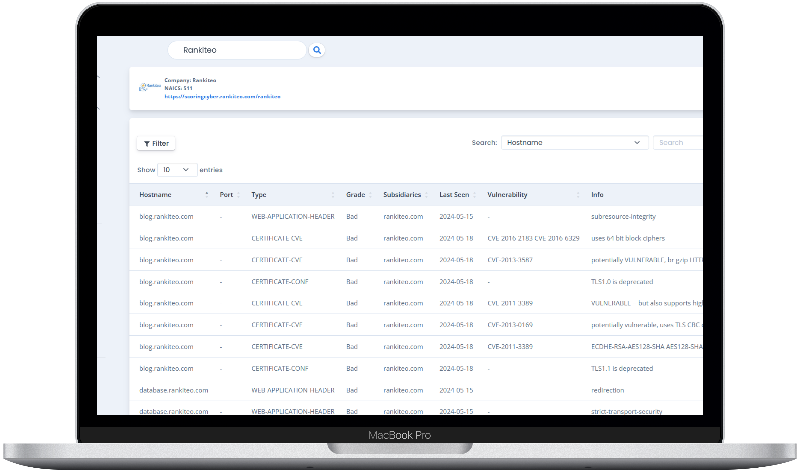
Every week, Rankiteo analyzes billions of signals to give organizations a sharper, faster view of emerging risks. With deeper, more actionable intelligence at their fingertips, security teams can outpace threat actors, respond instantly to Zero-Day attacks, and dramatically shrink their risk exposure window.
Identify exposed access points, detect misconfigured SSL certificates, and uncover vulnerabilities across the network infrastructure.
Gain visibility into the software components used within an organization to detect vulnerabilities, manage risk, and ensure supply chain security.
Monitor and manage all IT assets and their configurations to ensure accurate, real-time visibility across the company's technology environment.
Leverage real-time insights on active threats, malware campaigns, and emerging vulnerabilities to proactively defend against evolving cyberattacks.







 Rapid
Rapid