












Tencent
Company Details
Linkedin ID:
tencentglobal
Website:
Employees number:
89,363
Number of followers:
1,258,146
NAICS:
5112
Industry Type:
Homepage:
tencent.com
IP Addresses:
689
Company ID:
TEN_1048461
Scan Status:
Completed


Tencent Vendor Cyber Rating & Cyber Score
tencent.comTencent is a world-leading internet and technology company that develops innovative products and services to improve the quality of life of people around the world. Founded in 1998 with its headquarters in Shenzhen, China, Tencent's guiding principle is to use technology for good. Our communication and social services connect more than one billion people around the world, helping them to keep in touch with friends and family, access transportation, pay for daily necessities, and even be entertained. Tencent also publishes some of the world's most popular video games and other high-quality digital content, enriching interactive entertainment experiences for people around the globe. Tencent also offers a range of services such as cloud computing, advertising, FinTech, and other enterprise services to support our clients' digital transformation and business growth. Tencent has been listed on the Stock Exchange of Hong Kong since 2004.
Company Details
tencentglobal
89,363
1,258,146
5112
tencent.com
689
TEN_1048461
Completed
 Tencent Risk Score (AI oriented)
Between 700 and 749
 Tencent Global Score (TPRM)
XXXX
Description: The "Mother of All Breaches": 26 Billion Records Exposed in Unprecedented Data Leak Security researchers have uncovered what may be the largest compilation of stolen credentials in history a 12-terabyte database dubbed the "Mother of All Breaches" (MOAB), containing 26 billion records from thousands of prior data leaks. Discovered by researcher Bob Dyachenko of *SecurityDiscovery.com* in collaboration with *Cybernews*, the dataset was found on an open, publicly accessible server, though its owner remains unknown. Unlike a single hack, the MOAB is a "compilation of breaches" (COB), aggregating credentials from major platforms, including: - 1.5 billion records from *Tencent* - 504 million from *Weibo* - 360 million from *MySpace* - 281 million from *Twitter (X)* - Millions more from *LinkedIn, Adobe, Canva, Deezer, AdultFriendFinder*, and others The dataset also includes records from government organizations in the U.S., Brazil, Germany, the Philippines, and Turkey, amplifying risks for both individuals and enterprises. ### Why This Breach Is a Game-Changer The MOAB’s danger lies in its consolidation and accessibility. Instead of scattered leaks, attackers now have a single, searchable repository for credential stuffing, phishing, and targeted attacks. While many passwords are outdated, the sheer volume ensures some will still work especially given widespread password reuse. Worse, experts warn the dataset may include fresh data from infostealer malware, which harvests current credentials, browser cookies, and autofill details. This hybrid threat combining historical breaches with live infections creates a highly effective tool for cybercriminals, from low-level fraudsters to initial access brokers (IABs) selling corporate network access to ransomware gangs. ### The Fallout: A New Era of Cyber Risk The MOAB’s impact extends beyond individuals. Corporate and government networks are at heightened risk due to employees reusing passwords across personal and work accounts. A single compromised credential could provide attackers with a foothold for devastating intrusions. Security experts emphasize that password-only authentication is now obsolete against such a vast dataset. The breach underscores the urgent need for multi-factor authentication (MFA), particularly phishing-resistant methods like FIDO2 security keys. Continuous monitoring of credentials against breach databases is also critical. With the data now in the wild, the MOAB will fuel cyberattacks for years, marking a sobering shift in the threat landscape. The leak serves as a stark reminder: once exposed, data never truly disappears it only becomes more dangerous.
Description: Tencent’s WeChat, alongside Sina Weibo and Baidu Tieba, is under formal investigation by China’s Cyberspace Administration of China (CAC) for violations of the country’s Cybersecurity Law. The probe was triggered by user-generated content on WeChat including violence, fabricated rumors, obscenity, pornography, and information deemed harmful to national security, public safety, and social order. The CAC accused Tencent of failing to adequately moderate or remove prohibited content, neglecting its legal obligations under the Cybersecurity Law. While the investigation is ongoing, the reputational damage is immediate, given WeChat’s role as China’s dominant social media and messaging platform with over 1.3 billion users. The case highlights regulatory risks for tech giants operating under China’s strict cyber governance, where non-compliance can lead to fines, operational restrictions, or forced content removals. Though no data breach or financial loss was reported, the scrutiny threatens user trust, investor confidence, and potential government-imposed penalties, with broader implications for Tencent’s domestic and international operations. The CAC’s public notice also encourages further whistleblowing, amplifying the risk of prolonged regulatory pressure.


No incidents recorded for Tencent in 2026.
No incidents recorded for Tencent in 2026.
No incidents recorded for Tencent in 2026.
Tencent cyber incidents detection timeline including parent company and subsidiaries

Tencent is a world-leading internet and technology company that develops innovative products and services to improve the quality of life of people around the world. Founded in 1998 with its headquarters in Shenzhen, China, Tencent's guiding principle is to use technology for good. Our communication and social services connect more than one billion people around the world, helping them to keep in touch with friends and family, access transportation, pay for daily necessities, and even be entertained. Tencent also publishes some of the world's most popular video games and other high-quality digital content, enriching interactive entertainment experiences for people around the globe. Tencent also offers a range of services such as cloud computing, advertising, FinTech, and other enterprise services to support our clients' digital transformation and business growth. Tencent has been listed on the Stock Exchange of Hong Kong since 2004.

Nielsen shapes the world’s media and content as a global leader in audience insights, data and analytics. Through our understanding of people and their behaviors across all channels and platforms, we empower our clients with independent and actionable intelligence so they can connect and engage with

Grab is Southeast Asia’s leading superapp, offering a suite of services consisting of deliveries, mobility, financial services, enterprise and others. Grabbers come from all over the world, and we are united by a common mission: to drive Southeast Asia forward by creating economic empowerment for ev
Instacart, the leading grocery technology company in North America, works with grocers and retailers to transform how people shop. The company partners with more than 1,500 national, regional, and local retail banners to facilitate online shopping, delivery and pickup services from more than 85,000

The Facebook company is now Meta. Meta builds technologies that help people connect, find communities, and grow businesses. When Facebook launched in 2004, it changed the way people connect. Apps like Messenger, Instagram and WhatsApp further empowered billions around the world. Now, Meta is moving

ByteDance is a global incubator of platforms at the cutting edge of commerce, content, entertainment and enterprise services - over 2.5bn people interact with ByteDance products including TikTok. Creation is the core of ByteDance's purpose. Our products are built to help imaginations thrive. This i

Just Eat Takeaway.com is a leading global online delivery marketplace, connecting consumers and restaurants through our platform in 16 countries. Like a dinner table, working at JET brings our office employees and couriers together. From coding to customer service to couriers, JET is a

Cox Automotive is the world’s largest automotive services and technology provider. Fueled by the largest breadth of first-party data fed by 2.3 billion online interactions a year, Cox Automotive tailors leading solutions for car shoppers, auto manufacturers, dealers, lenders and fleets. The company

Join us in our mission to help the world get well, help the world stay well, and help future generations be healthier. We hire smart and motivated people from all academic majors to code, test, and implement healthcare software that hundreds of millions of patients and doctors rely on to improve ca
Olá, somos a TOTVS! A maior empresa de tecnologia do Brasil. 🤓 Líder absoluta em sistemas e plataformas para empresas, a TOTVS possui mais de 70 mil clientes. Indo muito além do ERP, oferece tecnologia completa para digitalização dos negócios por meio de 3 unidades de negócio: - Gestão: ERPs, sol
.png)
OpenClaw, a powerful AI tool that can act on a user's behalf, is rapidly gaining popularity in China.
With over 1 billion users, WeChat becomes Tencent's biggest OpenClaw campaign, bringing into focus opportunity and regulatory caution.
People have flocked to the OpenClaw artificial intelligence agent since it was launched in November by Austrian programmer Peter Steinberger...
Welcome to this week's Cybersecurity Weekly Digest, your curated roundup of the most critical threats, attacks, breaches,...
Brazilian fintech company Treeal said on Thursday it is partnering with Tencent Cloud to launch the Chinese company's PalmAI biometric...
If you're brave enough to want to run the demonstrably insecure AI assistant OpenClaw, several clouds have already started offering it as a...
Tencent has filed a sweeping set of DMCA complaints with GitHub, leading to the removal of dozens of open-source projects that enable users...
More than 18000 active command-and-control servers across 48 hosting providers have been tapped by Chinese threat actors to facilitate...
The website of anti-censorship organisation GreatFire.org's platform dedicated to exposing Chinese government censorship of WeChat is taken...

Explore insights on cybersecurity incidents, risk posture, and Rankiteo's assessments.
The official website of Tencent is https://www.tencent.com/en-us/.
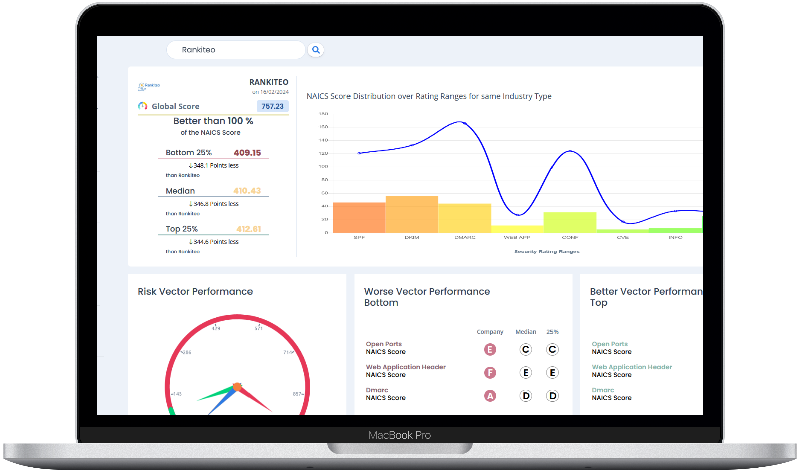
According to Rankiteo, Tencent’s AI-generated cybersecurity score is 729, reflecting their Moderate security posture.
According to Rankiteo, Tencent currently holds 0 security badges, indicating that no recognized compliance certifications are currently verified for the organization.
According to Rankiteo, Tencent has not been affected by any supply chain cyber incidents, and no incident IDs are currently listed for the organization.
According to Rankiteo, Tencent is not certified under SOC 2 Type 1.
According to Rankiteo, Tencent does not hold a SOC 2 Type 2 certification.
According to Rankiteo, Tencent is not listed as GDPR compliant.
According to Rankiteo, Tencent does not currently maintain PCI DSS compliance.
According to Rankiteo, Tencent is not compliant with HIPAA regulations.
According to Rankiteo,Tencent is not certified under ISO 27001, indicating the absence of a formally recognized information security management framework.
Tencent operates primarily in the Software Development industry.
Tencent employs approximately 89,363 people worldwide.
Tencent presently has no subsidiaries across any sectors.
Tencent’s official LinkedIn profile has approximately 1,258,146 followers.
Tencent is classified under the NAICS code 5112, which corresponds to Software Publishers.
No, Tencent does not have a profile on Crunchbase.
Yes, Tencent maintains an official LinkedIn profile, which is actively utilized for branding and talent engagement, which can be accessed here: https://www.linkedin.com/company/tencentglobal.
As of April 02, 2026, Rankiteo reports that Tencent has experienced 2 cybersecurity incidents.
Tencent has an estimated 29,309 peer or competitor companies worldwide.
Incident Types: The types of cybersecurity incidents that have occurred include Breach.
Detection and Response: The company detects and responds to cybersecurity incidents through an law enforcement notified with cyberspace administration of china (cac), and communication strategy with public notice by cac, communication strategy with 24/7 reporting channel for violations (phone: 12377, website: www.12377.cn, email: [email protected]), and enhanced monitoring with recommended..
Title: Investigation of WeChat, Sina Weibo, and Baidu Tieba Under China’s Cybersecurity Law
Description: The Cyberspace Administration of China (CAC) launched investigations into Tencent’s WeChat, Sina Weibo, and Baidu Tieba for hosting user-generated content violating China’s Cybersecurity Law, including violence, fabrication, rumors, obscenity, and pornography. The platforms were accused of failing to manage prohibited content adequately, harming national security, public safety, and social order. Investigations are being conducted by CAC’s Beijing and Guangdong offices, with follow-ups pending.
Date Publicly Disclosed: 2017-08-11T10:00:00
Type: Regulatory Violation
Title: Mother of All Breaches (MOAB)
Description: Security researchers uncovered a 12-terabyte database containing 26 billion records from thousands of prior data leaks, dubbed the 'Mother of All Breaches' (MOAB). The dataset aggregates credentials from major platforms and government organizations, posing significant risks for credential stuffing, phishing, and targeted attacks.
Type: Data Breach
Attack Vector: Compilation of Breaches (COB)
Motivation: Credential harvesting, cybercrime, initial access brokerage
Common Attack Types: The most common types of attacks the company has faced is Breach.

Operational Impact: Potential service restrictions or penalties under Cybersecurity Law
Brand Reputation Impact: Negative publicity due to regulatory scrutinyAssociated with harmful content
Legal Liabilities: Potential fines or sanctions under China’s Cybersecurity Law

Data Compromised: 26 billion records
Operational Impact: Heightened risk of credential stuffing, phishing, and targeted attacks
Brand Reputation Impact: Potential reputational damage for affected platforms
Identity Theft Risk: High
Commonly Compromised Data Types: The types of data most commonly compromised in incidents are Credentials, personally identifiable information, browser cookies and autofill details.
Entity Name: Tencent (WeChat)
Entity Type: Technology Company
Industry: Social Media / Messaging
Location: Shenzhen, Guangdong, China
Entity Name: Sina Weibo
Entity Type: Technology Company
Industry: Social Media
Location: Beijing, China
Entity Name: Baidu Tieba
Entity Type: Online Community Platform
Industry: Social Media / Search Services
Location: Beijing, China
Entity Name: Tencent
Entity Type: Company
Industry: Technology/Social Media
Customers Affected: 1.5 billion records
Entity Name: Weibo
Entity Type: Company
Industry: Social Media
Customers Affected: 504 million records
Entity Name: MySpace
Entity Type: Company
Industry: Social Media
Customers Affected: 360 million records
Entity Name: Twitter (X)
Entity Type: Company
Industry: Social Media
Customers Affected: 281 million records
Entity Name: LinkedIn
Entity Type: Company
Industry: Professional Networking
Customers Affected: Millions
Entity Name: Adobe
Entity Type: Company
Industry: Software
Customers Affected: Millions
Entity Name: Canva
Entity Type: Company
Industry: Design/Technology
Customers Affected: Millions
Entity Name: Deezer
Entity Type: Company
Industry: Music Streaming
Customers Affected: Millions
Entity Name: AdultFriendFinder
Entity Type: Company
Industry: Adult/Social Networking
Customers Affected: Millions
Entity Name: U.S. Government Organizations
Entity Type: Government
Industry: Public Sector
Location: United States
Entity Name: Brazilian Government Organizations
Entity Type: Government
Industry: Public Sector
Location: Brazil
Entity Name: German Government Organizations
Entity Type: Government
Industry: Public Sector
Location: Germany
Entity Name: Philippine Government Organizations
Entity Type: Government
Industry: Public Sector
Location: Philippines
Entity Name: Turkish Government Organizations
Entity Type: Government
Industry: Public Sector
Location: Turkey
Law Enforcement Notified: Cyberspace Administration of China (CAC),
Communication Strategy: Public notice by CAC24/7 reporting channel for violations (phone: 12377, website: www.12377.cn, email: [email protected])
Enhanced Monitoring: Recommended
Type of Data Compromised: Credentials, personally identifiable information, browser cookies, autofill details
Number of Records Exposed: 26 billion
Sensitivity of Data: High (includes PII, government data, and potential fresh infostealer malware data)
Personally Identifiable Information: Yes
Regulations Violated: China’s Cybersecurity Law (effective June 1, 2017),
Legal Actions: Ongoing investigations by CAC’s Beijing and Guangdong offices,
Regulatory Notifications: Public notice issued by CAC on August 11, 2017
Ensuring Regulatory Compliance: The company ensures compliance with regulatory requirements through Ongoing investigations by CAC’s Beijing and Guangdong offices, .
Lessons Learned: Password-only authentication is obsolete against large-scale credential dumps. Multi-factor authentication (MFA), especially phishing-resistant methods like FIDO2 security keys, is critical. Continuous monitoring of credentials against breach databases is essential.
Recommendations: Implement multi-factor authentication (MFA), preferably phishing-resistant methods like FIDO2 security keys., Monitor credentials against breach databases continuously., Educate users on password hygiene and the risks of password reuse.Implement multi-factor authentication (MFA), preferably phishing-resistant methods like FIDO2 security keys., Monitor credentials against breach databases continuously., Educate users on password hygiene and the risks of password reuse.Implement multi-factor authentication (MFA), preferably phishing-resistant methods like FIDO2 security keys., Monitor credentials against breach databases continuously., Educate users on password hygiene and the risks of password reuse.
Key Lessons Learned: The key lessons learned from past incidents are Password-only authentication is obsolete against large-scale credential dumps. Multi-factor authentication (MFA), especially phishing-resistant methods like FIDO2 security keys, is critical. Continuous monitoring of credentials against breach databases is essential.
Implemented Recommendations: The company has implemented the following recommendations to improve cybersecurity: Monitor credentials against breach databases continuously., Implement multi-factor authentication (MFA), preferably phishing-resistant methods like FIDO2 security keys. and Educate users on password hygiene and the risks of password reuse..
Source: Cyberspace Administration of China (CAC)
Date Accessed: 2017-08-11
Source: SecurityDiscovery.com
Source: Cybernews
Additional Resources: Stakeholders can find additional resources on cybersecurity best practices at and Source: Cyberspace Administration of China (CAC)Date Accessed: 2017-08-11, and Source: SecurityDiscovery.com, and Source: Cybernews.
Investigation Status: Ongoing (as of August 11, 2017)
Investigation Status: Ongoing (owner of the dataset unknown)
Communication of Investigation Status: The company communicates the status of incident investigations to stakeholders through Public Notice By Cac, 24/7 Reporting Channel For Violations (Phone: 12377, Website: Www.12377.Cn and Email: [Email Protected]).
High Value Targets: Corporate and government networks
Data Sold on Dark Web: Corporate and government networks
Root Causes: Inadequate Content Moderation, Failure To Comply With Cybersecurity Law Obligations,
Root Causes: Aggregation of historical breaches, potential inclusion of fresh infostealer malware data, and widespread password reuse
Corrective Actions: Adoption of MFA, continuous credential monitoring, and user education on password security
Post-Incident Analysis Process: The company's process for conducting post-incident analysis is described as Recommended.
Corrective Actions Taken: The company has taken the following corrective actions based on post-incident analysis: Adoption of MFA, continuous credential monitoring, and user education on password security.
Most Recent Incident Publicly Disclosed: The most recent incident publicly disclosed was on 2017-08-11T10:00:00.
Most Significant Data Compromised: The most significant data compromised in an incident was 26 billion records.
Most Sensitive Data Compromised: The most sensitive data compromised in a breach was 26 billion records.
Number of Records Exposed in Most Significant Breach: The number of records exposed in the most significant breach was 26.0B.
Most Significant Legal Action: The most significant legal action taken for a regulatory violation was Ongoing investigations by CAC’s Beijing and Guangdong offices, .
Most Significant Lesson Learned: The most significant lesson learned from past incidents was Password-only authentication is obsolete against large-scale credential dumps. Multi-factor authentication (MFA), especially phishing-resistant methods like FIDO2 security keys, is critical. Continuous monitoring of credentials against breach databases is essential.
Most Significant Recommendation Implemented: The most significant recommendation implemented to improve cybersecurity was Monitor credentials against breach databases continuously., Implement multi-factor authentication (MFA), preferably phishing-resistant methods like FIDO2 security keys. and Educate users on password hygiene and the risks of password reuse..
Most Recent Source: The most recent source of information about an incident are Cyberspace Administration of China (CAC), Cybernews and SecurityDiscovery.com.
Current Status of Most Recent Investigation: The current status of the most recent investigation is Ongoing (as of August 11, 2017).
Most Significant Root Cause: The most significant root cause identified in post-incident analysis was Inadequate content moderationFailure to comply with Cybersecurity Law obligations, Aggregation of historical breaches, potential inclusion of fresh infostealer malware data, and widespread password reuse.
Most Significant Corrective Action: The most significant corrective action taken based on post-incident analysis was Adoption of MFA, continuous credential monitoring, and user education on password security.
.png)
A vulnerability was found in Nothings stb up to 1.26. Impacted is the function stbtt_InitFont_internal in the library stb_truetype.h of the component TTF File Handler. Performing a manipulation results in out-of-bounds read. Remote exploitation of the attack is possible. The exploit has been made public and could be used. The vendor was contacted early about this disclosure but did not respond in any way.
V-SFT versions 6.2.10.0 and prior contain an out-of-bounds read in VS6ComFile!get_macro_mem_COM. Opening a crafted V7 file may lead to information disclosure from the affected product.
V-SFT versions 6.2.10.0 and prior contain a stack-based buffer overflow in VS6ComFile!CSaveData::_conv_AnimationItem. Opening a crafted V7 file may lead to arbitrary code execution on the affected product.
V-SFT versions 6.2.10.0 and prior contain an out-of-bounds read vulnerability in VS6MemInIF!set_temp_type_default. Opening a crafted V7 file may lead to information disclosure from the affected product.
V-SFT versions 6.2.10.0 and prior contain an out-of-bounds read vulnerability in VS6ComFile!load_link_inf. Opening a crafted V7 file may lead to information disclosure from the affected product.

Get company history

Every week, Rankiteo analyzes billions of signals to give organizations a sharper, faster view of emerging risks. With deeper, more actionable intelligence at their fingertips, security teams can outpace threat actors, respond instantly to Zero-Day attacks, and dramatically shrink their risk exposure window.
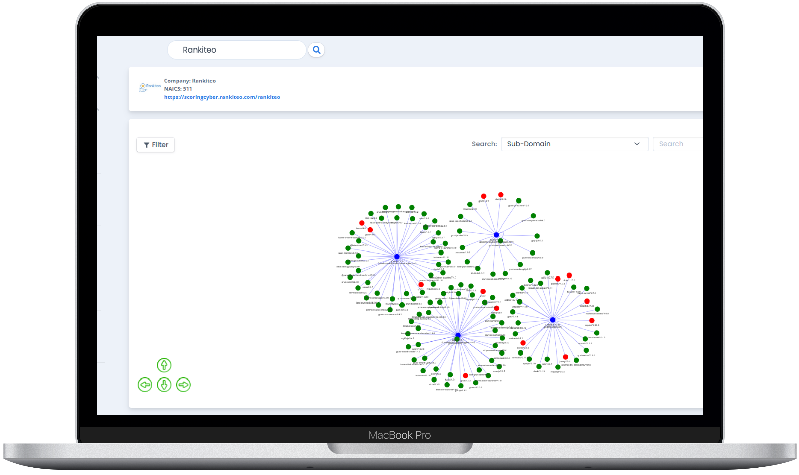
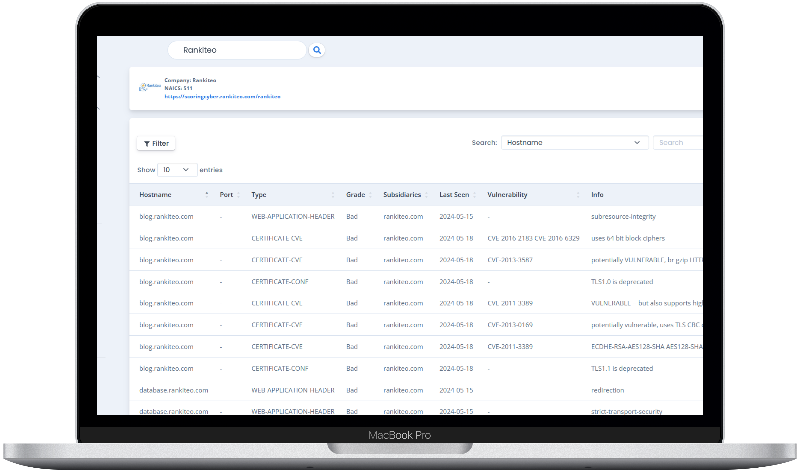
Identify exposed access points, detect misconfigured SSL certificates, and uncover vulnerabilities across the network infrastructure.
Gain visibility into the software components used within an organization to detect vulnerabilities, manage risk, and ensure supply chain security.
Monitor and manage all IT assets and their configurations to ensure accurate, real-time visibility across the company's technology environment.
Leverage real-time insights on active threats, malware campaigns, and emerging vulnerabilities to proactively defend against evolving cyberattacks.








 Rapid
Rapid