







SM
Company Details
Linkedin ID:
state-of-missouri
Website:
Employees number:
12,114
Number of followers:
64,308
NAICS:
92
Industry Type:
Homepage:
mo.gov
IP Addresses:
0
Company ID:
STA_2209458
Scan Status:
In-progress

State of Missouri Vendor Cyber Rating & Cyber Score
mo.govBuild the Missouri of tomorrow. Ensure a strong foundation today. Join a group of innovative team members focused on driving the State of Missouri forward. As public servants, our team members have the opportunity to produce work that is both lasting and important. This work serves to protect families, communities, and our natural resources. No matter where you are in your career, whether entry level or senior level, a career with the State of Missouri will challenge you to grow both personally and professionally. Though one employer, there is no shortage of exciting opportunities as there are many career paths you may take within the State. If you are searching for a job that transforms lives, including your own, a career with the State of Missouri is the perfect fit!
Company Details
state-of-missouri
12,114
64,308
92
mo.gov
0
STA_2209458
In-progress
 SM Risk Score (AI oriented)
Between 750 and 799
 SM Global Score (TPRM)
XXXX
Description: The state of Missouri faces an unprecedented cyber threat landscape, with an average of 6 million cyberattack attempts daily. These attacks target government infrastructure, critical services, and sensitive citizen data, ranging from phishing and malware to advanced ransomware campaigns. Experts highlight the state’s cybersecurity teams must maintain a 100% defense success rate blocking every single attempt to prevent breaches that could disrupt public services, expose personal records (e.g., tax files, licenses, or employee data), or even cripple essential systems like healthcare or emergency response. The sheer volume of attacks, combined with the rising sophistication of AI-driven ransomware, elevates the risk of a catastrophic breach. A successful intrusion could lead to massive data leaks of citizen and employee information, financial fraud, operational outages (e.g., government portals or payment systems), or reputational damage eroding public trust. Given Missouri’s role in regional governance, a large-scale attack could also cascade into broader economic or national security threats, particularly if critical infrastructure (e.g., energy, law enforcement databases) is compromised.


No incidents recorded for State of Missouri in 2026.
No incidents recorded for State of Missouri in 2026.
No incidents recorded for State of Missouri in 2026.
SM cyber incidents detection timeline including parent company and subsidiaries

Build the Missouri of tomorrow. Ensure a strong foundation today. Join a group of innovative team members focused on driving the State of Missouri forward. As public servants, our team members have the opportunity to produce work that is both lasting and important. This work serves to protect families, communities, and our natural resources. No matter where you are in your career, whether entry level or senior level, a career with the State of Missouri will challenge you to grow both personally and professionally. Though one employer, there is no shortage of exciting opportunities as there are many career paths you may take within the State. If you are searching for a job that transforms lives, including your own, a career with the State of Missouri is the perfect fit!


El Consejo Nacional de Investigaciones Científicas y Técnicas (CONICET) es el principal organismo dedicado a la promoción de la ciencia y la tecnología en la Argentina. Su actividad se desarrolla en cuatro grandes áreas: • Ciencias agrarias, ingeniería y de materiales • Ciencias biológicas y de la s

Minnesota State Government is the third largest employer in the state of Minnesota, employing over 50,000 diverse and talented employees in more than 100 state agencies, boards, commissions, colleges, and universities. Our workplaces can be found across the state in 86 out of 87 Minnesota counties a

Rijkswaterstaat is de uitvoeringsorganisatie van het Ministerie van Infrastructuur en Waterstaat. We beheren en ontwikkelen de rijkswegen, -vaarwegen en –wateren en zetten in op een duurzame leefomgeving. Samen met andere organisaties werken we aan een land dat beschermd is tegen overstromingen. Wa
Its main functions are to: collect and administer all national taxes, duties and levies; collect revenue that may be imposed under any other legislation, as agreed on between SARS and an organ of state or institution entitled to the revenue; provide protection against the illegal importation

The Transportation Security Administration (TSA) is a component agency of the U.S. Department of Homeland Security (DHS), committed to securing the nation’s transportation systems to ensure safe and efficient travel for all. Our mission is to protect the American people by preventing threats and dis
MISIÓN/PROPÓSITO: La SEP tiene como propósito esencial crear condiciones que permitan asegurar el acceso de todas las mexicanas y mexicanos a una educación de calidad, en el nivel y modalidad que la requieran y en el lugar donde la demanden. VISIÓN: En el año 2025, México cuenta con un sistema
The Treasury Department is the executive agency responsible for promoting economic prosperity and ensuring the financial security of the United States. The Department is responsible for a wide range of activities such as advising the President on economic and financial issues, encouraging sustainabl
Är du beredd att tänka nytt och hitta framtidens lösningar? För vårt framtida uppdrag behöver vi medarbetare med hög kompetens, stort engagemang och som strävar efter ständig förbättring. Vid din sida kan du få engagerade kollegor inom hundratals kvalificerade yrken – ekonomer, sjuksköterskor, ju

Working for Amsterdam means working for the most beautiful city in the world. Think of its rich history, the role Amsterdam plays internationally, and events such as Sail, Gay Pride and King’s Day. Of course everybody wants to visit Amsterdam, or work or live here. As you can probably imagine, work
.png)
BY: Mike Cullinan, [email protected]. Posted online February 18, 2026 | 8:19 am. Coming off its first full calendar year in operation,...
U.S. Sen. Josh Hawley, R-Missouri, advanced his Rural Hospital Cybersecurity Enhancement Act during a markup by the Senate Health,...
Legislation proposed by Sen. Mary Elizabeth Coleman, R-Arnold, would do away with several state boards and commissions. If it becomes law,...
Missouri's DOGE effort targets cybersecurity as state recovers from hack · Kurt Erickson | Post-Dispatch · Jan 14, 2026 · Jan 14, 2026 · 0. Sen.
As a Missouri website that serves more than 50000 state employees remains shut down after suspicious activity, it appears that quick work by...
The website, which lets state workers report time off and manage health savings, deferred compensation, and related accounts, has been shut...
The hack affects state employees, including prison guards, higher education regulators and highway patrol troopers.
Northwest Missouri State University computer science students recently put their skills to the test by participating in a national...
The City said data from CodeRED, the third-party service used to send emergency alerts to residents, was possibly leaked in a recent...

Explore insights on cybersecurity incidents, risk posture, and Rankiteo's assessments.
The official website of State of Missouri is http://mo.gov.
According to Rankiteo, State of Missouri’s AI-generated cybersecurity score is 757, reflecting their Fair security posture.
According to Rankiteo, State of Missouri currently holds 0 security badges, indicating that no recognized compliance certifications are currently verified for the organization.
According to Rankiteo, State of Missouri has not been affected by any supply chain cyber incidents, and no incident IDs are currently listed for the organization.
According to Rankiteo, State of Missouri is not certified under SOC 2 Type 1.
According to Rankiteo, State of Missouri does not hold a SOC 2 Type 2 certification.
According to Rankiteo, State of Missouri is not listed as GDPR compliant.
According to Rankiteo, State of Missouri does not currently maintain PCI DSS compliance.
According to Rankiteo, State of Missouri is not compliant with HIPAA regulations.
According to Rankiteo,State of Missouri is not certified under ISO 27001, indicating the absence of a formally recognized information security management framework.
State of Missouri operates primarily in the Government Administration industry.
State of Missouri employs approximately 12,114 people worldwide.
State of Missouri presently has no subsidiaries across any sectors.
State of Missouri’s official LinkedIn profile has approximately 64,308 followers.
State of Missouri is classified under the NAICS code 92, which corresponds to Public Administration.
No, State of Missouri does not have a profile on Crunchbase.
Yes, State of Missouri maintains an official LinkedIn profile, which is actively utilized for branding and talent engagement, which can be accessed here: https://www.linkedin.com/company/state-of-missouri.
As of April 02, 2026, Rankiteo reports that State of Missouri has experienced 1 cybersecurity incidents.
State of Missouri has an estimated 12,424 peer or competitor companies worldwide.
Incident Types: The types of cybersecurity incidents that have occurred include Cyber Attack.
Detection and Response: The company detects and responds to cybersecurity incidents through an containment measures with cyber hygiene education, containment measures with multi-factor authentication, containment measures with password managers, and remediation measures with software updates, remediation measures with threat monitoring, remediation measures with ai-driven defense tools, and communication strategy with public awareness campaigns, communication strategy with media reports (e.g., ky3), communication strategy with bbb advisories, and enhanced monitoring with recommended (e.g., threat maps like fortiguard, bitdefender)..
Title: None
Description: The article discusses general cybersecurity threats, including ransomware, malware, and phishing, with a focus on preparedness. It highlights the increasing frequency of ransomware attacks (predicted to occur every 2 seconds by 2031) and emphasizes cyber hygiene practices like strong passwords, software updates, and multi-factor authentication. The state of Missouri is mentioned as facing ~6 million cyberattack attempts daily. AI is noted as a growing tool for cybercriminals to automate attacks, particularly ransomware. Industries like Capital Markets, Media/Entertainment, and Life Sciences are leading cybersecurity spending, with Western Europe and the U.S. accounting for over 70% of global spending.
Date Publicly Disclosed: 2025-01-01
Type: general cybersecurity awareness
Attack Vector: phishingmalwareransomwareAI-generated attackscredential stuffing (reused passwords)
Vulnerability Exploited: weak/recycled passwordsunpatched softwarelack of multi-factor authenticationhuman error (clicking suspicious links)
Threat Actor: opportunistic cybercriminalsransomware gangsAI-assisted attackers
Motivation: financial gaindata theftdisruption
Common Attack Types: The most common types of attacks the company has faced is Cyber Attack.
Identification of Attack Vectors: The company identifies the attack vectors used in incidents through phishing emailsexploited vulnerabilitiesstolen credentials from prior breaches.

Identity Theft Risk: high (due to credential reuse and data breaches)
Payment Information Risk: high (if passwords are reused across financial platforms)
Commonly Compromised Data Types: The types of data most commonly compromised in incidents are Credentials (Usernames/Passwords), Potentially Pii If Breaches Occur and .
Entity Name: State of Missouri
Entity Type: government
Industry: public administration
Location: Missouri, USA
Entity Name: General Public/Individuals
Entity Type: consumers
Industry: cross-sector
Location: Global (emphasis on Western Europe and U.S.)
Entity Name: Capital Markets, Media & Entertainment, Life Sciences
Entity Type: industries
Industry: financial services, media, healthcare/pharma
Location: Global
Containment Measures: cyber hygiene educationmulti-factor authenticationpassword managers
Remediation Measures: software updatesthreat monitoringAI-driven defense tools
Communication Strategy: public awareness campaignsmedia reports (e.g., KY3)BBB advisories
Enhanced Monitoring: recommended (e.g., threat maps like FortiGuard, Bitdefender)
Type of Data Compromised: Credentials (usernames/passwords), Potentially pii if breaches occur
Sensitivity of Data: high (if financial or personal data is accessed)
Personally Identifiable Information: likely (due to credential reuse)
Prevention of Data Exfiltration: The company takes the following measures to prevent data exfiltration: software updates, threat monitoring, AI-driven defense tools, .
Handling of PII Incidents: The company handles incidents involving personally identifiable information (PII) through by cyber hygiene education, multi-factor authentication, password managers and .
Lessons Learned: Cyberattacks are inevitable; preparedness is critical ('when, not if')., Basic cyber hygiene (strong passwords, MFA, updates) deters most opportunistic attacks., AI is lowering the barrier for cybercriminals to launch sophisticated attacks., Credential reuse across platforms amplifies identity theft risks., State-level entities face relentless attack volumes (e.g., Missouri’s 6M daily attempts).
Recommendations: Implement multi-factor authentication (MFA) universally., Use password managers to avoid credential reuse., Regularly update software and systems to patch vulnerabilities., Educate employees/public on phishing and social engineering tactics., Monitor dark web for leaked credentials (e.g., via threat intelligence tools)., Invest in AI-driven defense mechanisms to counter AI-powered attacks., Segment networks to limit lateral movement during breaches., Participate in industry-specific threat-sharing initiatives (e.g., ISACs).Implement multi-factor authentication (MFA) universally., Use password managers to avoid credential reuse., Regularly update software and systems to patch vulnerabilities., Educate employees/public on phishing and social engineering tactics., Monitor dark web for leaked credentials (e.g., via threat intelligence tools)., Invest in AI-driven defense mechanisms to counter AI-powered attacks., Segment networks to limit lateral movement during breaches., Participate in industry-specific threat-sharing initiatives (e.g., ISACs).Implement multi-factor authentication (MFA) universally., Use password managers to avoid credential reuse., Regularly update software and systems to patch vulnerabilities., Educate employees/public on phishing and social engineering tactics., Monitor dark web for leaked credentials (e.g., via threat intelligence tools)., Invest in AI-driven defense mechanisms to counter AI-powered attacks., Segment networks to limit lateral movement during breaches., Participate in industry-specific threat-sharing initiatives (e.g., ISACs).Implement multi-factor authentication (MFA) universally., Use password managers to avoid credential reuse., Regularly update software and systems to patch vulnerabilities., Educate employees/public on phishing and social engineering tactics., Monitor dark web for leaked credentials (e.g., via threat intelligence tools)., Invest in AI-driven defense mechanisms to counter AI-powered attacks., Segment networks to limit lateral movement during breaches., Participate in industry-specific threat-sharing initiatives (e.g., ISACs).Implement multi-factor authentication (MFA) universally., Use password managers to avoid credential reuse., Regularly update software and systems to patch vulnerabilities., Educate employees/public on phishing and social engineering tactics., Monitor dark web for leaked credentials (e.g., via threat intelligence tools)., Invest in AI-driven defense mechanisms to counter AI-powered attacks., Segment networks to limit lateral movement during breaches., Participate in industry-specific threat-sharing initiatives (e.g., ISACs).Implement multi-factor authentication (MFA) universally., Use password managers to avoid credential reuse., Regularly update software and systems to patch vulnerabilities., Educate employees/public on phishing and social engineering tactics., Monitor dark web for leaked credentials (e.g., via threat intelligence tools)., Invest in AI-driven defense mechanisms to counter AI-powered attacks., Segment networks to limit lateral movement during breaches., Participate in industry-specific threat-sharing initiatives (e.g., ISACs).Implement multi-factor authentication (MFA) universally., Use password managers to avoid credential reuse., Regularly update software and systems to patch vulnerabilities., Educate employees/public on phishing and social engineering tactics., Monitor dark web for leaked credentials (e.g., via threat intelligence tools)., Invest in AI-driven defense mechanisms to counter AI-powered attacks., Segment networks to limit lateral movement during breaches., Participate in industry-specific threat-sharing initiatives (e.g., ISACs).Implement multi-factor authentication (MFA) universally., Use password managers to avoid credential reuse., Regularly update software and systems to patch vulnerabilities., Educate employees/public on phishing and social engineering tactics., Monitor dark web for leaked credentials (e.g., via threat intelligence tools)., Invest in AI-driven defense mechanisms to counter AI-powered attacks., Segment networks to limit lateral movement during breaches., Participate in industry-specific threat-sharing initiatives (e.g., ISACs).
Key Lessons Learned: The key lessons learned from past incidents are Cyberattacks are inevitable; preparedness is critical ('when, not if').,Basic cyber hygiene (strong passwords, MFA, updates) deters most opportunistic attacks.,AI is lowering the barrier for cybercriminals to launch sophisticated attacks.,Credential reuse across platforms amplifies identity theft risks.,State-level entities face relentless attack volumes (e.g., Missouri’s 6M daily attempts).
Implemented Recommendations: The company has implemented the following recommendations to improve cybersecurity: Invest in AI-driven defense mechanisms to counter AI-powered attacks., Participate in industry-specific threat-sharing initiatives (e.g., ISACs)., Regularly update software and systems to patch vulnerabilities., Monitor dark web for leaked credentials (e.g., via threat intelligence tools)., Use password managers to avoid credential reuse., Segment networks to limit lateral movement during breaches., Educate employees/public on phishing and social engineering tactics. and Implement multi-factor authentication (MFA) universally..
Source: KY3 News (Springfield, MO)
URL: https://www.ky3.com
Date Accessed: 2025-01-01
Source: FortiGuard Labs - Outbreak Threat Map
Source: Bitdefender Threat Map
Source: Cybersecurity Ventures - 2025 Statistics Report
URL: https://cybersecurityventures.com/cybersecurity-statistics-2025
Source: DHS Office of Intelligence and Analysis - Homeland Threat Assessment 2025
Additional Resources: Stakeholders can find additional resources on cybersecurity best practices at and Source: KY3 News (Springfield, MO)Url: https://www.ky3.comDate Accessed: 2025-01-01, and Source: FortiGuard Labs - Outbreak Threat MapUrl: https://threatmap.fortiguard.com, and Source: Bitdefender Threat MapUrl: https://www.bitdefender.com/threat-map, and Source: Cybersecurity Ventures - 2025 Statistics ReportUrl: https://cybersecurityventures.com/cybersecurity-statistics-2025, and Source: DHS Office of Intelligence and Analysis - Homeland Threat Assessment 2025Url: https://www.dhs.gov/homeland-threat-assessment.
Investigation Status: ongoing (general trend analysis; no specific incident investigated)
Communication of Investigation Status: The company communicates the status of incident investigations to stakeholders through Public Awareness Campaigns, Media Reports (E.G., Ky3) and Bbb Advisories.
Stakeholder Advisories: Better Business Bureau (Bbb) Warnings On Password Reuse., Cisa Guidelines On Cyber Hygiene., State Of Missouri Cybersecurity Bulletins (Implied)..
Customer Advisories: Avoid clicking suspicious links.Enable MFA on all accounts.Use unique passwords for each platform.Report phishing attempts to IT/security teams.
Advisories Provided: The company provides the following advisories to stakeholders and customers following an incident: were Better Business Bureau (Bbb) Warnings On Password Reuse., Cisa Guidelines On Cyber Hygiene., State Of Missouri Cybersecurity Bulletins (Implied)., Avoid Clicking Suspicious Links., Enable Mfa On All Accounts., Use Unique Passwords For Each Platform., Report Phishing Attempts To It/Security Teams. and .
Entry Point: Phishing Emails, Exploited Vulnerabilities, Stolen Credentials From Prior Breaches,
High Value Targets: Financial Data, Pii, Corporate Networks,
Data Sold on Dark Web: Financial Data, Pii, Corporate Networks,
Root Causes: Poor Password Hygiene (Reuse Across Platforms)., Lack Of Mfa Adoption., Delayed Software Patching., Insufficient User Training On Phishing/Social Engineering., Over-Reliance On Perimeter Defenses Without Layered Security.,
Corrective Actions: Mandate Mfa For All Critical Systems., Deploy Enterprise-Wide Password Managers., Automate Patch Management Processes., Conduct Regular Phishing Simulations And Training., Adopt Zero-Trust Architecture Principles., Increase Investment In Threat Detection/Response Tools.,
Post-Incident Analysis Process: The company's process for conducting post-incident analysis is described as recommended (e.g., threat maps like FortiGuard, Bitdefender).
Corrective Actions Taken: The company has taken the following corrective actions based on post-incident analysis: Mandate Mfa For All Critical Systems., Deploy Enterprise-Wide Password Managers., Automate Patch Management Processes., Conduct Regular Phishing Simulations And Training., Adopt Zero-Trust Architecture Principles., Increase Investment In Threat Detection/Response Tools., .
Last Attacking Group: The attacking group in the last incident was an opportunistic cybercriminalsransomware gangsAI-assisted attackers.
Most Recent Incident Publicly Disclosed: The most recent incident publicly disclosed was on 2025-01-01.
Containment Measures in Most Recent Incident: The containment measures taken in the most recent incident was cyber hygiene educationmulti-factor authenticationpassword managers.
Most Significant Lesson Learned: The most significant lesson learned from past incidents was State-level entities face relentless attack volumes (e.g., Missouri’s 6M daily attempts).
Most Significant Recommendation Implemented: The most significant recommendation implemented to improve cybersecurity was Invest in AI-driven defense mechanisms to counter AI-powered attacks., Participate in industry-specific threat-sharing initiatives (e.g., ISACs)., Regularly update software and systems to patch vulnerabilities., Monitor dark web for leaked credentials (e.g., via threat intelligence tools)., Use password managers to avoid credential reuse., Segment networks to limit lateral movement during breaches., Educate employees/public on phishing and social engineering tactics. and Implement multi-factor authentication (MFA) universally..
Most Recent Source: The most recent source of information about an incident are DHS Office of Intelligence and Analysis - Homeland Threat Assessment 2025, KY3 News (Springfield, MO), Cybersecurity Ventures - 2025 Statistics Report, FortiGuard Labs - Outbreak Threat Map and Bitdefender Threat Map.
Most Recent URL for Additional Resources: The most recent URL for additional resources on cybersecurity best practices is https://www.ky3.com, https://threatmap.fortiguard.com, https://www.bitdefender.com/threat-map, https://cybersecurityventures.com/cybersecurity-statistics-2025, https://www.dhs.gov/homeland-threat-assessment .
Current Status of Most Recent Investigation: The current status of the most recent investigation is ongoing (general trend analysis; no specific incident investigated).
Most Recent Stakeholder Advisory: The most recent stakeholder advisory issued was Better Business Bureau (BBB) warnings on password reuse., CISA guidelines on cyber hygiene., State of Missouri cybersecurity bulletins (implied)., .
Most Recent Customer Advisory: The most recent customer advisory issued was an Avoid clicking suspicious links.Enable MFA on all accounts.Use unique passwords for each platform.Report phishing attempts to IT/security teams.
.png)
A vulnerability was found in Nothings stb up to 1.26. Impacted is the function stbtt_InitFont_internal in the library stb_truetype.h of the component TTF File Handler. Performing a manipulation results in out-of-bounds read. Remote exploitation of the attack is possible. The exploit has been made public and could be used. The vendor was contacted early about this disclosure but did not respond in any way.
V-SFT versions 6.2.10.0 and prior contain an out-of-bounds read in VS6ComFile!get_macro_mem_COM. Opening a crafted V7 file may lead to information disclosure from the affected product.
V-SFT versions 6.2.10.0 and prior contain a stack-based buffer overflow in VS6ComFile!CSaveData::_conv_AnimationItem. Opening a crafted V7 file may lead to arbitrary code execution on the affected product.
V-SFT versions 6.2.10.0 and prior contain an out-of-bounds read vulnerability in VS6MemInIF!set_temp_type_default. Opening a crafted V7 file may lead to information disclosure from the affected product.
V-SFT versions 6.2.10.0 and prior contain an out-of-bounds read vulnerability in VS6ComFile!load_link_inf. Opening a crafted V7 file may lead to information disclosure from the affected product.

Get company history

Every week, Rankiteo analyzes billions of signals to give organizations a sharper, faster view of emerging risks. With deeper, more actionable intelligence at their fingertips, security teams can outpace threat actors, respond instantly to Zero-Day attacks, and dramatically shrink their risk exposure window.
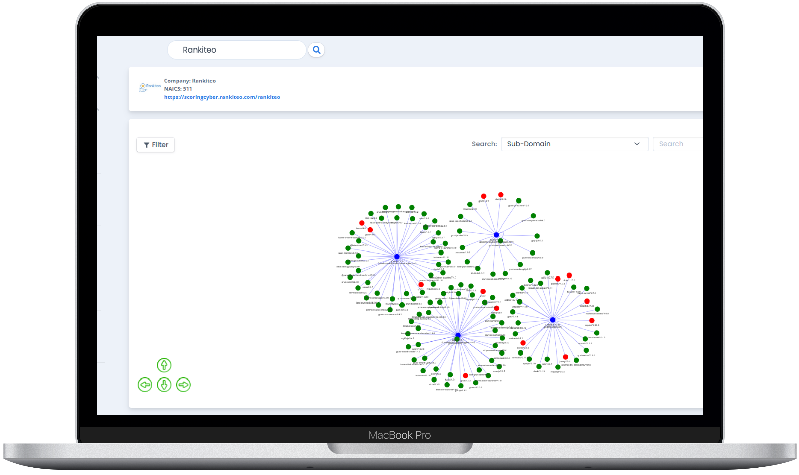
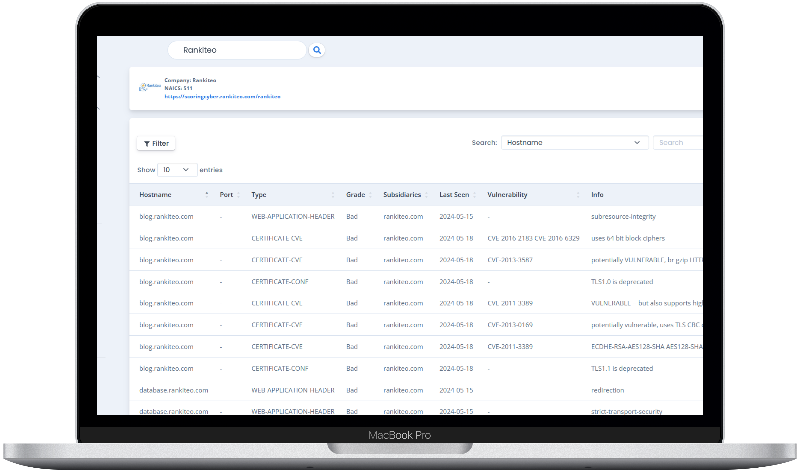
Identify exposed access points, detect misconfigured SSL certificates, and uncover vulnerabilities across the network infrastructure.
Gain visibility into the software components used within an organization to detect vulnerabilities, manage risk, and ensure supply chain security.
Monitor and manage all IT assets and their configurations to ensure accurate, real-time visibility across the company's technology environment.
Leverage real-time insights on active threats, malware campaigns, and emerging vulnerabilities to proactively defend against evolving cyberattacks.




 Rapid
Rapid