








NFCU
Company Details
Linkedin ID:
navy-federal-credit-union
Website:
Employees number:
24,598
Number of followers:
178,753
NAICS:
52
Industry Type:
Homepage:
navyfederal.org
IP Addresses:
0
Company ID:
NAV_1378981
Scan Status:
In-progress


Navy Federal Credit Union Vendor Cyber Rating & Cyber Score
navyfederal.orgNavy Federal is the world’s largest credit union, with more than 15 million members, $190 billion+ in assets and 25,000+ employees. Throughout campuses in Vienna, VA Pensacola, FL and Winchester, VA, as well as 370 branches, we serve the Armed Forces, Department of Defense, Veterans and their families with world-class financial products and services. Navy Federal provides much more than a job. We provide a meaningful career experience, including a culture that is energized, engaged and committed; and fierce appreciation for our teams, who are rewarded with highly competitive pay and generous benefits and perks. Our approach to careers is simple yet powerful: Make our mission your passion. Federally insured by NCUA. Equal opportunity employer. Android™ is a trademark of Google, Inc. iPhone® is a registered trademark of Apple, Inc. iPad® is a registered trademark of Apple, Inc. App Store(SM) is a service mark of Apple, Inc. Message and data rates may apply. FORTUNE and 100 Best Companies to Work For are registered trademarks of Time Inc., and are used under license. FORTUNE and Time Inc., are not affiliated with, and do not endorse products or services of, Navy Federal Credit Union. For more info, visit navyfederal.org. Images used for representational purposes only; do not imply government endorsement. Equal Housing Lender Equal Opportunity Employer, including disability/vets
Company Details
navy-federal-credit-union
24,598
178,753
52
navyfederal.org
0
NAV_1378981
In-progress
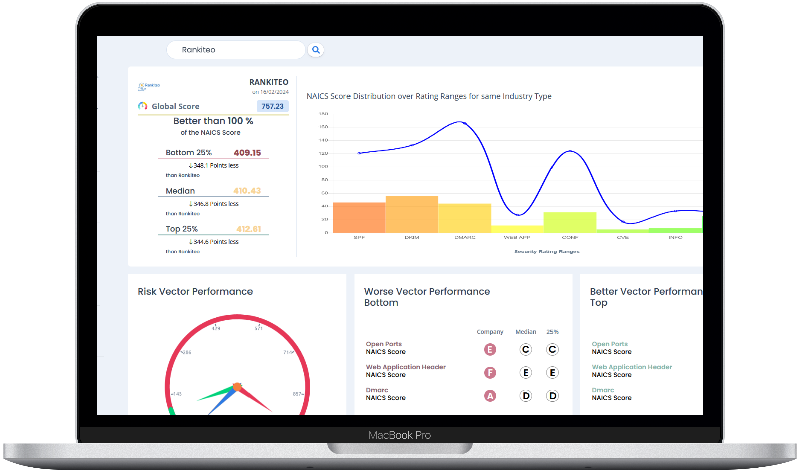
 NFCU Risk Score (AI oriented)
Between 700 and 749
 NFCU Global Score (TPRM)
XXXX
Description: Operation DoppelBrand: Sophisticated Phishing Campaign Targets Fortune 500 Firms An elusive cyberthreat group known as GS7 has been running Operation DoppelBrand, a large-scale phishing campaign targeting Fortune 500 companies, financial institutions, and high-value entities worldwide. First observed between December 2025 and January 2026, the operation leverages near-perfect replicas of corporate login portals to steal credentials and deploy remote management and monitoring (RMM) tools for further exploitation. ### Key Details of the Campaign - Targets: Primarily U.S.-based financial institutions including Wells Fargo, USAA, Navy Federal Credit Union, Fidelity Investments, and Citibank alongside technology, healthcare, and telecommunications firms in Europe and other regions. - Tactics: GS7 registers over 150 malicious domains via registrars like NameCheap and OwnRegistrar, routing traffic through Cloudflare to evade detection. Attackers exfiltrate stolen data usernames, passwords, IP addresses, geolocation, device fingerprints, and timestamps to Telegram bots controlled by the group. - Infrastructure: The group has operated since at least 2022, with claims of activity dating back nearly a decade. Researchers linked GS7 to Brazilian cybercrime forums, where stolen credentials and financial data are traded. - Impact: Beyond credential theft, GS7 installs RMM tools on victim systems, enabling remote access or malware deployment. The campaign’s sophistication including rotating infrastructure and meticulous branding mimicry has allowed it to evade detection until now. ### Researcher Findings Security firm SOCRadar uncovered the operation, identifying a Telegram group ("NfResultz by GS") tied to the threat actor. A self-proclaimed GS7 member provided screenshots of past campaigns, including a Fidelity Investments phishing demo that triggered RMM tool downloads upon login. SOCRadar released TTPs (tactics, techniques, and procedures) and IoCs (indicators of compromise) to help defenders track the group’s activities. With English-speaking markets as the primary focus, GS7’s DoppelBrand campaign remains active, underscoring the growing threat of highly organized, financially motivated phishing operations.
Description: Cybersecurity researcher Jeremiah Fowler discovered an unprotected 378 GB database belonging to Navy Federal Credit Union (NFCU), exposed publicly without encryption or password protection. The breach revealed sensitive internal files, including operational metadata, hashed passwords, system logs, plain-text usernames/emails, and Tableau workbooks containing database connection details, financial formulas, and loan portfolio metrics. While no direct customer data (e.g., account numbers, SSNs) was exposed in plain text, the leaked internal details such as employee credentials, system architectures, and business intelligence create severe risks. Attackers could exploit this information for phishing, credential stuffing, or supply-chain attacks, potentially escalating access to member data or financial systems. The incident underscores systemic vulnerabilities in third-party handling of sensitive data, though NFCU secured the database after discovery. The exposure, while not immediately catastrophic, provides cybercriminals with a roadmap for deeper intrusions, threatening long-term operational and member security.


No incidents recorded for Navy Federal Credit Union in 2026.
No incidents recorded for Navy Federal Credit Union in 2026.
No incidents recorded for Navy Federal Credit Union in 2026.
NFCU cyber incidents detection timeline including parent company and subsidiaries

Navy Federal is the world’s largest credit union, with more than 15 million members, $190 billion+ in assets and 25,000+ employees. Throughout campuses in Vienna, VA Pensacola, FL and Winchester, VA, as well as 370 branches, we serve the Armed Forces, Department of Defense, Veterans and their families with world-class financial products and services. Navy Federal provides much more than a job. We provide a meaningful career experience, including a culture that is energized, engaged and committed; and fierce appreciation for our teams, who are rewarded with highly competitive pay and generous benefits and perks. Our approach to careers is simple yet powerful: Make our mission your passion. Federally insured by NCUA. Equal opportunity employer. Android™ is a trademark of Google, Inc. iPhone® is a registered trademark of Apple, Inc. iPad® is a registered trademark of Apple, Inc. App Store(SM) is a service mark of Apple, Inc. Message and data rates may apply. FORTUNE and 100 Best Companies to Work For are registered trademarks of Time Inc., and are used under license. FORTUNE and Time Inc., are not affiliated with, and do not endorse products or services of, Navy Federal Credit Union. For more info, visit navyfederal.org. Images used for representational purposes only; do not imply government endorsement. Equal Housing Lender Equal Opportunity Employer, including disability/vets


Fidelity’s mission is to strengthen the financial well-being of our customers and deliver better outcomes for the clients and businesses we serve. Fidelity’s strength comes from the scale of our diversified, market-leading financial services businesses that serve individuals, families, employers, we

At Ameriprise Financial, we have been helping people feel more confident about their financial future for over 130 years. With extensive investment advice, asset management and insurance capabilities and a nationwide network of approximately 10,000 financial advisors*, we have the expertise to serve
Discover® is now part of Capital One. Together, we’ll continue to deliver exceptional financial products and experiences, drive innovation, and serve customers. Find the latest updates at https://capitalonediscover.com. Discover is one of the most recognized brands in the U.S. with the Discover® ca

With financial advisors serving our clients in all 50 states, Wells Fargo Advisors is headquartered in St. Louis. At the end of the day, we help our clients succeed financially. For us – our Financial Advisors and thousands of other team members – it's a commitment. It's about honoring our relation
People are living longer, and we are excited about the possibilities this brings. We see longevity, aging, and changing life patterns as an opportunity for our customers, our employees, and society as a whole. And we want to support everyone in building the financial means to explore the possibiliti
BDO is a full-service universal bank in the Philippines. It provides a complete array of industry-leading products and services including Lending (corporate and consumer), Deposit-taking, Foreign Exchange, Brokering, Trust and Investments, Credit Cards, Corporate Cash Management, and Remittances in
At State Street, we deliver leading investment platforms, data, expertise, and solutions that accelerate performance and better decision making. With over 200 years of global financial leadership, we equip institutional investors through a comprehensive suite of capabilities: Investment Services: I

O Sicoob é o maior sistema financeiro cooperativo do país, com mais de 9 milhões de cooperados e mais de 4,6 mil pontos de atendimento distribuídos em todo o Brasil. Somos uma cooperativa financeira que oferece aos cooperados serviços de conta corrente, crédito, investimento, cartões, previdência, c

IIFL group is one of India's largest diversified financial services conglomerates with three listed entities - IIFL Finance, IIFL Securities and 360 ONE Wealth & Asset Management. Founded in 1995 by Nirmal Jain as a small research house, today IIFL Group employs over 40000 people and caters to over
.png)
Some Navy Federal CDs have competitive rates, but you'll need to meet eligibility requirements to bank with the military-focused credit...
Client: Navy Federal Credit Union (NFCU). Region: North America. Industry: Banking and capital markets. Linkedin · Facebook...
NEWPORT BEACH, CA, UNITED STATES, January 6, 2026 /EINPresswire.com/ — Lifestory Research today released the results of two 2026 America's Most Trusted®...
Navy Federal is an excellent mortgage lender to consider, especially if you are seeking interest rate protection on a VA-backed mortgage and are an active or...
Stories about data breaches, fraud and one neobank were reader favorites this year.
Navy Federal Credit Union recognized three ROTC All-American Students of the Year on Saturday, December 27, during the Go Bowling Military...
Fifty-four individuals tied to the Tren de Aragua gang face charges for using Ploutus malware to drain millions from community banks and...
America's Credit Unions defended credit union overdraft practices in a letter to the Democratic senators who are seeking detailed...

Explore insights on cybersecurity incidents, risk posture, and Rankiteo's assessments.
The official website of Navy Federal Credit Union is http://www.navyfederal.org.
According to Rankiteo, Navy Federal Credit Union’s AI-generated cybersecurity score is 715, reflecting their Moderate security posture.
According to Rankiteo, Navy Federal Credit Union currently holds 0 security badges, indicating that no recognized compliance certifications are currently verified for the organization.
According to Rankiteo, Navy Federal Credit Union has not been affected by any supply chain cyber incidents, and no incident IDs are currently listed for the organization.
According to Rankiteo, Navy Federal Credit Union is not certified under SOC 2 Type 1.
According to Rankiteo, Navy Federal Credit Union does not hold a SOC 2 Type 2 certification.
According to Rankiteo, Navy Federal Credit Union is not listed as GDPR compliant.
According to Rankiteo, Navy Federal Credit Union does not currently maintain PCI DSS compliance.
According to Rankiteo, Navy Federal Credit Union is not compliant with HIPAA regulations.
According to Rankiteo,Navy Federal Credit Union is not certified under ISO 27001, indicating the absence of a formally recognized information security management framework.
Navy Federal Credit Union operates primarily in the Financial Services industry.
Navy Federal Credit Union employs approximately 24,598 people worldwide.
Navy Federal Credit Union presently has no subsidiaries across any sectors.
Navy Federal Credit Union’s official LinkedIn profile has approximately 178,753 followers.
Navy Federal Credit Union is classified under the NAICS code 52, which corresponds to Finance and Insurance.
No, Navy Federal Credit Union does not have a profile on Crunchbase.
Yes, Navy Federal Credit Union maintains an official LinkedIn profile, which is actively utilized for branding and talent engagement, which can be accessed here: https://www.linkedin.com/company/navy-federal-credit-union.
As of April 02, 2026, Rankiteo reports that Navy Federal Credit Union has experienced 2 cybersecurity incidents.
Navy Federal Credit Union has an estimated 31,537 peer or competitor companies worldwide.
Incident Types: The types of cybersecurity incidents that have occurred include Cyber Attack and Breach.
Detection and Response: The company detects and responds to cybersecurity incidents through an containment measures with database secured post-discovery, and third party assistance with socradar..
Title: Unprotected Database Exposure at Navy Federal Credit Union (NFCU)
Description: Cybersecurity researcher Jeremiah Fowler discovered an unprotected 378 GB database containing sensitive internal files linked to Navy Federal Credit Union (NFCU). The database was publicly accessible without encryption or password protection, exposing operational metadata, hashed passwords, internal usernames, emails, and business intelligence workbooks. While no customer data was visible in plain text, the exposed internal details could facilitate phishing, credential stuffing, or further intrusions by cybercriminals.
Type: data exposure
Attack Vector: unsecured databaselack of encryptionlack of authentication
Vulnerability Exploited: misconfigured databaseunprotected storage
Title: Operation DoppelBrand: Sophisticated Phishing Campaign Targets Fortune 500 Firms
Description: An elusive cyberthreat group known as GS7 has been running Operation DoppelBrand, a large-scale phishing campaign targeting Fortune 500 companies, financial institutions, and high-value entities worldwide. The operation leverages near-perfect replicas of corporate login portals to steal credentials and deploy remote management and monitoring (RMM) tools for further exploitation.
Date Detected: 2025-12-01
Date Publicly Disclosed: 2026-01-01
Type: Phishing Campaign
Attack Vector: Malicious domains, credential harvesting, RMM tools
Vulnerability Exploited: Social engineering, lack of multi-factor authentication
Threat Actor: GS7
Motivation: Financial gain, data theft
Common Attack Types: The most common types of attacks the company has faced is Cyber Attack.
Identification of Attack Vectors: The company identifies the attack vectors used in incidents through Phishing portals.

Data Compromised: Operational metadata, Hashed passwords, Storage locations, System logs, Internal usernames, Emails (plain text), Tableau business intelligence workbooks (database connection details, financial performance formulas, loan portfolio metrics)
Operational Impact: potential for targeted phishingcredential stuffingsocial engineering attacksfuture exploitation via operational blueprints
Brand Reputation Impact: potential erosion of trust due to exposure of sensitive internal data
Identity Theft Risk: ['increased risk due to exposed internal usernames, emails, and operational details']
Data Compromised: Usernames, passwords, IP addresses, geolocation, device fingerprints, timestamps
Systems Affected: Corporate login portals, victim systems with RMM tools installed
Operational Impact: Remote access or malware deployment on victim systems
Identity Theft Risk: High
Commonly Compromised Data Types: The types of data most commonly compromised in incidents are Operational Metadata, Hashed Passwords, Internal Usernames, Emails, Business Intelligence Workbooks, System Logs, Database Connection Details, Financial Performance Formulas, Loan Portfolio Metrics, , Credentials, device fingerprints, geolocation and timestamps.
Entity Name: Navy Federal Credit Union (NFCU)
Entity Type: financial institution
Industry: banking/credit union
Location: United States
Entity Name: Wells Fargo
Entity Type: Financial Institution
Industry: Banking
Location: U.S.
Entity Name: USAA
Entity Type: Financial Institution
Industry: Banking
Location: U.S.
Entity Name: Navy Federal Credit Union
Entity Type: Financial Institution
Industry: Banking
Location: U.S.
Entity Name: Fidelity Investments
Entity Type: Financial Institution
Industry: Investment
Location: U.S.
Entity Name: Citibank
Entity Type: Financial Institution
Industry: Banking
Location: U.S.
Entity Type: Technology Firms
Industry: Technology
Location: Europe, other regions
Entity Type: Healthcare Firms
Industry: Healthcare
Location: Europe, other regions
Entity Type: Telecommunications Firms
Industry: Telecommunications
Location: Europe, other regions
Containment Measures: database secured post-discovery
Third Party Assistance: SOCRadar
Third-Party Assistance: The company involves third-party assistance in incident response through SOCRadar.
Type of Data Compromised: Operational metadata, Hashed passwords, Internal usernames, Emails, Business intelligence workbooks, System logs, Database connection details, Financial performance formulas, Loan portfolio metrics
Sensitivity of Data: high (internal operational and financial details)
Data Encryption: ['no (database was unencrypted)']
File Types Exposed: .gz.sql.twbx
Personally Identifiable Information: internal usernamesemails
Type of Data Compromised: Credentials, device fingerprints, geolocation, timestamps
Sensitivity of Data: High
Data Exfiltration: Yes, to Telegram bots
Personally Identifiable Information: Usernames, passwords, IP addresses, device fingerprints
Handling of PII Incidents: The company handles incidents involving personally identifiable information (PII) through by database secured post-discovery and .
Lessons Learned: The incident underscores the critical importance of securing databases with encryption and authentication, even for internal or operational data. Exposure of non-customer data (e.g., internal usernames, system logs, business intelligence) can still enable targeted attacks like phishing or credential stuffing, posing significant downstream risks to both the organization and its members.
Recommendations: Implement robust encryption and access controls for all databases, including those containing operational or internal data., Regularly audit third-party vendors and contractors for security vulnerabilities to mitigate supply chain risks., Monitor for exposed credentials or internal details on the Dark Web to preemptively address potential threats., Educate employees and members on recognizing phishing and social engineering attempts, especially following data exposures., Adopt tools like Bitdefender Digital Identity Protection to proactively detect and respond to identity-related risks.Implement robust encryption and access controls for all databases, including those containing operational or internal data., Regularly audit third-party vendors and contractors for security vulnerabilities to mitigate supply chain risks., Monitor for exposed credentials or internal details on the Dark Web to preemptively address potential threats., Educate employees and members on recognizing phishing and social engineering attempts, especially following data exposures., Adopt tools like Bitdefender Digital Identity Protection to proactively detect and respond to identity-related risks.Implement robust encryption and access controls for all databases, including those containing operational or internal data., Regularly audit third-party vendors and contractors for security vulnerabilities to mitigate supply chain risks., Monitor for exposed credentials or internal details on the Dark Web to preemptively address potential threats., Educate employees and members on recognizing phishing and social engineering attempts, especially following data exposures., Adopt tools like Bitdefender Digital Identity Protection to proactively detect and respond to identity-related risks.Implement robust encryption and access controls for all databases, including those containing operational or internal data., Regularly audit third-party vendors and contractors for security vulnerabilities to mitigate supply chain risks., Monitor for exposed credentials or internal details on the Dark Web to preemptively address potential threats., Educate employees and members on recognizing phishing and social engineering attempts, especially following data exposures., Adopt tools like Bitdefender Digital Identity Protection to proactively detect and respond to identity-related risks.Implement robust encryption and access controls for all databases, including those containing operational or internal data., Regularly audit third-party vendors and contractors for security vulnerabilities to mitigate supply chain risks., Monitor for exposed credentials or internal details on the Dark Web to preemptively address potential threats., Educate employees and members on recognizing phishing and social engineering attempts, especially following data exposures., Adopt tools like Bitdefender Digital Identity Protection to proactively detect and respond to identity-related risks.
Key Lessons Learned: The key lessons learned from past incidents are The incident underscores the critical importance of securing databases with encryption and authentication, even for internal or operational data. Exposure of non-customer data (e.g., internal usernames, system logs, business intelligence) can still enable targeted attacks like phishing or credential stuffing, posing significant downstream risks to both the organization and its members.
Source: Jeremiah Fowler (Cybersecurity Researcher)
Source: SOCRadar
Additional Resources: Stakeholders can find additional resources on cybersecurity best practices at and Source: Jeremiah Fowler (Cybersecurity Researcher), and Source: SOCRadar.
Investigation Status: Resolved (database secured post-discovery)
Investigation Status: Ongoing
Customer Advisories: Consumers advised to use identity protection tools (e.g., Bitdefender Digital Identity Protection) and monitor for phishing or credential stuffing attempts.
Advisories Provided: The company provides the following advisories to stakeholders and customers following an incident: were Consumers Advised To Use Identity Protection Tools (E.G., Bitdefender Digital Identity Protection) And Monitor For Phishing Or Credential Stuffing Attempts. and .
Entry Point: Phishing portals
Backdoors Established: RMM tools
High Value Targets: Fortune 500 companies, financial institutions
Data Sold on Dark Web: Fortune 500 companies, financial institutions
Root Causes: Unprotected Database Lacking Encryption And Authentication, Potential Third-Party Mishandling Of Sensitive Data,
Root Causes: Lack of multi-factor authentication, social engineering
Post-Incident Analysis Process: The company's process for conducting post-incident analysis is described as SOCRadar.
Last Attacking Group: The attacking group in the last incident was an GS7.
Most Recent Incident Detected: The most recent incident detected was on 2025-12-01.
Most Recent Incident Publicly Disclosed: The most recent incident publicly disclosed was on 2026-01-01.
Most Significant Data Compromised: The most significant data compromised in an incident were operational metadata, hashed passwords, storage locations, system logs, internal usernames, emails (plain text), Tableau business intelligence workbooks (database connection details, financial performance formulas, loan portfolio metrics), , Usernames, passwords, IP addresses, geolocation, device fingerprints and timestamps.
Third-Party Assistance in Most Recent Incident: The third-party assistance involved in the most recent incident was SOCRadar.
Containment Measures in Most Recent Incident: The containment measures taken in the most recent incident was database secured post-discovery.
Most Sensitive Data Compromised: The most sensitive data compromised in a breach were system logs, emails (plain text), hashed passwords, storage locations, operational metadata, internal usernames, Usernames, passwords, IP addresses, geolocation, device fingerprints, timestamps, Tableau business intelligence workbooks (database connection details, financial performance formulas and loan portfolio metrics).
Most Significant Lesson Learned: The most significant lesson learned from past incidents was The incident underscores the critical importance of securing databases with encryption and authentication, even for internal or operational data. Exposure of non-customer data (e.g., internal usernames, system logs, business intelligence) can still enable targeted attacks like phishing or credential stuffing, posing significant downstream risks to both the organization and its members.
Most Significant Recommendation Implemented: The most significant recommendation implemented to improve cybersecurity was Educate employees and members on recognizing phishing and social engineering attempts, especially following data exposures., Implement robust encryption and access controls for all databases, including those containing operational or internal data., Adopt tools like Bitdefender Digital Identity Protection to proactively detect and respond to identity-related risks., Monitor for exposed credentials or internal details on the Dark Web to preemptively address potential threats. and Regularly audit third-party vendors and contractors for security vulnerabilities to mitigate supply chain risks..
Most Recent Source: The most recent source of information about an incident are Jeremiah Fowler (Cybersecurity Researcher) and SOCRadar.
Current Status of Most Recent Investigation: The current status of the most recent investigation is Resolved (database secured post-discovery).
Most Recent Customer Advisory: The most recent customer advisory issued were an Consumers advised to use identity protection tools (e.g. and Bitdefender Digital Identity Protection) and monitor for phishing or credential stuffing attempts.
Most Recent Entry Point: The most recent entry point used by an initial access broker was an Phishing portals.
Most Significant Root Cause: The most significant root cause identified in post-incident analysis was unprotected database lacking encryption and authenticationpotential third-party mishandling of sensitive data, Lack of multi-factor authentication, social engineering.
.png)
A vulnerability was found in Nothings stb up to 1.26. Impacted is the function stbtt_InitFont_internal in the library stb_truetype.h of the component TTF File Handler. Performing a manipulation results in out-of-bounds read. Remote exploitation of the attack is possible. The exploit has been made public and could be used. The vendor was contacted early about this disclosure but did not respond in any way.
V-SFT versions 6.2.10.0 and prior contain an out-of-bounds read in VS6ComFile!get_macro_mem_COM. Opening a crafted V7 file may lead to information disclosure from the affected product.
V-SFT versions 6.2.10.0 and prior contain a stack-based buffer overflow in VS6ComFile!CSaveData::_conv_AnimationItem. Opening a crafted V7 file may lead to arbitrary code execution on the affected product.
V-SFT versions 6.2.10.0 and prior contain an out-of-bounds read vulnerability in VS6MemInIF!set_temp_type_default. Opening a crafted V7 file may lead to information disclosure from the affected product.
V-SFT versions 6.2.10.0 and prior contain an out-of-bounds read vulnerability in VS6ComFile!load_link_inf. Opening a crafted V7 file may lead to information disclosure from the affected product.

Get company history

Every week, Rankiteo analyzes billions of signals to give organizations a sharper, faster view of emerging risks. With deeper, more actionable intelligence at their fingertips, security teams can outpace threat actors, respond instantly to Zero-Day attacks, and dramatically shrink their risk exposure window.
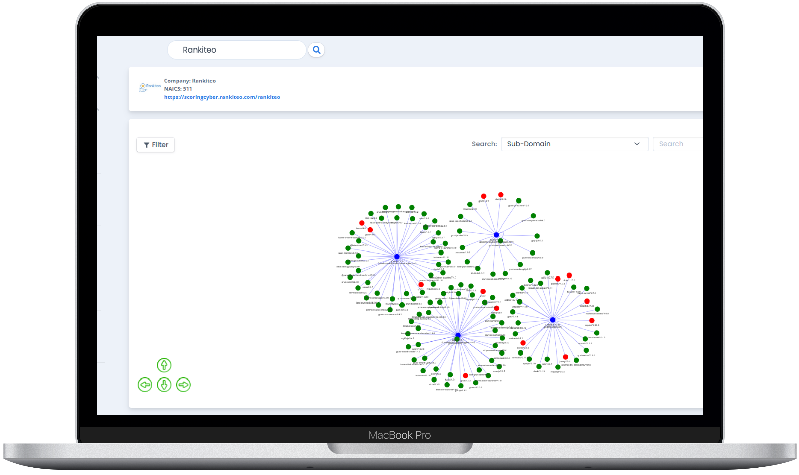
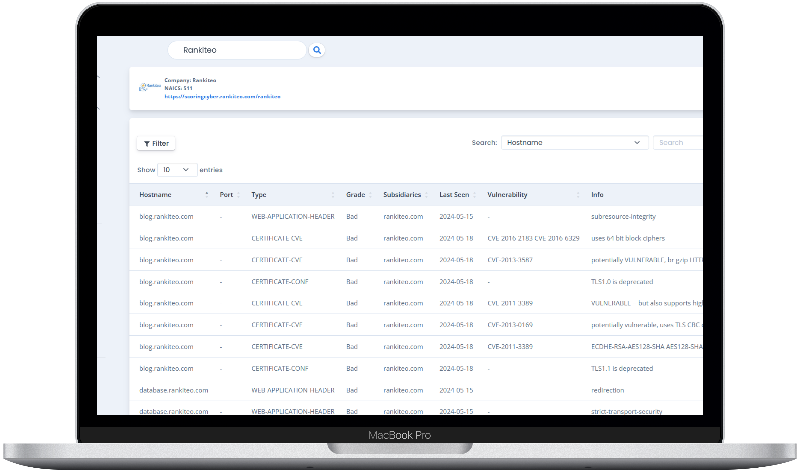
Identify exposed access points, detect misconfigured SSL certificates, and uncover vulnerabilities across the network infrastructure.
Gain visibility into the software components used within an organization to detect vulnerabilities, manage risk, and ensure supply chain security.
Monitor and manage all IT assets and their configurations to ensure accurate, real-time visibility across the company's technology environment.
Leverage real-time insights on active threats, malware campaigns, and emerging vulnerabilities to proactively defend against evolving cyberattacks.







 Rapid
Rapid