













IRS
Company Details
Linkedin ID:
irs
Website:
Employees number:
48,949
Number of followers:
365,225
NAICS:
92
Industry Type:
Homepage:
irs.gov
IP Addresses:
0
Company ID:
INT_1279664
Scan Status:
In-progress


Internal Revenue Service Vendor Cyber Rating & Cyber Score
irs.govWelcome to the Internal Revenue Service’s official LinkedIn account. Here, you will find the latest and greatest news and updates for taxpayers to help them understand and meet their tax responsibilities. Also, this is a place to learn about a meaningful career with the IRS. Check out the tabs above to learn more about us and view job openings. The U.S. government does not promote or endorse any non-government or commercial content appearing on this page. This service is operated by a third party and not an official government website. The IRS strongly discourages you from providing personally identifiable information. Read our privacy policy at www.irs.gov/privacy
Company Details
irs
48,949
365,225
92
irs.gov
0
INT_1279664
In-progress
 IRS Risk Score (AI oriented)
Between 650 and 699
 IRS Global Score (TPRM)
XXXX
Description: A cybercriminal exploited stolen taxpayer data to file fraudulent tax returns, targeting refunds under the victim’s identity. While the IRS has robust safeguards to detect such fraud, the breach exposed sensitive personal and financial information including Social Security numbers, bank details, and tax records. The attackers primarily aimed to monetize the stolen data by opening unauthorized credit cards, selling the information on dark web marketplaces, or directly draining bank accounts via fraudulent transfers. Though the tax refund fraud itself had limited success due to IRS protections, the broader misuse of the compromised data led to financial losses for affected individuals, including unauthorized transactions, credit damage, and potential identity theft. The incident underscored vulnerabilities in third-party systems handling tax-related data, where cybercriminals leveraged phishing or database exploits to harvest credentials. While no large-scale systemic outage occurred, the reputational harm to the IRS and affected taxpayers was significant, eroding trust in digital tax filing security.
Description: IRS Erroneously Shared Taxpayer Data with DHS in Immigration Enforcement Dispute A controversial data-sharing agreement between the IRS and the Department of Homeland Security (DHS) has led to the unauthorized disclosure of thousands of taxpayers’ confidential records, according to a recent court filing. The agreement, signed in April 2023 by Treasury Secretary Scott Bessent and DHS Secretary Kristi Noem, authorized U.S. Immigration and Customs Enforcement (ICE) to submit names and addresses of undocumented immigrants to the IRS for cross-verification against tax records ostensibly to aid deportation efforts. However, IRS Chief Risk and Control Officer Dottie Romo revealed in a declaration filed this week that the agency erroneously shared additional taxpayer information with ICE, including residential addresses, for roughly 47,000 of the 1.28 million names requested. The IRS later acknowledged the error in January, notifying DHS and requesting the improperly shared data be disposed of in accordance with federal law. Advocacy groups, including Public Citizen and the Center for Democracy & Technology, argue the breach violates long-standing privacy protections and could endanger individuals if misused by enforcement agencies. The incident has intensified legal challenges to the IRS-DHS agreement. In November 2023, a federal court blocked the IRS from sharing tax data with DHS, ruling that the agency had unlawfully disseminated migrants’ records the previous summer. A Massachusetts federal court later ordered the IRS to halt the sharing of residential addresses with ICE. The dispute stems from a lawsuit filed by immigrant rights groups shortly after the agreement was signed, which alleged the policy undermined taxpayer privacy and legal safeguards. Critics warn the breach could have broader implications, including the potential for malicious targeting of Americans or further erosion of trust in tax confidentiality. The IRS has not publicly commented on the matter, and the extent of ICE’s use of the shared data remains unclear. The case underscores ongoing tensions between immigration enforcement and data privacy protections within federal agencies.
Description: Unauthorized Social Security Data Access Raises Identity Theft Risks for Millions The Trump administration recently acknowledged in a court filing that U.S. agents accessed and shared sensitive Social Security data without authorization, following whistleblower allegations and a lawsuit claiming the information was misused for political purposes. While the full scope of the exposure remains unclear, cybersecurity and privacy experts warn that the breach underscores a persistent threat: Social Security numbers (SSNs) are among the most valuable tools for identity thieves, enabling fraud that often goes undetected until financial or tax-related damage occurs. Experts emphasize that even limited exposure of SSNs can lead to severe consequences, including fraudulent credit applications, tax refund theft, medical identity theft, and unauthorized account takeovers. Criminals may use stolen data to file bogus insurance claims, manipulate medical records, or open new financial accounts activity that may not appear on traditional credit reports. Former federal prosecutor and privacy advocate Loewry noted that financial crimes rarely originate from credit reports, making proactive monitoring of bank, investment, and retirement accounts critical. To mitigate risks, experts recommend several immediate steps: - Freezing credit at all three major bureaus (Equifax, Experian, TransUnion) and the National Consumer Telecom & Utilities Exchange (NCTUE), which is used for telecom and utility approvals. - Establishing an online Social Security account to prevent criminals from redirecting benefit payments. - Obtaining an IRS Identity Protection PIN to block fraudulent tax filings. - Enabling two-factor authentication on financial and online accounts. - Monitoring the dark web for signs of exposed personal data, such as SSNs or email addresses. The breach highlights broader vulnerabilities in how SSNs are stored and accessed, with experts advising consumers not to wait for confirmation of exposure before taking protective measures. Given the long-term risks including fraud that may surface years after initial exposure vigilance across all financial and medical accounts is essential.
Description: The hackers targeted the networks of Internal Revenue Services and breached the personal information of about 104,000 taxpayers. The stolen information included personal information like Social Security number, date of birth, address, and tax filing status of several years. IRS warned the taxpayers to be alerted of any suspicious activities.
Description: Treasury Cancels Booz Allen Hamilton Contracts After Massive Tax Data Leak The U.S. Department of the Treasury announced on Monday the termination of all contracts with consulting firm Booz Allen Hamilton following a major breach involving the leak of sensitive tax information. The decision comes after former IRS contractor Charles Edward Littlejohn, who worked for Booz Allen, was sentenced in 2024 to five years in prison for disclosing confidential tax records including those of former President Donald Trump to media outlets. Between 2018 and 2020, Littlejohn provided stolen tax data to *The New York Times* and *ProPublica*, an act prosecutors described as "unparalleled in the IRS's history." The breach exposed records belonging to approximately 406,000 individuals, though the Treasury’s statement did not explicitly mention Trump’s leaked returns. Treasury Secretary Scott Bessent stated that the cancellation was necessary to "increase Americans' trust in government," citing Booz Allen’s failure to implement adequate safeguards for sensitive taxpayer data. The department had 31 active contracts with the firm, totaling $4.8 million in annual spending and $21 million in total obligations. Court documents revealed that Littlejohn intentionally sought the contractor role to access Trump’s tax returns, using his technical skills to extract data without detection. At his sentencing in January 2024, he acknowledged his actions, stating, *"I used my skills to systematically violate the privacy of thousands of people."* Booz Allen Hamilton has not yet commented on the termination.


No incidents recorded for Internal Revenue Service in 2026.
No incidents recorded for Internal Revenue Service in 2026.
No incidents recorded for Internal Revenue Service in 2026.
IRS cyber incidents detection timeline including parent company and subsidiaries

Welcome to the Internal Revenue Service’s official LinkedIn account. Here, you will find the latest and greatest news and updates for taxpayers to help them understand and meet their tax responsibilities. Also, this is a place to learn about a meaningful career with the IRS. Check out the tabs above to learn more about us and view job openings. The U.S. government does not promote or endorse any non-government or commercial content appearing on this page. This service is operated by a third party and not an official government website. The IRS strongly discourages you from providing personally identifiable information. Read our privacy policy at www.irs.gov/privacy


Page officielle du ministère de l'Éducation nationale. Retrouvez toute l'information sur www.education.gouv.fr, twitter.com/education_gouv, facebook.com/education.gouv et dans nos lettres d'informations (bulletin hebdo et lettre education.gouv.fr). --------------------------------------------------

The OFFICIAL careers page for the South Australian Government. The South Australian Public Sector is the State's largest workforce. We are an employer of choice that reflects the diverse community we serve. Our people are from a range of backgrounds and vocations, from entry level, mid-career and

The National Institute of Statistics and Geography of Mexico (INEGI) is an autonomous institution of the Federal Public Sector. INEGI is the coordinator of the National System of Statistical and Geographical Information of Mexico. The main objective of INEGI is to provide statistical and geograph

With a workforce of 30,000 people, and opportunities in 1,000 different job categories, the City of Philadelphia is one of the largest employers in Southeastern Pennsylvania. As an employer, we operate through the guiding principles of service, integrity, respect, accountability, collaboration, dive

Workingfor.be is the job platform of the federal administration. Here, you will find a wide variety of jobs in different fields of profession. Every day thousands of our employees help build tomorrow's society. When you choose the federal administration, you choose an employer who embraces you
Official LinkedIn page for the state of Oregon. Oregon is a state in the Pacific Northwest region of the United States. It is located on the Pacific coast, with Washington to the north, California to the south, Nevada on the southeast and Idaho to the east. The Columbia and Snake rivers delineate mu

State government is the largest employer in Tennessee, with approximately 43,500 employees in the three branches of government. The State of Tennessee has approximately 1,300 different job classifications in areas such as administrative, health services, historic preservation, legal, agriculture, co

Montréal est la plus grande ville francophone d’Amérique et elle se distingue par sa vitalité culturelle exceptionnelle et des forces créatrices reconnues mondialement. Elle se développe un peu plus chaque jour en une ville contemporaine, inclusive et dynamique sur les plans économique, culturel

Der Arbeitgeber Niedersachsen vereint über 2000 Dienststellen mit einem gemeinsamen Ziel: Wir gestalten das Leben in Niedersachsen verantwortungsvoll und zukunftsorientiert. Als der größte Arbeitgeber im Land Niedersachsen bieten wir sichere Arbeitsplätze, sinnstiftende Aufgaben und vielfältige Ei
.png)
New tax filers face rising scam risks. A cybersecurity expert explains common IRS impersonation, phishing and fake support schemes to watch for.
IRS chief says agency is engaged in a 'thorough' cybersecurity review. Democratic lawmakers pressed Frank Bisignano on the IRS-ICE data-sharing...
While most IT workers were told it's a temporary detail, several say they are skeptical they will ever return to their tech-centered jobs.
CIO Dustin Goetz said the agency is using Stella, an AI chatbot, to help do the work of lower-level roles in cybersecurity, service desk and...
The Executive Chairman, Ogun State Internal Revenue Service (OGIRS), Mr. Olugbenga Olaleye, has charged Directors, Zonal Controllers,...
The Executive Chairman of the Ogun State Internal Revenue Service, Olugbenga Olaleye, has directed directors, zonal controllers, tax office...
FedScoop takes a detailed look at contingency plans at civilian CFO Act agencies for general tech and Office of the Chief Information...
After 35 years of federal service, Rick Therrien has announced his retirement from government and the start of a new venture, CISOLOGY LLC.
In three major hacks, Treasury didn't deploy cybersecurity measures that could have prevented the attacks or flagged the intruders sooner.

Explore insights on cybersecurity incidents, risk posture, and Rankiteo's assessments.
The official website of Internal Revenue Service is http://www.irs.gov.
According to Rankiteo, Internal Revenue Service’s AI-generated cybersecurity score is 651, reflecting their Weak security posture.
According to Rankiteo, Internal Revenue Service currently holds 0 security badges, indicating that no recognized compliance certifications are currently verified for the organization.
According to Rankiteo, Internal Revenue Service has been affected by a supply chain cyber incident involving Booz Allen Hamilton, with the incident ID BOOIRSUS-1769454012.
According to Rankiteo, Internal Revenue Service is not certified under SOC 2 Type 1.
According to Rankiteo, Internal Revenue Service does not hold a SOC 2 Type 2 certification.
According to Rankiteo, Internal Revenue Service is not listed as GDPR compliant.
According to Rankiteo, Internal Revenue Service does not currently maintain PCI DSS compliance.
According to Rankiteo, Internal Revenue Service is not compliant with HIPAA regulations.
According to Rankiteo,Internal Revenue Service is not certified under ISO 27001, indicating the absence of a formally recognized information security management framework.
Internal Revenue Service operates primarily in the Government Administration industry.
Internal Revenue Service employs approximately 48,949 people worldwide.
Internal Revenue Service presently has no subsidiaries across any sectors.
Internal Revenue Service’s official LinkedIn profile has approximately 365,225 followers.
Internal Revenue Service is classified under the NAICS code 92, which corresponds to Public Administration.
No, Internal Revenue Service does not have a profile on Crunchbase.
Yes, Internal Revenue Service maintains an official LinkedIn profile, which is actively utilized for branding and talent engagement, which can be accessed here: https://www.linkedin.com/company/irs.
As of April 03, 2026, Rankiteo reports that Internal Revenue Service has experienced 5 cybersecurity incidents.
Internal Revenue Service has an estimated 12,425 peer or competitor companies worldwide.
Incident Types: The types of cybersecurity incidents that have occurred include Breach and Cyber Attack.
Total Financial Loss: The total financial loss from these incidents is estimated to be $21 million.
Detection and Response: The company detects and responds to cybersecurity incidents through an communication strategy with irs warned the taxpayers to be alerted of any suspicious activities, and law enforcement notified with potential involvement of irs criminal investigation (ci) unit, law enforcement notified with fbi for severe cases, and containment measures with irs safeguards to detect fraudulent filings, containment measures with identity verification protocols, and remediation measures with victim credit monitoring, remediation measures with fraud alerts on credit reports, remediation measures with irs identity protection pin (ip pin), and recovery measures with disputing fraudulent transactions, recovery measures with filing identity theft affidavits (e.g., irs form 14039), and communication strategy with irs public advisories on tax-related identity theft, communication strategy with victim notification protocols, and enhanced monitoring with credit monitoring services for victims, enhanced monitoring with irs fraud detection systems, and remediation measures with freezing credit at major bureaus and nctue, remediation measures with establishing online social security accounts, remediation measures with obtaining irs identity protection pin, remediation measures with enabling two-factor authentication, remediation measures with monitoring the dark web for exposed data, and law enforcement notified with yes, and containment measures with termination of contracts, and communication strategy with public statement by treasury secretary, and containment measures with irs requested improperly shared data be disposed of, and remediation measures with policy suspension, court-ordered halt to data sharing, and communication strategy with limited public comment..
Title: IRS Data Breach
Description: The hackers targeted the networks of Internal Revenue Services and breached the personal information of about 104,000 taxpayers. The stolen information included personal information like Social Security number, date of birth, address, and tax filing status of several years. IRS warned the taxpayers to be alerted of any suspicious activities.
Type: Data Breach
Title: Tax Refund Fraud and Monetization of Stolen Personal Information
Description: Cybercriminals may use stolen personal information to conduct tax refund fraud by filing a tax return in the target’s name and claiming a refund. This scheme has a low probability of success due to IRS safeguards. More commonly, cybercriminals exploit stolen data year-round to monetize it—such as opening credit cards in the victim’s name, selling the data or access to other criminals, directly transferring funds from bank accounts, or making unauthorized online purchases.
Type: identity theft
Attack Vector: stolen personal informationphishingdata breach (unspecified)
Threat Actor: cybercriminalsfraudstersidentity thieves
Motivation: financial gain
Title: Unauthorized Social Security Data Access Raises Identity Theft Risks for Millions
Description: The Trump administration recently acknowledged in a court filing that U.S. agents accessed and shared sensitive Social Security data without authorization, following whistleblower allegations and a lawsuit claiming the information was misused for political purposes. The breach underscores risks of identity theft, including fraudulent credit applications, tax refund theft, medical identity theft, and unauthorized account takeovers.
Type: Data Breach
Attack Vector: Unauthorized Access
Threat Actor: U.S. agents
Motivation: Political misuse (alleged)
Title: Treasury Cancels Booz Allen Hamilton Contracts After Massive Tax Data Leak
Description: The U.S. Department of the Treasury terminated all contracts with Booz Allen Hamilton following a major breach involving the leak of sensitive tax information by a former IRS contractor. The breach exposed records of approximately 406,000 individuals, including those of former President Donald Trump, and was described as 'unparalleled in the IRS's history.'
Date Publicly Disclosed: 2024-01-01
Type: Data Breach
Attack Vector: Insider Threat
Vulnerability Exploited: Inadequate safeguards for sensitive data
Threat Actor: Charles Edward Littlejohn
Motivation: Intentional disclosure to media outlets
Title: IRS Erroneously Shared Taxpayer Data with DHS in Immigration Enforcement Dispute
Description: A controversial data-sharing agreement between the IRS and the Department of Homeland Security (DHS) led to the unauthorized disclosure of thousands of taxpayers’ confidential records. The IRS erroneously shared additional taxpayer information, including residential addresses, with ICE for roughly 47,000 of the 1.28 million names requested, violating privacy protections and potentially endangering individuals.
Date Detected: 2024-01
Type: Data Breach
Vulnerability Exploited: Policy/Procedural Failure
Threat Actor: Government Agency (IRS/DHS)
Motivation: Immigration Enforcement
Common Attack Types: The most common types of attacks the company has faced is Breach.
Identification of Attack Vectors: The company identifies the attack vectors used in incidents through phishing attacksdata breaches at third-party organizationsmalware infections.

Data Compromised: Social security number, Date of birth, Address, Tax filing status

Financial Loss: potential unauthorized bank transfersfraudulent tax refundsunauthorized credit card charges
Data Compromised: Personal identifiable information (pii), Tax-related data, Bank account details
Customer Complaints: ['potential increase due to identity theft or fraudulent activities']
Brand Reputation Impact: potential reputational damage to affected individuals or institutions
Legal Liabilities: potential liability for financial institutions or tax agencies if negligence is proven
Identity Theft Risk: high
Payment Information Risk: high
Data Compromised: Social Security numbers (SSNs)
Brand Reputation Impact: Potential reputational damage to U.S. government agencies
Legal Liabilities: Lawsuit and regulatory scrutiny
Identity Theft Risk: High (fraudulent credit applications, tax refund theft, medical identity theft, account takeovers)
Financial Loss: $21 million (total contract obligations)
Data Compromised: Sensitive tax records
Systems Affected: IRS tax record systems
Operational Impact: Termination of contracts with Booz Allen Hamilton
Brand Reputation Impact: Loss of trust in government and contractor
Identity Theft Risk: High
Data Compromised: Taxpayer records, residential addresses
Systems Affected: IRS data-sharing systems
Operational Impact: Legal challenges, policy suspension
Brand Reputation Impact: Erosion of trust in tax confidentiality
Legal Liabilities: Ongoing lawsuits, regulatory violations
Identity Theft Risk: High (residential addresses exposed)
Average Financial Loss: The average financial loss per incident is $4.20 million.
Commonly Compromised Data Types: The types of data most commonly compromised in incidents are Personal Information, , Social Security Numbers (Ssn), Taxpayer Identification Numbers, Bank Account Details, Personal Identifiable Information (Pii), , Social Security numbers (SSNs), Tax records, Taxpayer records and residential addresses.
Entity Name: Internal Revenue Services
Entity Type: Government Agency
Industry: Public Administration
Location: United States
Customers Affected: 104000
Entity Type: individuals, taxpayers
Location: United States (IRS jurisdiction)
Entity Name: Internal Revenue Service (IRS)
Entity Type: government agency
Industry: tax administration
Location: United States
Entity Name: U.S. government (Trump administration)
Entity Type: Government
Industry: Public Sector
Location: United States
Customers Affected: Millions (potentially)
Entity Name: U.S. Department of the Treasury
Entity Type: Government Agency
Industry: Public Sector
Location: United States
Size: Large
Customers Affected: 406,000 individuals
Entity Name: Booz Allen Hamilton
Entity Type: Consulting Firm
Industry: Defense and Government Contracting
Location: United States
Size: Large
Entity Name: Internal Revenue Service (IRS)
Entity Type: Government Agency
Industry: Taxation/Government
Location: United States
Size: Large
Customers Affected: 47,000 taxpayers
Entity Name: Department of Homeland Security (DHS)/ICE
Entity Type: Government Agency
Industry: Immigration Enforcement/Government
Location: United States
Size: Large
Communication Strategy: IRS warned the taxpayers to be alerted of any suspicious activities
Law Enforcement Notified: potential involvement of IRS Criminal Investigation (CI) unit, FBI for severe cases,
Containment Measures: IRS safeguards to detect fraudulent filingsidentity verification protocols
Remediation Measures: victim credit monitoringfraud alerts on credit reportsIRS Identity Protection PIN (IP PIN)
Recovery Measures: disputing fraudulent transactionsfiling identity theft affidavits (e.g., IRS Form 14039)
Communication Strategy: IRS public advisories on tax-related identity theftvictim notification protocols
Enhanced Monitoring: credit monitoring services for victimsIRS fraud detection systems
Remediation Measures: Freezing credit at major bureaus and NCTUEEstablishing online Social Security accountsObtaining IRS Identity Protection PINEnabling two-factor authenticationMonitoring the dark web for exposed data
Law Enforcement Notified: Yes
Containment Measures: Termination of contracts
Communication Strategy: Public statement by Treasury Secretary
Containment Measures: IRS requested improperly shared data be disposed of
Remediation Measures: Policy suspension, court-ordered halt to data sharing
Communication Strategy: Limited public comment
Type of Data Compromised: Personal information
Number of Records Exposed: 104000
Personally Identifiable Information: Social Security numberdate of birthaddresstax filing status
Type of Data Compromised: Social security numbers (ssn), Taxpayer identification numbers, Bank account details, Personal identifiable information (pii)
Sensitivity of Data: high
Data Exfiltration: likely, if data was stolen from third-party breaches
Personally Identifiable Information: full nameaddressdate of birthSSNfinancial records
Type of Data Compromised: Social Security numbers (SSNs)
Sensitivity of Data: High (PII)
Personally Identifiable Information: SSNs, potential financial and medical data
Type of Data Compromised: Tax records
Number of Records Exposed: 406,000
Sensitivity of Data: High (confidential taxpayer information)
Data Exfiltration: Yes
Personally Identifiable Information: Yes
Type of Data Compromised: Taxpayer records, residential addresses
Number of Records Exposed: 47,000
Sensitivity of Data: High (PII, residential addresses)
Data Exfiltration: Shared with ICE
Personally Identifiable Information: Names, residential addresses
Prevention of Data Exfiltration: The company takes the following measures to prevent data exfiltration: victim credit monitoring, fraud alerts on credit reports, IRS Identity Protection PIN (IP PIN), , Freezing credit at major bureaus and NCTUE, Establishing online Social Security accounts, Obtaining IRS Identity Protection PIN, Enabling two-factor authentication, Monitoring the dark web for exposed data, , Policy suspension, court-ordered halt to data sharing.
Handling of PII Incidents: The company handles incidents involving personally identifiable information (PII) through by irs safeguards to detect fraudulent filings, identity verification protocols, , termination of contracts and irs requested improperly shared data be disposed of.
Data Recovery from Ransomware: The company recovers data encrypted by ransomware through disputing fraudulent transactions, filing identity theft affidavits (e.g., IRS Form 14039), .
Regulations Violated: potential violations of IRS data protection policies, state-level data breach notification laws if PII is exposed,
Legal Actions: potential lawsuits against entities responsible for data leaks,
Regulatory Notifications: IRS may require notifications for confirmed identity theft cases
Legal Actions: Lawsuit filed
Legal Actions: Criminal prosecution of Charles Edward Littlejohn
Regulations Violated: Taxpayer privacy protections, Federal data-sharing laws,
Legal Actions: Ongoing lawsuits (e.g., immigrant rights groups)
Ensuring Regulatory Compliance: The company ensures compliance with regulatory requirements through potential lawsuits against entities responsible for data leaks, , Lawsuit filed, Criminal prosecution of Charles Edward Littlejohn, Ongoing lawsuits (e.g., immigrant rights groups).
Lessons Learned: Tax-related identity theft highlights the need for proactive monitoring of PII beyond tax season., Multi-factor authentication (MFA) and IP PINs can mitigate fraudulent tax filings., Public awareness campaigns are critical to educate taxpayers on recognizing and reporting identity theft.
Lessons Learned: SSNs are highly valuable for identity theft, and exposure can lead to long-term fraud risks. Proactive monitoring and protective measures (e.g., credit freezes, IRS PINs) are critical even without confirmed exposure.
Lessons Learned: Need for improved safeguards and monitoring of contractors with access to sensitive data
Lessons Learned: Need for stricter controls on government data-sharing agreements; potential risks of exposing sensitive taxpayer information to enforcement agencies.
Recommendations: Enable IRS IP PIN for tax filings to prevent fraudulent returns., Monitor credit reports and bank statements regularly for unauthorized activity., Use identity theft protection services, especially after known data breaches., Report suspected tax fraud to the IRS immediately via Form 14039., Organizations handling PII should implement robust encryption and access controls to prevent data exfiltration.Enable IRS IP PIN for tax filings to prevent fraudulent returns., Monitor credit reports and bank statements regularly for unauthorized activity., Use identity theft protection services, especially after known data breaches., Report suspected tax fraud to the IRS immediately via Form 14039., Organizations handling PII should implement robust encryption and access controls to prevent data exfiltration.Enable IRS IP PIN for tax filings to prevent fraudulent returns., Monitor credit reports and bank statements regularly for unauthorized activity., Use identity theft protection services, especially after known data breaches., Report suspected tax fraud to the IRS immediately via Form 14039., Organizations handling PII should implement robust encryption and access controls to prevent data exfiltration.Enable IRS IP PIN for tax filings to prevent fraudulent returns., Monitor credit reports and bank statements regularly for unauthorized activity., Use identity theft protection services, especially after known data breaches., Report suspected tax fraud to the IRS immediately via Form 14039., Organizations handling PII should implement robust encryption and access controls to prevent data exfiltration.Enable IRS IP PIN for tax filings to prevent fraudulent returns., Monitor credit reports and bank statements regularly for unauthorized activity., Use identity theft protection services, especially after known data breaches., Report suspected tax fraud to the IRS immediately via Form 14039., Organizations handling PII should implement robust encryption and access controls to prevent data exfiltration.
Recommendations: Freeze credit at Equifax, Experian, TransUnion, and NCTUE, Establish an online Social Security account to prevent benefit redirection, Obtain an IRS Identity Protection PIN, Enable two-factor authentication on financial and online accounts, Monitor the dark web for exposed SSNs or email addresses, Vigilantly monitor financial and medical accounts for fraudFreeze credit at Equifax, Experian, TransUnion, and NCTUE, Establish an online Social Security account to prevent benefit redirection, Obtain an IRS Identity Protection PIN, Enable two-factor authentication on financial and online accounts, Monitor the dark web for exposed SSNs or email addresses, Vigilantly monitor financial and medical accounts for fraudFreeze credit at Equifax, Experian, TransUnion, and NCTUE, Establish an online Social Security account to prevent benefit redirection, Obtain an IRS Identity Protection PIN, Enable two-factor authentication on financial and online accounts, Monitor the dark web for exposed SSNs or email addresses, Vigilantly monitor financial and medical accounts for fraudFreeze credit at Equifax, Experian, TransUnion, and NCTUE, Establish an online Social Security account to prevent benefit redirection, Obtain an IRS Identity Protection PIN, Enable two-factor authentication on financial and online accounts, Monitor the dark web for exposed SSNs or email addresses, Vigilantly monitor financial and medical accounts for fraudFreeze credit at Equifax, Experian, TransUnion, and NCTUE, Establish an online Social Security account to prevent benefit redirection, Obtain an IRS Identity Protection PIN, Enable two-factor authentication on financial and online accounts, Monitor the dark web for exposed SSNs or email addresses, Vigilantly monitor financial and medical accounts for fraudFreeze credit at Equifax, Experian, TransUnion, and NCTUE, Establish an online Social Security account to prevent benefit redirection, Obtain an IRS Identity Protection PIN, Enable two-factor authentication on financial and online accounts, Monitor the dark web for exposed SSNs or email addresses, Vigilantly monitor financial and medical accounts for fraud
Recommendations: Enhance insider threat detection, implement stricter access controls, and conduct regular audits of contractor activities
Recommendations: Review and strengthen IRS-DHS data-sharing policies; implement audit mechanisms for inter-agency data requests; enhance transparency and public accountability.
Key Lessons Learned: The key lessons learned from past incidents are Tax-related identity theft highlights the need for proactive monitoring of PII beyond tax season.,Multi-factor authentication (MFA) and IP PINs can mitigate fraudulent tax filings.,Public awareness campaigns are critical to educate taxpayers on recognizing and reporting identity theft.SSNs are highly valuable for identity theft, and exposure can lead to long-term fraud risks. Proactive monitoring and protective measures (e.g., credit freezes, IRS PINs) are critical even without confirmed exposure.Need for improved safeguards and monitoring of contractors with access to sensitive dataNeed for stricter controls on government data-sharing agreements; potential risks of exposing sensitive taxpayer information to enforcement agencies.
Implemented Recommendations: The company has implemented the following recommendations to improve cybersecurity: Enhance insider threat detection, implement stricter access controls, and conduct regular audits of contractor activities and Review and strengthen IRS-DHS data-sharing policies; implement audit mechanisms for inter-agency data requests; enhance transparency and public accountability..
Source: Internal Revenue Service (IRS)
URL: https://www.irs.gov/identity-theft-fraud-scams/identity-theft
Source: Federal Trade Commission (FTC) - Identity Theft Resources
Source: Court filing (Trump administration)
Source: U.S. Department of the Treasury
Source: Court Documents
Source: The New York Times
Source: ProPublica
Source: Court filing (IRS Chief Risk and Control Officer Dottie Romo)
Source: Public Citizen and Center for Democracy & Technology
Source: Federal court rulings (Massachusetts)
Additional Resources: Stakeholders can find additional resources on cybersecurity best practices at and Source: Internal Revenue Service (IRS)Url: https://www.irs.gov/identity-theft-fraud-scams/identity-theft, and Source: Federal Trade Commission (FTC) - Identity Theft ResourcesUrl: https://www.identitytheft.gov/, and Source: Court filing (Trump administration), and Source: U.S. Department of the Treasury, and Source: Court Documents, and Source: The New York Times, and Source: ProPublica, and Source: Court filing (IRS Chief Risk and Control Officer Dottie Romo), and Source: Public Citizen and Center for Democracy & Technology, and Source: Federal court rulings (Massachusetts).
Investigation Status: Completed (sentencing of threat actor)
Investigation Status: Ongoing (legal challenges, policy review)
Communication of Investigation Status: The company communicates the status of incident investigations to stakeholders through Irs Warned The Taxpayers To Be Alerted Of Any Suspicious Activities, Irs Public Advisories On Tax-Related Identity Theft, Victim Notification Protocols, Public statement by Treasury Secretary and Limited public comment.
Stakeholder Advisories: Irs Publishes Annual Warnings About Tax-Related Identity Theft During Filing Season..
Customer Advisories: Taxpayers are advised to file taxes early to reduce the window for fraudulent filings.
Customer Advisories: Consumers advised to take protective measures regardless of confirmed exposure.
Stakeholder Advisories: Public statement by Treasury Secretary Scott Bessent
Stakeholder Advisories: Immigrant rights groups, taxpayer advocacy organizations
Advisories Provided: The company provides the following advisories to stakeholders and customers following an incident: were Irs Publishes Annual Warnings About Tax-Related Identity Theft During Filing Season., Taxpayers Are Advised To File Taxes Early To Reduce The Window For Fraudulent Filings., , Consumers advised to take protective measures regardless of confirmed exposure., Public statement by Treasury Secretary Scott Bessent, Immigrant rights groups and taxpayer advocacy organizations.
Entry Point: Phishing Attacks, Data Breaches At Third-Party Organizations, Malware Infections,
High Value Targets: Taxpayer Pii, Financial Account Credentials,
Data Sold on Dark Web: Taxpayer Pii, Financial Account Credentials,
High Value Targets: Former President Donald Trump's tax returns
Data Sold on Dark Web: Former President Donald Trump's tax returns
Root Causes: Weak Protection Of Pii By Third-Party Entities (E.G., Employers, Financial Institutions)., Lack Of Public Awareness About Tax-Related Identity Theft Risks., Delayed Detection Of Fraudulent Activities Due To Manual Review Processes.,
Corrective Actions: Strengthen Irs Fraud Detection Algorithms To Flag Suspicious Filings., Mandate Ip Pin Usage For High-Risk Taxpayers., Improve Collaboration Between Financial Institutions And Tax Agencies To Share Threat Intelligence.,
Root Causes: Unauthorized access and sharing of SSNs by U.S. agents (alleged misuse)
Root Causes: Inadequate safeguards for sensitive data, insider threat exploitation
Corrective Actions: Termination of contracts with Booz Allen Hamilton
Root Causes: Flawed data-sharing agreement; lack of procedural safeguards; miscommunication between IRS and DHS
Corrective Actions: Court-ordered suspension of data sharing; policy review; potential legislative reforms
Post-Incident Analysis Process: The company's process for conducting post-incident analysis is described as Credit Monitoring Services For Victims, Irs Fraud Detection Systems, .
Corrective Actions Taken: The company has taken the following corrective actions based on post-incident analysis: Strengthen Irs Fraud Detection Algorithms To Flag Suspicious Filings., Mandate Ip Pin Usage For High-Risk Taxpayers., Improve Collaboration Between Financial Institutions And Tax Agencies To Share Threat Intelligence., , Termination of contracts with Booz Allen Hamilton, Court-ordered suspension of data sharing; policy review; potential legislative reforms.
Last Attacking Group: The attacking group in the last incident were an cybercriminalsfraudstersidentity thieves, U.S. agents, Charles Edward Littlejohn and Government Agency (IRS/DHS).
Most Recent Incident Detected: The most recent incident detected was on 2024-01.
Most Recent Incident Publicly Disclosed: The most recent incident publicly disclosed was on 2024-01-01.
Most Significant Data Compromised: The most significant data compromised in an incident were Social Security number, date of birth, address, tax filing status, , personal identifiable information (PII), tax-related data, bank account details, , Social Security numbers (SSNs), Sensitive tax records, Taxpayer records and residential addresses.
Containment Measures in Most Recent Incident: The containment measures taken in the most recent incident were IRS safeguards to detect fraudulent filingsidentity verification protocols, Termination of contracts and IRS requested improperly shared data be disposed of.
Most Sensitive Data Compromised: The most sensitive data compromised in a breach were date of birth, tax filing status, Social Security numbers (SSNs), personal identifiable information (PII), tax-related data, address, Taxpayer records, residential addresses, Sensitive tax records, Social Security number and bank account details.
Number of Records Exposed in Most Significant Breach: The number of records exposed in the most significant breach was 453.1K.
Most Significant Legal Action: The most significant legal action taken for a regulatory violation was potential lawsuits against entities responsible for data leaks, , Lawsuit filed, Criminal prosecution of Charles Edward Littlejohn, Ongoing lawsuits (e.g., immigrant rights groups).
Most Significant Lesson Learned: The most significant lesson learned from past incidents was Public awareness campaigns are critical to educate taxpayers on recognizing and reporting identity theft., SSNs are highly valuable for identity theft, and exposure can lead to long-term fraud risks. Proactive monitoring and protective measures (e.g., credit freezes, IRS PINs) are critical even without confirmed exposure., Need for improved safeguards and monitoring of contractors with access to sensitive data, Need for stricter controls on government data-sharing agreements; potential risks of exposing sensitive taxpayer information to enforcement agencies.
Most Significant Recommendation Implemented: The most significant recommendation implemented to improve cybersecurity was Use identity theft protection services, especially after known data breaches., Obtain an IRS Identity Protection PIN, Monitor credit reports and bank statements regularly for unauthorized activity., Review and strengthen IRS-DHS data-sharing policies; implement audit mechanisms for inter-agency data requests; enhance transparency and public accountability., Monitor the dark web for exposed SSNs or email addresses, Vigilantly monitor financial and medical accounts for fraud, Report suspected tax fraud to the IRS immediately via Form 14039., Establish an online Social Security account to prevent benefit redirection, Organizations handling PII should implement robust encryption and access controls to prevent data exfiltration., Enhance insider threat detection, implement stricter access controls, and conduct regular audits of contractor activities, Enable IRS IP PIN for tax filings to prevent fraudulent returns., Enable two-factor authentication on financial and online accounts, Freeze credit at Equifax, Experian, TransUnion and and NCTUE.
Most Recent Source: The most recent source of information about an incident are Internal Revenue Service (IRS), Public Citizen and Center for Democracy & Technology, Federal court rulings (Massachusetts), Court filing (IRS Chief Risk and Control Officer Dottie Romo), Court Documents, ProPublica, Court filing (Trump administration), The New York Times, U.S. Department of the Treasury and Federal Trade Commission (FTC) - Identity Theft Resources.
Most Recent URL for Additional Resources: The most recent URL for additional resources on cybersecurity best practices is https://www.irs.gov/identity-theft-fraud-scams/identity-theft, https://www.identitytheft.gov/ .
Current Status of Most Recent Investigation: The current status of the most recent investigation is Completed (sentencing of threat actor).
Most Recent Stakeholder Advisory: The most recent stakeholder advisory issued was IRS publishes annual warnings about tax-related identity theft during filing season., Public statement by Treasury Secretary Scott Bessent, Immigrant rights groups, taxpayer advocacy organizations, .
Most Recent Customer Advisory: The most recent customer advisory issued were an Taxpayers are advised to file taxes early to reduce the window for fraudulent filings. and Consumers advised to take protective measures regardless of confirmed exposure.
Most Significant Root Cause: The most significant root cause identified in post-incident analysis was Weak protection of PII by third-party entities (e.g., employers, financial institutions).Lack of public awareness about tax-related identity theft risks.Delayed detection of fraudulent activities due to manual review processes., Unauthorized access and sharing of SSNs by U.S. agents (alleged misuse), Inadequate safeguards for sensitive data, insider threat exploitation, Flawed data-sharing agreement; lack of procedural safeguards; miscommunication between IRS and DHS.
Most Significant Corrective Action: The most significant corrective action taken based on post-incident analysis was Strengthen IRS fraud detection algorithms to flag suspicious filings.Mandate IP PIN usage for high-risk taxpayers.Improve collaboration between financial institutions and tax agencies to share threat intelligence., Termination of contracts with Booz Allen Hamilton, Court-ordered suspension of data sharing; policy review; potential legislative reforms.
.png)
A vulnerability was found in Nothings stb up to 1.26. Impacted is the function stbtt_InitFont_internal in the library stb_truetype.h of the component TTF File Handler. Performing a manipulation results in out-of-bounds read. Remote exploitation of the attack is possible. The exploit has been made public and could be used. The vendor was contacted early about this disclosure but did not respond in any way.
V-SFT versions 6.2.10.0 and prior contain an out-of-bounds read in VS6ComFile!get_macro_mem_COM. Opening a crafted V7 file may lead to information disclosure from the affected product.
V-SFT versions 6.2.10.0 and prior contain a stack-based buffer overflow in VS6ComFile!CSaveData::_conv_AnimationItem. Opening a crafted V7 file may lead to arbitrary code execution on the affected product.
V-SFT versions 6.2.10.0 and prior contain an out-of-bounds read vulnerability in VS6MemInIF!set_temp_type_default. Opening a crafted V7 file may lead to information disclosure from the affected product.
V-SFT versions 6.2.10.0 and prior contain an out-of-bounds read vulnerability in VS6ComFile!load_link_inf. Opening a crafted V7 file may lead to information disclosure from the affected product.

Get company history

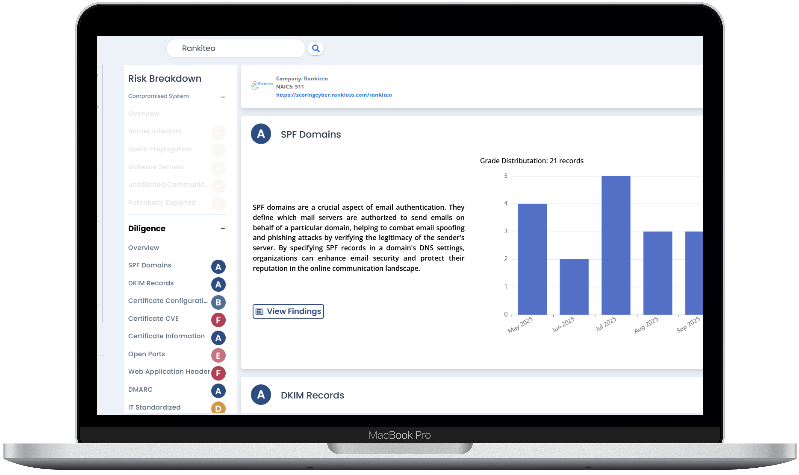
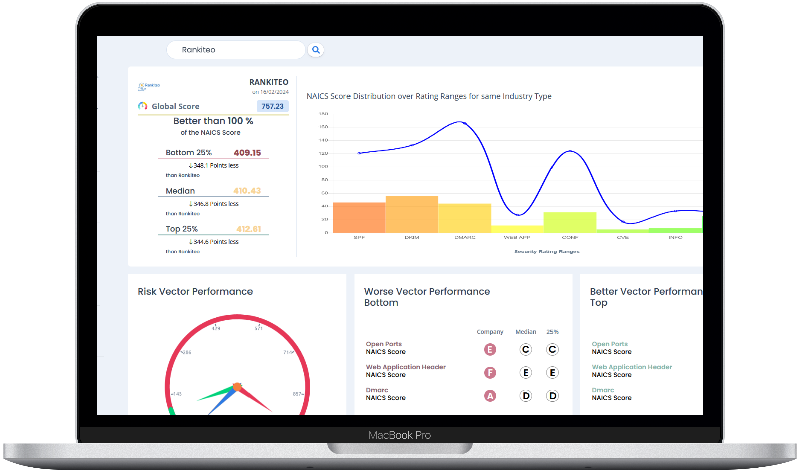
Every week, Rankiteo analyzes billions of signals to give organizations a sharper, faster view of emerging risks. With deeper, more actionable intelligence at their fingertips, security teams can outpace threat actors, respond instantly to Zero-Day attacks, and dramatically shrink their risk exposure window.
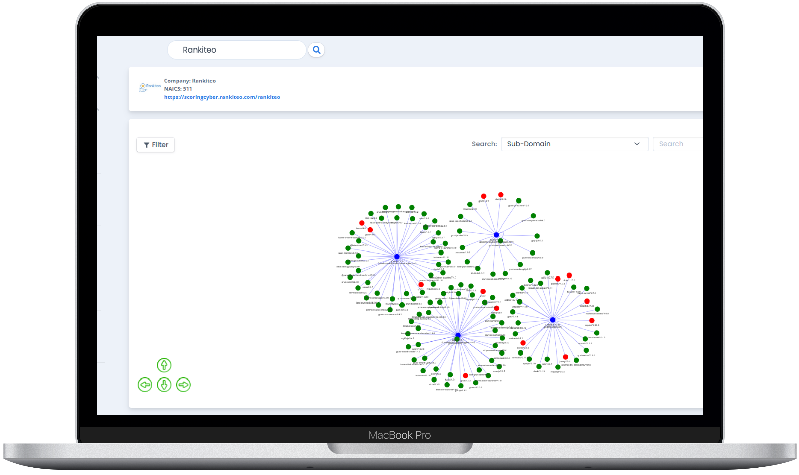
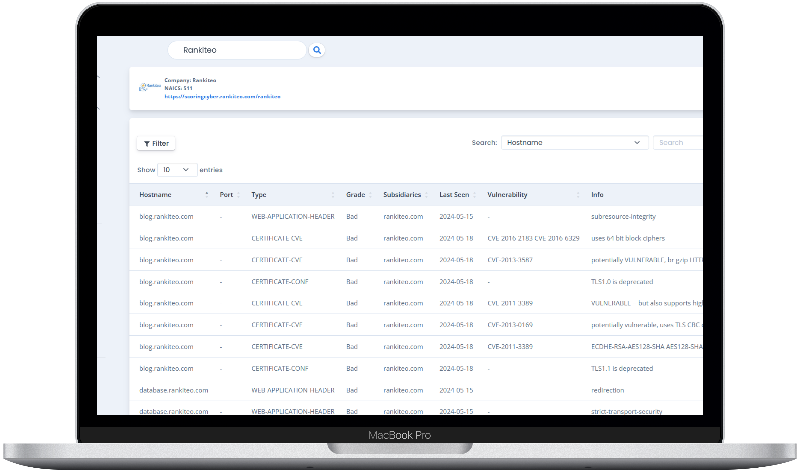
Identify exposed access points, detect misconfigured SSL certificates, and uncover vulnerabilities across the network infrastructure.
Gain visibility into the software components used within an organization to detect vulnerabilities, manage risk, and ensure supply chain security.
Monitor and manage all IT assets and their configurations to ensure accurate, real-time visibility across the company's technology environment.
Leverage real-time insights on active threats, malware campaigns, and emerging vulnerabilities to proactively defend against evolving cyberattacks.



 Booz Allen Hamilton


 Rapid
Rapid