








Columbia University
Company Details
Linkedin ID:
columbia-university
Website:
Employees number:
23,329
Number of followers:
740,462
NAICS:
6113
Industry Type:
Homepage:
columbia.edu
IP Addresses:
614
Company ID:
COL_3351048
Scan Status:
Completed


Columbia University Vendor Cyber Rating & Cyber Score
columbia.eduFor more than 250 years, Columbia has been a leader in higher education in the nation and around the world. At the core of our wide range of academic inquiry is the commitment to attract and engage the best minds in pursuit of greater human understanding, pioneering new discoveries and service to society.
Company Details
columbia-university
23,329
740,462
6113
columbia.edu
614
COL_3351048
Completed
 Columbia University Risk Score (AI oriented)
Between 750 and 799
 Columbia University Global Score (TPRM)
XXXX
Description: Higher Education Under Siege: A Wave of Cyberattacks Exposes Systemic Vulnerabilities In the first half of 2025, a surge of cyberattacks has targeted major U.S. universities, exposing critical weaknesses in higher education’s cybersecurity defenses. The University of Pennsylvania, Harvard University, and Princeton University all reported breaches within the past two months, following earlier incidents at Columbia University, Dartmouth College, and New York University. Each institution confirmed the attacks stemmed from social engineering, with Harvard and Princeton specifically citing phone-based phishing as the entry point. Officials at the affected schools stated they acted swiftly to contain the breaches and are reinforcing security measures. However, experts warn that universities face an uphill battle. Mike Corn, a former chief information security officer in higher education and current consultant at Vantage Technology, noted that colleges operate like "small cities," with decentralized networks, personal devices, and diverse user behaviors creating countless vulnerabilities. Even robust investments in cybersecurity, he argued, cannot guarantee immunity from attacks especially as AI-driven threats grow more sophisticated. The challenges extend beyond technology. Brian Nichols, CIO at the University of Kentucky, highlighted that while phishing simulations and training have improved awareness, they are not foolproof. Anita Nikolich, director of research and technology innovation at the University of Illinois at Urbana-Champaign, warned that punitive security measures can backfire, alienating faculty who may resist protocols perceived as restrictive. A core tension lies in academic freedom versus centralized IT control: many universities allow individual departments such as medical or business schools to maintain separate IT teams, increasing risk. Nikolich, who previously led IT infrastructure at the University of Chicago, described this fragmentation as a "huge risk factor," as decentralized systems complicate consistent security enforcement. Faculty resistance further complicates the issue. Janice Lanham, a nursing lecturer at Clemson University, nearly fell victim to a phishing scam but caught the deception in time. Yet, as Brian Voss, Clemson’s CIO, observed, some professors view security protocols as obstacles to research and teaching. Voss described a "culture of subservience" in higher-ed IT, where departments prioritize faculty demands over security, often retaining excessive data including sensitive information like Social Security numbers despite the risks. His efforts to reduce data storage have met resistance, with one university even retaining personal data for voter registration purposes, creating what he called "piles of gold for bad guys." The conflict between research needs and security is particularly acute. Nikolich, who also conducts quantum computing research, faced initial pushback when requesting network data for her work. After demonstrating the data’s non-sensitive nature and potential security benefits, she gained access but noted that other universities default to blanket denials. When researchers are blocked, she warned, they often bypass official channels, increasing exposure. The solution, Nikolich suggested, lies in collaboration: IT, security teams, and faculty must treat cybersecurity as a shared priority, balancing innovation with protection. Until then, universities remain prime targets caught between the demands of open academic environments and the escalating sophistication of cyber threats.


Columbia University has 45.05% fewer incidents than the average of same-industry companies with at least one recorded incident.
Columbia University has 13.79% fewer incidents than the average of all companies with at least one recorded incident.
Columbia University reported 1 incidents this year: 0 cyber attacks, 0 ransomware, 0 vulnerabilities, 1 data breaches, compared to industry peers with at least 1 incident.
Columbia University cyber incidents detection timeline including parent company and subsidiaries

For more than 250 years, Columbia has been a leader in higher education in the nation and around the world. At the core of our wide range of academic inquiry is the commitment to attract and engage the best minds in pursuit of greater human understanding, pioneering new discoveries and service to society.


FIU is Miami's public research university. Offering bachelor's, master's and doctoral degrees, both on campus and fully online. Designated a Preeminent State Research University, FIU emphasizes research as a major component in the university's mission. For more than 50 years, FIU has positioned

The University of Utah, located in Salt Lake City in the foothills of the Wasatch Mountains, is the flagship institution of higher learning in Utah. Founded in 1850, it serves over 31,000 students from across the U.S. and the world. With over 72 major subjects at the undergraduate level and more tha

Página oficial. La Universidad Nacional de Colombia fue creada en 1867 por medio de la expedición de la Ley 66 del Congreso de la República, como un ente universitario con plena autonomía vinculado al Ministerio de Educación Nacional, con régimen especial, de carácter público y perteneciente al Esta

A Universidade de São Paulo (USP) é uma universidade pública, mantida pelo Estado de São Paulo e ligada à Secretaria de Desenvolvimento Econômico, Ciência, Tecnologia e Inovação (SDECTI). O talento e dedicação dos docentes, alunos e funcionários têm sido reconhecidos por diferentes rankings mundiais

Founded in 1831, NYU is one of the world’s foremost research universities and is a member of the selective Association of American Universities. The first Global Network University, NYU has degree-granting university campuses in New York and Abu Dhabi, and has announced a third in Shanghai; has a do

Kansas State University, often referred to as K-State, is an institution of higher learning located in Manhattan, Kansas, in the United States. A branch campus, including the College of Technology and Aviation, is located in Salina, Kansas. A third campus, K-State Olathe, officially opened on Apri

Stanford is a place of discovery, creativity and innovation located in the San Francisco Bay Area on the ancestral land of the Muwekma Ohlone Tribe. Dedicated to our founding mission—benefitting society through research and education—we are working toward a sustainable future, accelerating the impac

With more than 34,000 students and 7,000 faculty and staff, North Carolina State University is a comprehensive university known for its leadership in education and research, and globally recognized for its science, technology, engineering and mathematics leadership. NC State students, faculty and

Uppsala University strives to bring new perspectives to the basic questions of science as well as knowledge contributing to sustainable development and human health. We offer 39 different master programmes covering over 60 different specialisations. In Uppsala you walk in the gardens of Linnaeus, fo
.png)
There's nothing better than when we have a celebrity sub-in for a blog post! Welcome, Jason Healey! One of SIPA's extraordinary faculty...
A ransomware attack last year has reportedly caused the personal information of more than 1 million people to have been compromised.
The professional landscape for technology leaders is undergoing a seismic shift as we approach 2026. With the global cybersecurity workforce...
The medical center canceled all elective procedures and shut off many systems, reverting to paper-based processes to keep emergency care...
If you've fallen for an online scam or hack recently, you're far from alone. Experts say that both the volume and sophistication of online attacks are...
The hack came during the summer of 2025, when Columbia was negotiating with the Trump administration to restore hundreds of millions of...
Bringing Cutting-Edge Faculty Expertise and Policy Insights on Today's Most Urgent Global Challenges to Leaders Around the World.
On July 2, 2025, we informed the Columbia University community that an unauthorized party had accessed our network, stolen data,...
Multiple lawsuits have been filed against Princeton in the wake of a widespread cybersecurity breach.

Explore insights on cybersecurity incidents, risk posture, and Rankiteo's assessments.
The official website of Columbia University is http://columbia.edu.
According to Rankiteo, Columbia University’s AI-generated cybersecurity score is 752, reflecting their Fair security posture.
According to Rankiteo, Columbia University currently holds 0 security badges, indicating that no recognized compliance certifications are currently verified for the organization.
According to Rankiteo, Columbia University has been affected by a supply chain cyber incident involving Oracle, with the incident ID DARHARPRICOLCLE1767881845.
According to Rankiteo, Columbia University is not certified under SOC 2 Type 1.
According to Rankiteo, Columbia University does not hold a SOC 2 Type 2 certification.
According to Rankiteo, Columbia University is not listed as GDPR compliant.
According to Rankiteo, Columbia University does not currently maintain PCI DSS compliance.
According to Rankiteo, Columbia University is not compliant with HIPAA regulations.
According to Rankiteo,Columbia University is not certified under ISO 27001, indicating the absence of a formally recognized information security management framework.
Columbia University operates primarily in the Higher Education industry.
Columbia University employs approximately 23,329 people worldwide.
Columbia University presently has no subsidiaries across any sectors.
Columbia University’s official LinkedIn profile has approximately 740,462 followers.
Columbia University is classified under the NAICS code 6113, which corresponds to Colleges, Universities, and Professional Schools.
No, Columbia University does not have a profile on Crunchbase.
Yes, Columbia University maintains an official LinkedIn profile, which is actively utilized for branding and talent engagement, which can be accessed here: https://www.linkedin.com/company/columbia-university.
As of April 02, 2026, Rankiteo reports that Columbia University has experienced 1 cybersecurity incidents.
Columbia University has an estimated 15,823 peer or competitor companies worldwide.
Incident Types: The types of cybersecurity incidents that have occurred include Breach.
Detection and Response: The company detects and responds to cybersecurity incidents through an incident response plan activated with yes, and containment measures with removed hackers' access to internal systems, and remediation measures with stepped up security protocols, and communication strategy with public statements to stakeholders..
Title: Multiple University Data Breaches Due to Social Engineering Attacks
Description: In the past two months, the University of Pennsylvania, Harvard University, and Princeton University have fallen victim to data breaches attributed to social engineering attacks, specifically phone-based phishing. Earlier in 2025, Columbia University, Dartmouth College, and New York University also experienced similar incidents. These breaches highlight vulnerabilities in higher education cybersecurity infrastructure.
Type: Data Breach
Attack Vector: Social Engineering (Phone-based Phishing)
Vulnerability Exploited: Human error, lack of centralized IT control, decentralized IT departments
Common Attack Types: The most common types of attacks the company has faced is Breach.
Identification of Attack Vectors: The company identifies the attack vectors used in incidents through Phone-based phishing (social engineering).

Data Compromised: Personal data of students, faculty, and staff
Systems Affected: Internal university systems
Operational Impact: Disruption of university operations, increased security protocols
Brand Reputation Impact: Reputational damage to affected universities
Identity Theft Risk: High (potential exposure of personally identifiable information)
Commonly Compromised Data Types: The types of data most commonly compromised in incidents are Personal data and potentially including personally identifiable information.
Entity Name: University of Pennsylvania
Entity Type: University
Industry: Higher Education
Location: United States
Size: Large
Customers Affected: Thousands of students, faculty, and staff
Entity Name: Harvard University
Entity Type: University
Industry: Higher Education
Location: United States
Size: Large
Customers Affected: Thousands of students, faculty, and staff
Entity Name: Princeton University
Entity Type: University
Industry: Higher Education
Location: United States
Size: Large
Customers Affected: Thousands of students, faculty, and staff
Entity Name: Columbia University
Entity Type: University
Industry: Higher Education
Location: United States
Size: Large
Customers Affected: Thousands of students, faculty, and staff
Entity Name: Dartmouth College
Entity Type: University
Industry: Higher Education
Location: United States
Size: Large
Customers Affected: Thousands of students, faculty, and staff
Entity Name: New York University
Entity Type: University
Industry: Higher Education
Location: United States
Size: Large
Customers Affected: Thousands of students, faculty, and staff
Incident Response Plan Activated: Yes
Containment Measures: Removed hackers' access to internal systems
Remediation Measures: Stepped up security protocols
Communication Strategy: Public statements to stakeholders
Incident Response Plan: The company's incident response plan is described as Yes.
Type of Data Compromised: Personal data, potentially including personally identifiable information
Sensitivity of Data: High (personal and potentially sensitive information)
Personally Identifiable Information: Likely (e.g., Social Security numbers, payroll data)
Prevention of Data Exfiltration: The company takes the following measures to prevent data exfiltration: Stepped up security protocols.
Handling of PII Incidents: The company handles incidents involving personally identifiable information (PII) through by removed hackers' access to internal systems.
Lessons Learned: Universities are highly vulnerable to cyberattacks due to decentralized IT structures, lack of centralized control, and human error. Cybersecurity training and awareness are critical but not sufficient alone. There is a need for better collaboration between IT departments and faculty to balance security with academic freedom.
Recommendations: Implement more centralized IT control to reduce vulnerabilities from decentralized departments., Enhance cybersecurity training and awareness programs, focusing on non-punitive approaches., Limit data retention to reduce the risk of exposure (e.g., avoid storing unnecessary sensitive data like Social Security numbers)., Foster partnerships between IT, security teams, and faculty to align research needs with cybersecurity protocols., Adopt adaptive security measures like behavioral WAFs and enhanced monitoring to detect and respond to threats more effectively.Implement more centralized IT control to reduce vulnerabilities from decentralized departments., Enhance cybersecurity training and awareness programs, focusing on non-punitive approaches., Limit data retention to reduce the risk of exposure (e.g., avoid storing unnecessary sensitive data like Social Security numbers)., Foster partnerships between IT, security teams, and faculty to align research needs with cybersecurity protocols., Adopt adaptive security measures like behavioral WAFs and enhanced monitoring to detect and respond to threats more effectively.Implement more centralized IT control to reduce vulnerabilities from decentralized departments., Enhance cybersecurity training and awareness programs, focusing on non-punitive approaches., Limit data retention to reduce the risk of exposure (e.g., avoid storing unnecessary sensitive data like Social Security numbers)., Foster partnerships between IT, security teams, and faculty to align research needs with cybersecurity protocols., Adopt adaptive security measures like behavioral WAFs and enhanced monitoring to detect and respond to threats more effectively.Implement more centralized IT control to reduce vulnerabilities from decentralized departments., Enhance cybersecurity training and awareness programs, focusing on non-punitive approaches., Limit data retention to reduce the risk of exposure (e.g., avoid storing unnecessary sensitive data like Social Security numbers)., Foster partnerships between IT, security teams, and faculty to align research needs with cybersecurity protocols., Adopt adaptive security measures like behavioral WAFs and enhanced monitoring to detect and respond to threats more effectively.Implement more centralized IT control to reduce vulnerabilities from decentralized departments., Enhance cybersecurity training and awareness programs, focusing on non-punitive approaches., Limit data retention to reduce the risk of exposure (e.g., avoid storing unnecessary sensitive data like Social Security numbers)., Foster partnerships between IT, security teams, and faculty to align research needs with cybersecurity protocols., Adopt adaptive security measures like behavioral WAFs and enhanced monitoring to detect and respond to threats more effectively.
Key Lessons Learned: The key lessons learned from past incidents are Universities are highly vulnerable to cyberattacks due to decentralized IT structures, lack of centralized control, and human error. Cybersecurity training and awareness are critical but not sufficient alone. There is a need for better collaboration between IT departments and faculty to balance security with academic freedom.
Source: Chronicle of Higher Education
Additional Resources: Stakeholders can find additional resources on cybersecurity best practices at and Source: Chronicle of Higher Education.
Investigation Status: Ongoing
Communication of Investigation Status: The company communicates the status of incident investigations to stakeholders through Public statements to stakeholders.
Stakeholder Advisories: Universities have issued public statements to stakeholders about the breaches and steps taken to mitigate risks.
Advisories Provided: The company provides the following advisories to stakeholders and customers following an incident: was Universities have issued public statements to stakeholders about the breaches and steps taken to mitigate risks..
Entry Point: Phone-based phishing (social engineering)
Root Causes: Human Error (Falling For Phishing Attacks), Decentralized It Departments Creating Inconsistent Security Protocols, Lack Of Centralized Control Over Technology Use, Excessive Data Retention (E.G., Storing Social Security Numbers Unnecessarily), Faculty Resistance To It Policies Due To Perceived Restrictions On Academic Freedom,
Corrective Actions: Removing Hackers' Access To Systems, Stepping Up Security Protocols, Enhancing Cybersecurity Training For Faculty And Staff,
Corrective Actions Taken: The company has taken the following corrective actions based on post-incident analysis: Removing Hackers' Access To Systems, Stepping Up Security Protocols, Enhancing Cybersecurity Training For Faculty And Staff, .
Most Significant Data Compromised: The most significant data compromised in an incident were Personal data of students, faculty and and staff.
Containment Measures in Most Recent Incident: The containment measures taken in the most recent incident was Removed hackers' access to internal systems.
Most Sensitive Data Compromised: The most sensitive data compromised in a breach were Personal data of students, faculty and and staff.
Most Significant Lesson Learned: The most significant lesson learned from past incidents was Universities are highly vulnerable to cyberattacks due to decentralized IT structures, lack of centralized control, and human error. Cybersecurity training and awareness are critical but not sufficient alone. There is a need for better collaboration between IT departments and faculty to balance security with academic freedom.
Most Significant Recommendation Implemented: The most significant recommendation implemented to improve cybersecurity was Limit data retention to reduce the risk of exposure (e.g., avoid storing unnecessary sensitive data like Social Security numbers)., Adopt adaptive security measures like behavioral WAFs and enhanced monitoring to detect and respond to threats more effectively., Foster partnerships between IT, security teams, and faculty to align research needs with cybersecurity protocols., Implement more centralized IT control to reduce vulnerabilities from decentralized departments., Enhance cybersecurity training and awareness programs and focusing on non-punitive approaches..
Most Recent Source: The most recent source of information about an incident is Chronicle of Higher Education.
Current Status of Most Recent Investigation: The current status of the most recent investigation is Ongoing.
Most Recent Stakeholder Advisory: The most recent stakeholder advisory issued was Universities have issued public statements to stakeholders about the breaches and steps taken to mitigate risks., .
Most Recent Entry Point: The most recent entry point used by an initial access broker was an Phone-based phishing (social engineering).
.png)
A vulnerability was found in Nothings stb up to 1.26. Impacted is the function stbtt_InitFont_internal in the library stb_truetype.h of the component TTF File Handler. Performing a manipulation results in out-of-bounds read. Remote exploitation of the attack is possible. The exploit has been made public and could be used. The vendor was contacted early about this disclosure but did not respond in any way.
V-SFT versions 6.2.10.0 and prior contain an out-of-bounds read in VS6ComFile!get_macro_mem_COM. Opening a crafted V7 file may lead to information disclosure from the affected product.
V-SFT versions 6.2.10.0 and prior contain a stack-based buffer overflow in VS6ComFile!CSaveData::_conv_AnimationItem. Opening a crafted V7 file may lead to arbitrary code execution on the affected product.
V-SFT versions 6.2.10.0 and prior contain an out-of-bounds read vulnerability in VS6MemInIF!set_temp_type_default. Opening a crafted V7 file may lead to information disclosure from the affected product.
V-SFT versions 6.2.10.0 and prior contain an out-of-bounds read vulnerability in VS6ComFile!load_link_inf. Opening a crafted V7 file may lead to information disclosure from the affected product.
Get company history

Every week, Rankiteo analyzes billions of signals to give organizations a sharper, faster view of emerging risks. With deeper, more actionable intelligence at their fingertips, security teams can outpace threat actors, respond instantly to Zero-Day attacks, and dramatically shrink their risk exposure window.
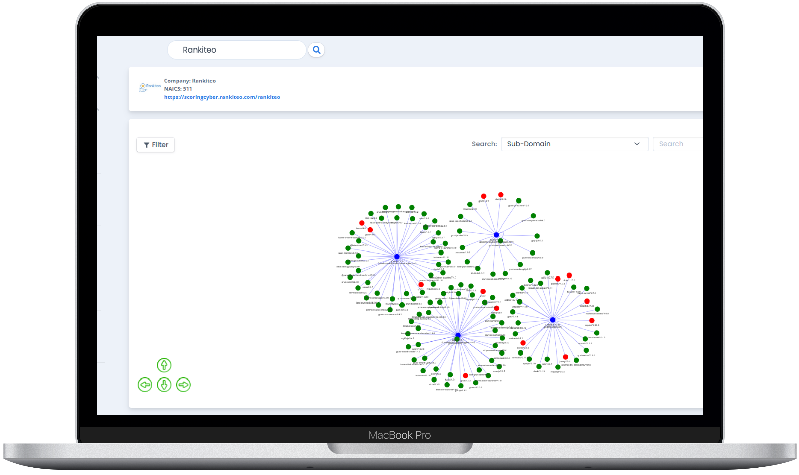
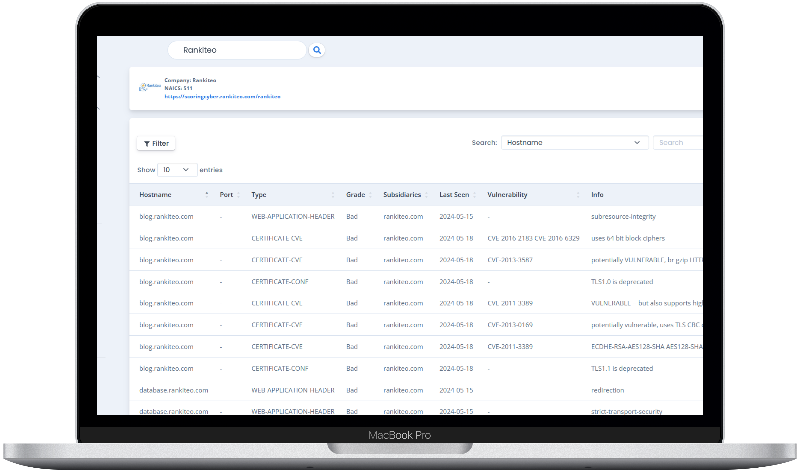
Identify exposed access points, detect misconfigured SSL certificates, and uncover vulnerabilities across the network infrastructure.
Gain visibility into the software components used within an organization to detect vulnerabilities, manage risk, and ensure supply chain security.
Monitor and manage all IT assets and their configurations to ensure accurate, real-time visibility across the company's technology environment.
Leverage real-time insights on active threats, malware campaigns, and emerging vulnerabilities to proactively defend against evolving cyberattacks.



 Oracle

 Rapid
Rapid