











Johnson Controls
Company Details
Linkedin ID:
johnson-controls
Website:
Employees number:
60,211
Number of followers:
1,690,218
NAICS:
3332
Industry Type:
Homepage:
johnsoncontrols.com
IP Addresses:
168
Company ID:
JOH_1596547
Scan Status:
Completed


Johnson Controls Vendor Cyber Rating & Cyber Score
johnsoncontrols.comAt Johnson Controls, we transform the environments where people live, work, learn and play. As the global leader in smart, healthy and sustainable buildings, our mission is to reimagine the performance of buildings to serve people, places and the planet. Building on a proud history of 140 years of innovation, we deliver the blueprint of the future for industries such as healthcare, schools, data centers, airports, stadiums, manufacturing and beyond through OpenBlue, our comprehensive digital offering. Today, Johnson Controls offers the world`s largest portfolio of building technology and software as well as service solutions from some of the most trusted names in the industry. Visit www.johnsoncontrols.com for more information.
Company Details
johnson-controls
60,211
1,690,218
3332
johnsoncontrols.com
168
JOH_1596547
Completed
 Johnson Controls Risk Score (AI oriented)
Between 750 and 799
 Johnson Controls Global Score (TPRM)
XXXX
Description: Johnson Controls, a critical infrastructure provider, faced severe exposure of its industrial control systems (ICS) due to unpatched vulnerabilities and misconfigurations. The systems, integral to power grids, water treatment plants, and manufacturing operations, were left accessible online with default credentials or known flaws. This negligence enabled potential cyber intrusions capable of triggering catastrophic outcomes such as blackouts, chemical contamination (e.g., tampering with chlorine levels in water utilities), or operational shutdowns in energy and healthcare sectors. The 2025 CISA advisory highlighted these vulnerabilities as high-severity risks, emphasizing the systemic failure to enforce air-gapping or zero-trust security models. The lapse not only jeopardized public safety but also invited state-sponsored or criminal exploitation, amplifying threats to national security. The company’s delayed mitigation efforts, coupled with regulatory gaps and legacy system dependencies, exacerbated the exposure, leaving critical infrastructure defenseless against attacks with life-threatening or war-escalating potential.
Description: A'massive ransomware attack' reportedly affected Johnson Controls International, encrypting many company devices, including VMware ESXi servers, and negatively affecting the business operations of both the parent corporation and its subsidiaries. Development and production of industrial control systems, security tools, air conditioners, and fire safety gear are all activities of the international company Johnson Controls. However, the incident has disrupted some of the Company's business operations and is anticipated to continue doing so. The Company is evaluating the incident's potential effects on its ability to deliver its financial results for the entire fiscal year and the fourth quarter on schedule.


No incidents recorded for Johnson Controls in 2026.
No incidents recorded for Johnson Controls in 2026.
No incidents recorded for Johnson Controls in 2026.
Johnson Controls cyber incidents detection timeline including parent company and subsidiaries

At Johnson Controls, we transform the environments where people live, work, learn and play. As the global leader in smart, healthy and sustainable buildings, our mission is to reimagine the performance of buildings to serve people, places and the planet. Building on a proud history of 140 years of innovation, we deliver the blueprint of the future for industries such as healthcare, schools, data centers, airports, stadiums, manufacturing and beyond through OpenBlue, our comprehensive digital offering. Today, Johnson Controls offers the world`s largest portfolio of building technology and software as well as service solutions from some of the most trusted names in the industry. Visit www.johnsoncontrols.com for more information.


Metso is a frontrunner in sustainable technologies, end-to-end solutions and services for the aggregates, minerals processing and metals refining industries globally. By improving our customers’ energy and water efficiency, increasing their productivity, and reducing environmental risks with our p

Bilfinger is an international industrial services provider with a vision to be the No. 1 for its customers in enhancing efficiency and sustainability within the process industry. Bilfinger’s comprehensive portfolio spans the entire value chain, from consulting & engineering to prefabrication & insta

FLSmidth is a full flowsheet technology and service supplier to the global mining industry. We enable our customers to improve performance, lower operating costs and reduce environmental impact. MissionZero is our sustainability ambition towards zero emissions in mining by 2030. We work within fully

We’re a global leader in water solutions. Every day, our intelligent, energy-saving pumps and water solutions help provide comfort, deliver drinking water, remove wastewater or sustain crops all over the world. We want to ensure water is accessible and reliable for all. Since 1945, we’ve proudly pr
We enable sustainable societies through innovation in technology and services together with all our stakeholders – today and tomorrow. We emphasise innovation in sustainable technology and services to help our customers continuously improve environmental and economic performance. We work together w

Established in 1949, the Liebherr Group today is not only one of the biggest construction equipment manufacturers in the world, but also offers high-quality, user-oriented products and services in many other areas. The family-run technology company employs nearly 50,000 people in over 150 companies
Flowserve is one of the world's largest manufacturers of pumps, valves and seals with over 16,000 employees across 50 countries. Built on more than 50 world-renowned heritage brands, the equity and customer loyalty we have earned over the past 230 years is the foundation of our leadership position a

Pioneering positive impact! Our pioneering 140-year-old start-up culture is built on the idea that partnership is the key to solving complex problems and unlocking the full potential of resources. So we collaborate closely with our partners, customers, and thought leaders to create game-changing so

Trane Technologies is a global climate innovator advancing sustainability through our leading brands Trane® and Thermo King®, which bring efficient and sustainable climate solutions to buildings, homes and transportation across the globe. Together, we are one team innovating for a better future. At
.png)
CISA issued a critical alert on a severe SQL injection vulnerability in multiple Johnson Controls ICS products.
US cyber security firm WitFoo shifts its global base to New Zealand, making the country the launch pad for its “Cyber Grid defence model.
Discover the top 6 trends shaping smart, sustainable buildings in 2026, from AI-driven automation to energy efficiency innovations.
As of January 7, 2026, Johnson Controls International (NYSE: JCI) stands at the epicenter of a global architectural and environmental...
Johnson Controls International plc JCI is benefiting from solid momentum across all segments. Increase in demand for heating,...
A Conversation with Leadership Award Recipient John Repko, EVP & Global Chief Information Officer (ret.), AIG.
The U.S. Cybersecurity and Infrastructure Security Agency (CISA) on Tuesday issued two new advisories and updated two others,...
The U.S. Cybersecurity and Infrastructure Security Agency (CISA) last week released ten Industrial Control Systems (ICS) advisories,...
Johnson Controls' AI strategy will dominate smart building tech by fusing deep data, OpenBlue platform, and partnerships.

Explore insights on cybersecurity incidents, risk posture, and Rankiteo's assessments.
The official website of Johnson Controls is http://www.johnsoncontrols.com.
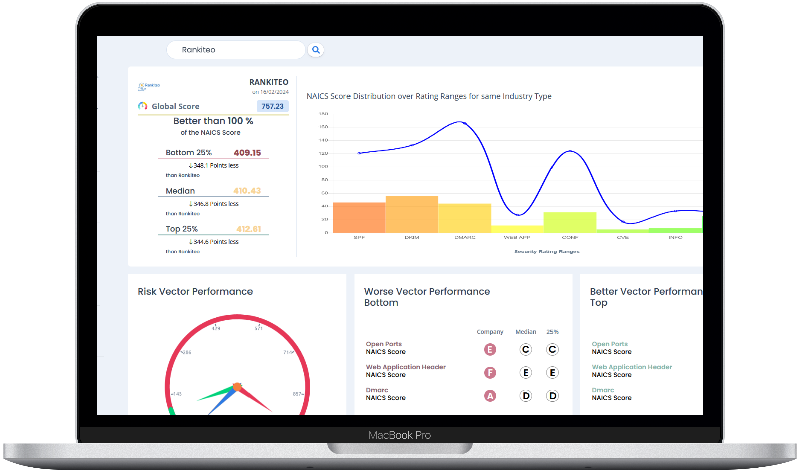
According to Rankiteo, Johnson Controls’s AI-generated cybersecurity score is 783, reflecting their Fair security posture.
According to Rankiteo, Johnson Controls currently holds 0 security badges, indicating that no recognized compliance certifications are currently verified for the organization.
According to Rankiteo, Johnson Controls has not been affected by any supply chain cyber incidents, and no incident IDs are currently listed for the organization.
According to Rankiteo, Johnson Controls is not certified under SOC 2 Type 1.
According to Rankiteo, Johnson Controls does not hold a SOC 2 Type 2 certification.
According to Rankiteo, Johnson Controls is not listed as GDPR compliant.
According to Rankiteo, Johnson Controls does not currently maintain PCI DSS compliance.
According to Rankiteo, Johnson Controls is not compliant with HIPAA regulations.
According to Rankiteo,Johnson Controls is not certified under ISO 27001, indicating the absence of a formally recognized information security management framework.
Johnson Controls operates primarily in the Industrial Machinery Manufacturing industry.
Johnson Controls employs approximately 60,211 people worldwide.
Johnson Controls presently has no subsidiaries across any sectors.
Johnson Controls’s official LinkedIn profile has approximately 1,690,218 followers.
Johnson Controls is classified under the NAICS code 3332, which corresponds to Industrial Machinery Manufacturing.
No, Johnson Controls does not have a profile on Crunchbase.
Yes, Johnson Controls maintains an official LinkedIn profile, which is actively utilized for branding and talent engagement, which can be accessed here: https://www.linkedin.com/company/johnson-controls.
As of April 01, 2026, Rankiteo reports that Johnson Controls has experienced 2 cybersecurity incidents.
Johnson Controls has an estimated 7,754 peer or competitor companies worldwide.
Incident Types: The types of cybersecurity incidents that have occurred include Ransomware and Vulnerability.
Total Financial Loss: The total financial loss from these incidents is estimated to be $0.
Detection and Response: The company detects and responds to cybersecurity incidents through an third party assistance with bitsight (cybersecurity firm), third party assistance with cisa (cybersecurity and infrastructure security agency), and containment measures with comprehensive asset inventories, containment measures with immediate patching of vulnerabilities, containment measures with network segmentation, and remediation measures with implementation of continuous monitoring, remediation measures with adoption of zero-trust models, remediation measures with air-gapping critical systems, and communication strategy with cisa advisories (e.g., may 2025 alert on johnson controls’ systems), communication strategy with industry reports by bitsight and cybersecurity dive, and network segmentation with advocated as a key mitigation strategy, and enhanced monitoring with organizations with continuous monitoring reduced exposure by up to 40%..
Title: Massive Ransomware Attack on Johnson Controls International
Description: A significant ransomware attack affected Johnson Controls International, encrypting many company devices, including VMware ESXi servers. The incident negatively impacted the business operations of both the parent corporation and its subsidiaries.
Type: Ransomware
Motivation: Financial Gain
Title: Mass Exposure of Industrial Control Systems to the Open Internet
Description: Nearly 200,000 industrial control systems (ICS), critical to power grids, water treatment plants, and manufacturing lines, are exposed to the open internet due to convenience-driven configurations, outdated security practices, and lack of safeguards. These systems, often running legacy software with unpatched vulnerabilities or default credentials, are vulnerable to cyberattacks that could trigger blackouts, chemical spills, or other catastrophic failures. The trend is accelerating due to digital transformation initiatives prioritizing operational efficiency over cybersecurity, with newly deployed systems in sectors like energy, transportation, and healthcare also appearing online without firewalls or encryption. Human error, misconfigurations, and regulatory gaps further exacerbate the issue, while experts advocate for asset inventories, patching, network segmentation, and AI-driven threat detection to mitigate risks.
Type: Exposure of Critical Infrastructure
Attack Vector: Publicly Accessible DevicesDefault CredentialsUnpatched Software VulnerabilitiesLack of Firewalls/Encryption
Vulnerability Exploited: Critical CVSS-rated vulnerabilities in legacy and new ICS devicesDefault passwordsMisconfigurations in operational technology (OT) systems
Common Attack Types: The most common types of attacks the company has faced is Vulnerability.
Identification of Attack Vectors: The company identifies the attack vectors used in incidents through Publicly accessible ICS devicesDefault credentialsUnpatched vulnerabilities.

Financial Loss: Potential delay in reporting financial results
Systems Affected: VMware ESXi serverscompany devices
Downtime: Ongoing disruption of business operations
Operational Impact: Significant

Systems Affected: Industrial Control Systems (ICS)Programmable Logic Controllers (PLCs)Water treatment control systemsEnergy sector devices (oil pipelines, electrical substations)Transportation infrastructureHealthcare infrastructure
Operational Impact: Potential blackoutsChemical spillsManipulation of critical processes (e.g., chlorine levels in water treatment)Cascading failures in interconnected systems
Brand Reputation Impact: Erosion of public trust in critical infrastructure securityPerception of negligence in safeguarding essential services
Average Financial Loss: The average financial loss per incident is $0.00.
Entity Name: Johnson Controls International
Entity Type: Corporation
Industry: Industrial Control Systems, Security Tools, Air Conditioners, Fire Safety Gear
Entity Type: Critical Infrastructure Operators, Industrial Facilities, Energy Sector Companies, Water Treatment Plants, Manufacturing Plants, Transportation Systems, Healthcare Infrastructure
Industry: Energy, Water/Wastewater, Manufacturing, Transportation, Healthcare
Location: Global (with specific emphasis on regions undergoing digital transformation)
Third Party Assistance: Bitsight (Cybersecurity Firm), Cisa (Cybersecurity And Infrastructure Security Agency).
Containment Measures: Comprehensive asset inventoriesImmediate patching of vulnerabilitiesNetwork segmentation
Remediation Measures: Implementation of continuous monitoringAdoption of zero-trust modelsAir-gapping critical systems
Communication Strategy: CISA advisories (e.g., May 2025 alert on Johnson Controls’ systems)Industry reports by Bitsight and Cybersecurity Dive
Network Segmentation: Advocated as a key mitigation strategy
Enhanced Monitoring: Organizations with continuous monitoring reduced exposure by up to 40%
Third-Party Assistance: The company involves third-party assistance in incident response through Bitsight (cybersecurity firm), CISA (Cybersecurity and Infrastructure Security Agency), .
Data Encryption: True
Data Encryption: ['Lack of encryption in exposed systems']
Prevention of Data Exfiltration: The company takes the following measures to prevent data exfiltration: Implementation of continuous monitoring, Adoption of zero-trust models, Air-gapping critical systems, .
Handling of PII Incidents: The company handles incidents involving personally identifiable information (PII) through by comprehensive asset inventories, immediate patching of vulnerabilities, network segmentation and .
Data Encryption: True
Regulatory Notifications: CISA advisories (e.g., May 2025 alert on Johnson Controls’ vulnerabilities)
Lessons Learned: Convenience-driven configurations (e.g., remote access) without adequate security expose critical infrastructure to severe risks., Legacy and new ICS devices often lack basic safeguards like firewalls, encryption, or updated credentials., Human error and misconfigurations by IT teams unfamiliar with OT systems are major contributors to exposure., Regulatory gaps and inconsistent enforcement allow vulnerabilities to persist., Digital transformation must prioritize security alongside operational efficiency to avoid amplifying risks.
Recommendations: Conduct comprehensive inventories of all connected ICS/OT assets., Immediately patch known vulnerabilities, especially those with critical CVSS ratings., Implement network segmentation and zero-trust models to limit exposure., Enforce mandatory air-gapping for the most critical systems where feasible., Replace default credentials and enforce strong authentication mechanisms., Adopt continuous monitoring to detect and respond to exposures in real-time., Integrate AI-driven threat detection to identify anomalies and potential attacks., Prioritize cybersecurity training for IT and OT teams to address skill gaps., Strengthen regulatory frameworks with mandatory compliance and enforcement mechanisms., Foster a cultural shift to prioritize security over convenience in operational decisions.Conduct comprehensive inventories of all connected ICS/OT assets., Immediately patch known vulnerabilities, especially those with critical CVSS ratings., Implement network segmentation and zero-trust models to limit exposure., Enforce mandatory air-gapping for the most critical systems where feasible., Replace default credentials and enforce strong authentication mechanisms., Adopt continuous monitoring to detect and respond to exposures in real-time., Integrate AI-driven threat detection to identify anomalies and potential attacks., Prioritize cybersecurity training for IT and OT teams to address skill gaps., Strengthen regulatory frameworks with mandatory compliance and enforcement mechanisms., Foster a cultural shift to prioritize security over convenience in operational decisions.Conduct comprehensive inventories of all connected ICS/OT assets., Immediately patch known vulnerabilities, especially those with critical CVSS ratings., Implement network segmentation and zero-trust models to limit exposure., Enforce mandatory air-gapping for the most critical systems where feasible., Replace default credentials and enforce strong authentication mechanisms., Adopt continuous monitoring to detect and respond to exposures in real-time., Integrate AI-driven threat detection to identify anomalies and potential attacks., Prioritize cybersecurity training for IT and OT teams to address skill gaps., Strengthen regulatory frameworks with mandatory compliance and enforcement mechanisms., Foster a cultural shift to prioritize security over convenience in operational decisions.Conduct comprehensive inventories of all connected ICS/OT assets., Immediately patch known vulnerabilities, especially those with critical CVSS ratings., Implement network segmentation and zero-trust models to limit exposure., Enforce mandatory air-gapping for the most critical systems where feasible., Replace default credentials and enforce strong authentication mechanisms., Adopt continuous monitoring to detect and respond to exposures in real-time., Integrate AI-driven threat detection to identify anomalies and potential attacks., Prioritize cybersecurity training for IT and OT teams to address skill gaps., Strengthen regulatory frameworks with mandatory compliance and enforcement mechanisms., Foster a cultural shift to prioritize security over convenience in operational decisions.Conduct comprehensive inventories of all connected ICS/OT assets., Immediately patch known vulnerabilities, especially those with critical CVSS ratings., Implement network segmentation and zero-trust models to limit exposure., Enforce mandatory air-gapping for the most critical systems where feasible., Replace default credentials and enforce strong authentication mechanisms., Adopt continuous monitoring to detect and respond to exposures in real-time., Integrate AI-driven threat detection to identify anomalies and potential attacks., Prioritize cybersecurity training for IT and OT teams to address skill gaps., Strengthen regulatory frameworks with mandatory compliance and enforcement mechanisms., Foster a cultural shift to prioritize security over convenience in operational decisions.Conduct comprehensive inventories of all connected ICS/OT assets., Immediately patch known vulnerabilities, especially those with critical CVSS ratings., Implement network segmentation and zero-trust models to limit exposure., Enforce mandatory air-gapping for the most critical systems where feasible., Replace default credentials and enforce strong authentication mechanisms., Adopt continuous monitoring to detect and respond to exposures in real-time., Integrate AI-driven threat detection to identify anomalies and potential attacks., Prioritize cybersecurity training for IT and OT teams to address skill gaps., Strengthen regulatory frameworks with mandatory compliance and enforcement mechanisms., Foster a cultural shift to prioritize security over convenience in operational decisions.Conduct comprehensive inventories of all connected ICS/OT assets., Immediately patch known vulnerabilities, especially those with critical CVSS ratings., Implement network segmentation and zero-trust models to limit exposure., Enforce mandatory air-gapping for the most critical systems where feasible., Replace default credentials and enforce strong authentication mechanisms., Adopt continuous monitoring to detect and respond to exposures in real-time., Integrate AI-driven threat detection to identify anomalies and potential attacks., Prioritize cybersecurity training for IT and OT teams to address skill gaps., Strengthen regulatory frameworks with mandatory compliance and enforcement mechanisms., Foster a cultural shift to prioritize security over convenience in operational decisions.Conduct comprehensive inventories of all connected ICS/OT assets., Immediately patch known vulnerabilities, especially those with critical CVSS ratings., Implement network segmentation and zero-trust models to limit exposure., Enforce mandatory air-gapping for the most critical systems where feasible., Replace default credentials and enforce strong authentication mechanisms., Adopt continuous monitoring to detect and respond to exposures in real-time., Integrate AI-driven threat detection to identify anomalies and potential attacks., Prioritize cybersecurity training for IT and OT teams to address skill gaps., Strengthen regulatory frameworks with mandatory compliance and enforcement mechanisms., Foster a cultural shift to prioritize security over convenience in operational decisions.Conduct comprehensive inventories of all connected ICS/OT assets., Immediately patch known vulnerabilities, especially those with critical CVSS ratings., Implement network segmentation and zero-trust models to limit exposure., Enforce mandatory air-gapping for the most critical systems where feasible., Replace default credentials and enforce strong authentication mechanisms., Adopt continuous monitoring to detect and respond to exposures in real-time., Integrate AI-driven threat detection to identify anomalies and potential attacks., Prioritize cybersecurity training for IT and OT teams to address skill gaps., Strengthen regulatory frameworks with mandatory compliance and enforcement mechanisms., Foster a cultural shift to prioritize security over convenience in operational decisions.Conduct comprehensive inventories of all connected ICS/OT assets., Immediately patch known vulnerabilities, especially those with critical CVSS ratings., Implement network segmentation and zero-trust models to limit exposure., Enforce mandatory air-gapping for the most critical systems where feasible., Replace default credentials and enforce strong authentication mechanisms., Adopt continuous monitoring to detect and respond to exposures in real-time., Integrate AI-driven threat detection to identify anomalies and potential attacks., Prioritize cybersecurity training for IT and OT teams to address skill gaps., Strengthen regulatory frameworks with mandatory compliance and enforcement mechanisms., Foster a cultural shift to prioritize security over convenience in operational decisions.
Key Lessons Learned: The key lessons learned from past incidents are Convenience-driven configurations (e.g., remote access) without adequate security expose critical infrastructure to severe risks.,Legacy and new ICS devices often lack basic safeguards like firewalls, encryption, or updated credentials.,Human error and misconfigurations by IT teams unfamiliar with OT systems are major contributors to exposure.,Regulatory gaps and inconsistent enforcement allow vulnerabilities to persist.,Digital transformation must prioritize security alongside operational efficiency to avoid amplifying risks.
Implemented Recommendations: The company has implemented the following recommendations to improve cybersecurity: Prioritize cybersecurity training for IT and OT teams to address skill gaps., Foster a cultural shift to prioritize security over convenience in operational decisions., Conduct comprehensive inventories of all connected ICS/OT assets., Strengthen regulatory frameworks with mandatory compliance and enforcement mechanisms., Enforce mandatory air-gapping for the most critical systems where feasible., Adopt continuous monitoring to detect and respond to exposures in real-time., Implement network segmentation and zero-trust models to limit exposure., Replace default credentials and enforce strong authentication mechanisms., Integrate AI-driven threat detection to identify anomalies and potential attacks., Immediately patch known vulnerabilities and especially those with critical CVSS ratings..
Source: Bitsight Report on Exposed Industrial Control Systems
Source: Cybersecurity Dive Analysis on Digital Transformation Risks
Source: CISA Advisory (May 2025) on Johnson Controls’ Vulnerabilities
URL: https://www.cisa.gov
Additional Resources: Stakeholders can find additional resources on cybersecurity best practices at and Source: Bitsight Report on Exposed Industrial Control Systems, and Source: Cybersecurity Dive Analysis on Digital Transformation Risks, and Source: CISA Advisory (May 2025) on Johnson Controls’ VulnerabilitiesUrl: https://www.cisa.gov.
Investigation Status: Ongoing (trend analysis by Bitsight and CISA; no specific incident under investigation)
Communication of Investigation Status: The company communicates the status of incident investigations to stakeholders through Cisa Advisories (E.G., May 2025 Alert On Johnson Controls’ Systems) and Industry Reports By Bitsight And Cybersecurity Dive.
Stakeholder Advisories: Cisa Alerts, Bitsight Reports, Industry Analyst Warnings On Systemic Risks.
Advisories Provided: The company provides the following advisories to stakeholders and customers following an incident: were Cisa Alerts, Bitsight Reports and Industry Analyst Warnings On Systemic Risks.
Entry Point: Publicly Accessible Ics Devices, Default Credentials, Unpatched Vulnerabilities,
High Value Targets: Energy Grids, Water Treatment Systems, Manufacturing Control Systems, Transportation Infrastructure,
Data Sold on Dark Web: Energy Grids, Water Treatment Systems, Manufacturing Control Systems, Transportation Infrastructure,
Root Causes: Prioritization Of Operational Convenience Over Security In Ics/Ot Environments., Lack Of Basic Safeguards (Firewalls, Encryption, Updated Credentials) In Legacy And New Systems., Human Error And Misconfigurations Due To It/Ot Skill Gaps., Regulatory Gaps And Inconsistent Enforcement Of Cybersecurity Standards., Digital Transformation Initiatives Accelerating Exposure Without Adequate Security Controls.,
Corrective Actions: Mandate Asset Inventories And Vulnerability Assessments For All Ics/Ot Devices., Enforce Patch Management And Configuration Hardening For Exposed Systems., Implement Network Segmentation And Zero-Trust Architectures To Limit Lateral Movement., Adopt Continuous Monitoring And Ai-Driven Anomaly Detection., Strengthen Regulatory Oversight With Enforceable Compliance Requirements., Invest In Cybersecurity Training For It And Ot Personnel., Promote A Security-First Culture In Critical Infrastructure Operations.,
Post-Incident Analysis Process: The company's process for conducting post-incident analysis is described as Bitsight (Cybersecurity Firm), Cisa (Cybersecurity And Infrastructure Security Agency), , Organizations with continuous monitoring reduced exposure by up to 40%.
Corrective Actions Taken: The company has taken the following corrective actions based on post-incident analysis: Mandate Asset Inventories And Vulnerability Assessments For All Ics/Ot Devices., Enforce Patch Management And Configuration Hardening For Exposed Systems., Implement Network Segmentation And Zero-Trust Architectures To Limit Lateral Movement., Adopt Continuous Monitoring And Ai-Driven Anomaly Detection., Strengthen Regulatory Oversight With Enforceable Compliance Requirements., Invest In Cybersecurity Training For It And Ot Personnel., Promote A Security-First Culture In Critical Infrastructure Operations., .
Highest Financial Loss: The highest financial loss from an incident was Potential delay in reporting financial results.
Most Significant System Affected: The most significant system affected in an incident were VMware ESXi serverscompany devices and Industrial Control Systems (ICS)Programmable Logic Controllers (PLCs)Water treatment control systemsEnergy sector devices (oil pipelines, electrical substations)Transportation infrastructureHealthcare infrastructure.
Third-Party Assistance in Most Recent Incident: The third-party assistance involved in the most recent incident was bitsight (cybersecurity firm), cisa (cybersecurity and infrastructure security agency), .
Containment Measures in Most Recent Incident: The containment measures taken in the most recent incident was Comprehensive asset inventoriesImmediate patching of vulnerabilitiesNetwork segmentation.
Most Significant Lesson Learned: The most significant lesson learned from past incidents was Digital transformation must prioritize security alongside operational efficiency to avoid amplifying risks.
Most Significant Recommendation Implemented: The most significant recommendation implemented to improve cybersecurity was Prioritize cybersecurity training for IT and OT teams to address skill gaps., Foster a cultural shift to prioritize security over convenience in operational decisions., Conduct comprehensive inventories of all connected ICS/OT assets., Strengthen regulatory frameworks with mandatory compliance and enforcement mechanisms., Enforce mandatory air-gapping for the most critical systems where feasible., Adopt continuous monitoring to detect and respond to exposures in real-time., Implement network segmentation and zero-trust models to limit exposure., Replace default credentials and enforce strong authentication mechanisms., Integrate AI-driven threat detection to identify anomalies and potential attacks., Immediately patch known vulnerabilities and especially those with critical CVSS ratings..
Most Recent Source: The most recent source of information about an incident are CISA Advisory (May 2025) on Johnson Controls’ Vulnerabilities, Bitsight Report on Exposed Industrial Control Systems and Cybersecurity Dive Analysis on Digital Transformation Risks.
Most Recent URL for Additional Resources: The most recent URL for additional resources on cybersecurity best practices is https://www.cisa.gov .
Current Status of Most Recent Investigation: The current status of the most recent investigation is Ongoing (trend analysis by Bitsight and CISA; no specific incident under investigation).
Most Recent Stakeholder Advisory: The most recent stakeholder advisory issued was CISA alerts, Bitsight reports, Industry analyst warnings on systemic risks, .
.png)
A security flaw has been discovered in itsourcecode Payroll Management System 1.0. Affected by this vulnerability is an unknown functionality of the file /manage_user.php of the component Parameter Handler. Performing a manipulation of the argument ID results in sql injection. The attack is possible to be carried out remotely. The exploit has been released to the public and may be used for attacks.
A vulnerability was identified in Axiomatic Bento4 up to 1.6.0-641. Affected is the function AP4_BitReader::SkipBits of the file Ap4Dac4Atom.cpp of the component DSI v1 Parser. Such manipulation of the argument n_presentations leads to heap-based buffer overflow. The attack needs to be performed locally. The exploit is publicly available and might be used. The project was informed of the problem early through an issue report but has not responded yet.
A vulnerability was determined in Axiomatic Bento4 up to 1.6.0-641. This impacts the function AP4_BitReader::ReadCache of the file Ap4Dac4Atom.cpp of the component MP4 File Parser. This manipulation causes heap-based buffer overflow. The attack needs to be launched locally. The exploit has been publicly disclosed and may be utilized. The project was informed of the problem early through an issue report but has not responded yet.
iccDEV provides a set of libraries and tools for working with ICC color management profiles. Prior to version 2.3.1.6, there is a heap-buffer-overflow (HBO) in icAnsiToUtf8() in the XML conversion path. The issue is triggered by a crafted ICC profile which causes icAnsiToUtf8(std::string&, char const*) to treat an input buffer as a C-string and call operations that rely on strlen()/null-termination. AddressSanitizer reports an out-of-bounds READ of size 115 past a 114-byte heap allocation, with the failure observed while running the iccToXml tool. This issue has been patched in version 2.3.1.6.
iccDEV provides a set of libraries and tools for working with ICC color management profiles. Prior to version 2.3.1.6, there is a stack-buffer-overflow (SBO) in CIccTagFixedNum<>::GetValues() and a related bug chain. The primary crash is an AddressSanitizer-reported WRITE of size 4 that overflows a 4-byte stack variable (rv) via the call chain CIccTagFixedNum::GetValues() -> CIccTagStruct::GetElemNumberValue(). This issue has been patched in version 2.3.1.6.

Get company history

Every week, Rankiteo analyzes billions of signals to give organizations a sharper, faster view of emerging risks. With deeper, more actionable intelligence at their fingertips, security teams can outpace threat actors, respond instantly to Zero-Day attacks, and dramatically shrink their risk exposure window.
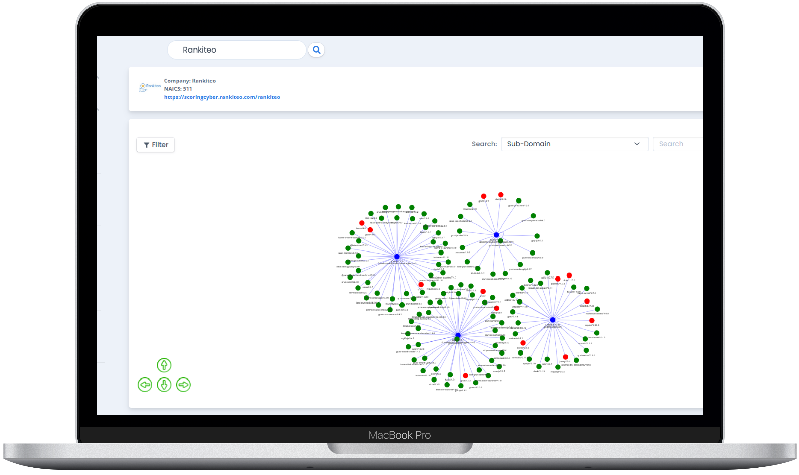
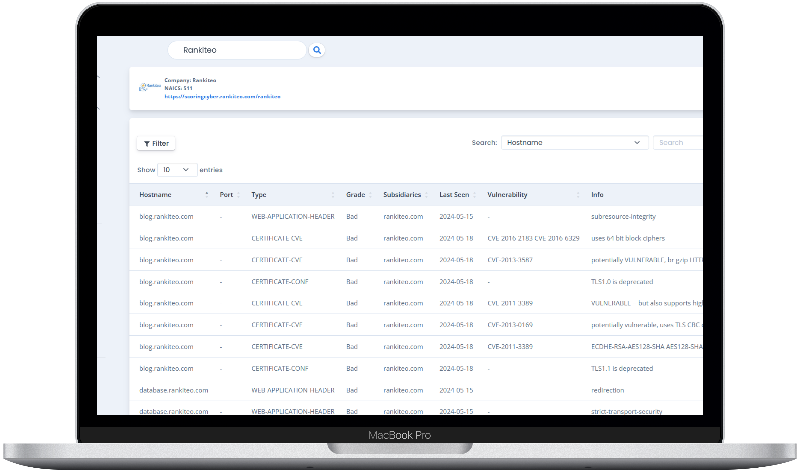
Identify exposed access points, detect misconfigured SSL certificates, and uncover vulnerabilities across the network infrastructure.
Gain visibility into the software components used within an organization to detect vulnerabilities, manage risk, and ensure supply chain security.
Monitor and manage all IT assets and their configurations to ensure accurate, real-time visibility across the company's technology environment.
Leverage real-time insights on active threats, malware campaigns, and emerging vulnerabilities to proactively defend against evolving cyberattacks.







 Rapid
Rapid