











Instagram
Company Details
Linkedin ID:
Website:
Employees number:
47,052
Number of followers:
1,398,977
NAICS:
5112
Industry Type:
Homepage:
instagram.com
IP Addresses:
0
Company ID:
INS_3401594
Scan Status:
In-progress


Instagram Vendor Cyber Rating & Cyber Score
instagram.comMore than one billion people around the world use Instagram, and we’re proud to be bringing them closer to the people and things they love. Instagram inspires people to see the world differently, discover new interests, and express themselves. Since launching in 2010, our community has grown at a rapid pace. Our teams are growing fast, too, and we’re looking for talent across engineering, product management, design, research, analytics, technical program management, operations, and more. In addition to our headquarters in Menlo Park, we have thriving offices in New York City and San Francisco where teams are doing impactful work every day.
Company Details
47,052
1,398,977
5112
instagram.com
0
INS_3401594
In-progress
 Instagram Risk Score (AI oriented)
Between 0 and 549
 Instagram Global Score (TPRM)
XXXX
Description: Instagram Data Exposure Highlights Growing Risks of "Cumulative Identity Theft" A recent incident involving Instagram has sparked debate over what constitutes a data breach and why even "non-breach" exposures can erode customer trust. In an interview with *CX Today*, Ron Zayas, CEO of Ironwall by Incogni, warns that traditional security definitions fail to account for the dangers of *cumulative risk*, where seemingly harmless data leaks combine to fuel sophisticated cyber threats. Zayas argues that aggregated identity data such as names, email addresses, or behavioral patterns can enable attackers to craft highly targeted phishing and impersonation schemes, even without a confirmed system intrusion. He draws a parallel to banking: customers don’t wait for a direct theft to lose confidence in a bank’s security; the same applies to companies handling personal data. Once trust is damaged, loyalty follows. The discussion also underscores the importance of transparent crisis communication. Zayas advises leaders to avoid minimizing incidents or relying on legal loopholes, instead treating customer data with the same urgency as financial assets. Key recommendations include limiting third-party data sharing and providing affected users with clear, actionable guidance. The incident serves as a reminder that privacy is now a critical driver of customer loyalty, and how organizations respond to exposure regardless of breach status can determine long-term reputational impact.
Description: ZeroDayRAT: A Rising Mobile Spyware Threat with Global Reach Since February 2, 2026, ZeroDayRAT, a sophisticated mobile spyware platform, has been sold openly on Telegram channels, offering cybercriminals an accessible tool for large-scale surveillance and financial theft. Developed and marketed through dedicated groups for sales, support, and updates, the malware targets Android (versions 5–16) and iOS (up to version 26, including iPhone 17 Pro) with minimal technical expertise required. Operators gain real-time control via a browser-based dashboard, enabling live spying, data theft, and financial attacks against victims worldwide. Infections typically begin through social engineering tactics, including smishing texts, phishing emails, fake app stores, or malicious links shared on WhatsApp and Telegram. Once installed via an APK on Android or a payload on iOS ZeroDayRAT grants full device access without the victim’s knowledge. ### Surveillance & Data Exfiltration Capabilities The spyware’s dashboard provides a comprehensive overview of compromised devices, including: - Device details: Model, OS version, battery level, country, lock status, SIM/carrier info, and dual-SIM numbers. - User profiling: App usage timelines, peak activity hours, and network providers. - Real-time notifications: Intercepted alerts from WhatsApp, Instagram, Telegram, YouTube, and system events. - Location tracking: GPS data mapped on Google Maps, with historical movement records (e.g., a device in Bengaluru). - Account harvesting: Usernames/emails from Google, WhatsApp, Instagram, Facebook, Amazon, Flipkart, PhonePe, Paytm, and Spotify enabling account takeovers or follow-up phishing. - SMS access: Full inbox search, message spoofing, and OTP interception, bypassing SMS-based two-factor authentication (2FA). ### Advanced Surveillance & Financial Theft ZeroDayRAT escalates beyond passive monitoring with active spying tools: - Live camera/microphone streams (front/back) synced with GPS for real-time tracking. - Keylogging: Captures keystrokes, biometrics, gestures, and app launches, paired with a live screen preview to steal passwords and sensitive inputs. - Crypto theft: Targets wallets like MetaMask, Trust Wallet, Binance, and Coinbase, swapping clipboard addresses to hijack transactions. - Banking attacks: Compromises UPI apps (PhonePe, Google Pay), Apple Pay, and PayPal via credential overlays, blending traditional and cryptocurrency theft. ### Global Impact Evidence from the dashboard shows compromised devices in multiple countries, including India and the U.S., underscoring the spyware’s widespread deployment. With its low barrier to entry and commercial availability, ZeroDayRAT represents a growing threat to individual privacy, financial security, and organizational data integrity.
Description: Instagram Data Leak Exposes 17.5 Million Accounts in Early 2026 In January 2026, a significant data leak exposed personal information belonging to approximately 17.5 million Instagram users. The breach, first reported by cybersecurity outlets, involved sensitive data including emails, phone numbers, and usernames now circulating on dark web forums. The incident surfaced amid a surge in suspicious password reset emails sent to users, raising concerns about phishing campaigns exploiting the leaked data. Meta, Instagram’s parent company, denied a direct breach of its systems, attributing the exposure to third-party scraping or historical vulnerabilities. However, independent analysts suggest the data may have originated from Instagram’s API, citing past incidents where outdated or poorly secured interfaces were exploited. A 2024 API leak, for example, allowed attackers to harvest user details through automated scripts. The leaked dataset, which first appeared on dark web markets around January 9, 2026, includes biographical details and regional targeting, particularly in Germany. Cybersecurity experts warn of increased risks of identity theft, phishing attacks, and impersonation schemes, especially for businesses and influencers reliant on the platform. User reports on X (formerly Twitter) describe unsolicited password reset requests, while posts from cybersecurity accounts confirm the sale of the data in underground markets. The breach has reignited criticism of Meta’s security practices, with comparisons drawn to past incidents, including a 2017 API bug that exposed verified accounts and a 2018 flaw that leaked passwords in plaintext. Regulatory scrutiny is expected, particularly under frameworks like the GDPR, as the incident underscores broader industry challenges in safeguarding user data. While Meta has encouraged users to enable two-factor authentication and report suspicious activity, experts emphasize the need for stronger encryption, regular audits, and transparent reporting to prevent future breaches. The fallout highlights the ongoing tension between connectivity and security in social media, with users and regulators alike demanding greater accountability from platforms. As investigations continue, the full impact of the leak remains under assessment.
Description: Massive Infostealer Database Exposes 184 Million Credentials in Latest Cybersecurity Threat Cybersecurity researcher Jeremiah Fowler recently uncovered an unsecured database containing over 184 million unique login credentials, underscoring the escalating danger posed by infostealer malware. The exposed data including emails, passwords, and authorization URLs spanned a wide range of services, from Microsoft, Facebook, and Instagram to financial institutions, healthcare portals, and government accounts. Unlike traditional data breaches, this trove was likely compiled by infostealers, a type of malware designed to silently extract credentials from infected devices. These malicious programs harvest data from browsers, email clients, messaging apps, and even cryptocurrency wallets, often spreading via phishing emails, malicious websites, or cracked software. The database’s removal from public access does not mitigate the broader threat, as infostealers continue to operate at scale. The sheer volume of exposed credentials suggests millions of individuals may be affected, though the number of unique victims is likely lower due to multiple accounts per user. Modern infostealers go beyond simple password theft, capturing autofill data, cookies, screenshots, and keystrokes, enabling attackers to bypass security measures and launch credential stuffing attacks, account takeovers, identity theft, and targeted phishing campaigns. This incident highlights the pervasive nature of infostealer infections, which allow cybercriminals to build detailed profiles of victims’ digital lives. While the exposed database has been secured, the underlying threat remains, with malware like Lumma Stealer (recently disrupted by authorities) representing just one of many sophisticated variants in circulation.
Description: Mass Instagram Password Reset Emails Spark Data Breach Concerns On January 8, 2025, Instagram users worldwide began receiving unsolicited password reset emails from the platform’s official domain (*[email protected]*). The messages, which appeared legitimate complete with proper formatting and verification marks triggered widespread confusion, as no users had initiated the resets. Reports flooded social media platforms, including Reddit and X, with users questioning whether the emails were part of a targeted attack, a technical error, or evidence of a larger breach. Some users found the reset notifications missing from their Instagram security logs, while others received identical emails after manually changing their passwords a sign the domain was authentic. Speculation ranged from a phishing campaign to a misconfigured system trigger, with one Reddit user in email marketing suggesting a possible "legacy system" error. The incident gained further urgency after Malwarebytes revealed on January 9 that hackers had stolen data from 17.5 million Instagram accounts, including usernames, physical addresses, phone numbers, and email addresses. The stolen data, now circulating on the dark web, could enable cybercriminals to impersonate brands or launch credential-stuffing attacks. The timing of the password reset emails aligns with the breach, raising concerns that the two events may be connected. Meta, Instagram’s parent company, has yet to issue a public statement. The global scale of the reset emails affecting users across multiple time zones suggests a systemic issue rather than isolated incidents. As of now, the cause remains unconfirmed, though the overlap with the reported breach has intensified scrutiny.
Description: Instagram faces an explosion of AI-generated influencer accounts using deepfake technology to steal videos from real models and monetize them. This trend undermines the platform's credibility and the income of authentic creators. Real models' views have plummeted, directly impacting their livelihoods. Instagram's lack of action against this widespread issue has industrialized AI exploitation, signaling a concerning shift towards AI dominance in social media content.
Description: Massive Instagram Data Breach Exposes 17.5 Million Users’ Personal Information A significant data breach has exposed the personal details of approximately 17.5 million Instagram users, with the compromised dataset now circulating on dark web forums. The leak, first identified by cybersecurity researchers at Malwarebytes, was posted by a threat actor under the alias “Solonik” earlier this week. The listing, titled *“INSTAGRAM.COM 17M GLOBAL USERS 2024 API LEAK,”* claims the data was harvested in late 2024 through an API vulnerability, allowing automated scraping of user profiles worldwide. The breach is particularly severe due to the depth of exposed information, which includes full names, usernames, verified email addresses, phone numbers, user IDs, and partial location data. Unlike previous leaks limited to usernames, this dataset enables cybercriminals to construct detailed profiles for targeted attacks. Screenshots of the data confirm its authenticity, showing structured records that facilitate identity theft and phishing campaigns. The incident has already led to active exploitation, with affected users reporting a surge in unsolicited password reset notifications. While passwords were not included in the leak, the combination of emails and phone numbers enables SIM-swapping attacks and sophisticated social engineering. Attackers can impersonate Instagram support or use exposed details to manipulate victims into revealing two-factor authentication (2FA) codes or login credentials. The breach is classified as a scraping incident exploiting public API endpoints rather than a direct server intrusion. However, the scale suggests a failure in rate-limiting or privacy controls, allowing threat actors to extract millions of records undetected. As of January 10, 2026, Meta has not issued a public statement addressing the 17.5 million-record dump. The incident underscores the risks of API-based data exposure and the need for enhanced security measures to prevent automated harvesting of user information.
Description: Instagram Data Leak Claims Reignite Concerns Over Old Breach and New Security Incident A recent claim by a hacker known as *Solonik* sparked fresh alarm over a purported 2024 Instagram data leak affecting 17 million users. The hacker posted the alleged dataset on a clear web hacking forum on 7 January, asserting it contained sensitive information including usernames, physical addresses, phone numbers, and email addresses. Cybersecurity firm Malwarebytes amplified the claim on X (formerly Twitter), suggesting the breach was both new and severe. However, investigations revealed the dataset was not new. A separate forum member had shared an identical dataset in 2023, describing it as a scrape of Instagram’s data though its origin remained unclear. The sample data provided by Solonik matched records from nearly three years prior, indicating the hacker had merely repackaged old information, a common tactic among cybercriminals. The situation grew more complex when Instagram users reported receiving unsolicited password reset emails, leading some observers to speculate a link between the two incidents. Meta, Instagram’s parent company, swiftly denied a breach but acknowledged a separate security issue. A spokesperson stated that the company had “fixed an issue that allowed an external party to request password reset emails for some users”, emphasizing that “no breach of [Meta’s] systems occurred” and that accounts remained secure. Users were advised to disregard the emails. While the 17-million-record dataset was confirmed to be old dating back to January 2021 and later added to Have I Been Pwned’s (HIBP) database its contents still pose risks. The data includes usernames, display names, account IDs, and in some cases, geolocation, email addresses (6.2 million records), and phone numbers, all of which could be exploited for phishing or social engineering attacks. The incident highlights the persistent threat of repackaged breach data and the challenges in verifying hacker claims, even as Meta works to contain unrelated security vulnerabilities.


Instagram has 150.0% more incidents than the average of same-industry companies with at least one recorded incident.
Instagram has 156.41% more incidents than the average of all companies with at least one recorded incident.
Instagram reported 3 incidents this year: 1 cyber attacks, 0 ransomware, 0 vulnerabilities, 2 data breaches, compared to industry peers with at least 1 incident.
Instagram cyber incidents detection timeline including parent company and subsidiaries

More than one billion people around the world use Instagram, and we’re proud to be bringing them closer to the people and things they love. Instagram inspires people to see the world differently, discover new interests, and express themselves. Since launching in 2010, our community has grown at a rapid pace. Our teams are growing fast, too, and we’re looking for talent across engineering, product management, design, research, analytics, technical program management, operations, and more. In addition to our headquarters in Menlo Park, we have thriving offices in New York City and San Francisco where teams are doing impactful work every day.


Wolt is a Helsinki-based technology company with a mission to bring joy, simplicity and earnings to the neighborhoods of the world. Wolt develops a local commerce platform that connects people looking to order food, groceries, and other goods with people interested in selling and delivering them. Wo

We're a global online visual communications platform on a mission to empower the world to design. Featuring a simple drag-and-drop user interface and a vast range of templates ranging from presentations, documents, websites, social media graphics, posters, apparel to videos, plus a huge library of f

Adhering to the ‘Retail + Technology’ strategy, Meituan commits to its mission that 'We help people eat better, live better'. Since its establishment in March 2010, Meituan has advanced the digital upgrading of services and goods retail on both supply and demand sides. Together with our partners we

OpenText is a leading Cloud and AI company that provides organizations around the world with a comprehensive suite of Business AI, Business Clouds, and Business Technology. We help organizations grow, innovate, become more efficient and effective, and do so in a trusted and secure way—through Inform

🌍Alibaba Group is on a mission to make it easy to do business anywhere! Guided by our passion and imagination, we’re leading the way in AI, cloud computing and e-commerce. We aim to build the future infrastructure of commerce, and we aspire to be a good company that lasts for 102 years.
Xiaomi Corporation was founded in April 2010 and listed on the Main Board of the Hong Kong Stock Exchange on July 9, 2018 (1810.HK). Xiaomi is a consumer electronics and smart manufacturing company with smartphones and smart hardware connected by an IoT platform at its core. Embracing our vision

A career at Booking.com is all about the journey, helping you explore new challenges in a place where you can be your best self. With plenty of exciting twists, turns and opportunities along the way. We’ve always been pioneers, on a mission to shape the future of travel through cutting edge techno

Workday is a leading provider of enterprise cloud applications for finance and human resources, helping customers adapt and thrive in a changing world. Workday applications for financial management, human resources, planning, spend management, and analytics are built with artificial intelligence and

Zoho offers beautifully smart software to help you grow your business. With over 100 million users worldwide, Zoho's 55+ products aid your sales and marketing, support and collaboration, finance, and recruitment needs—letting you focus only on your business. Zoho respects user privacy and does not h
.png)
End-to-end encryption will be removed on Instagram to allow better oversight of private messages.
Users will be prompted to download affected Instagram chats before removal.
Your Instagram DMs are no longer private. Follow for more tech news.
Meta has confirmed it will permanently remove end-to-end encryption (E2EE) support from Instagram direct messages, with the feature...
Meta will end Instagram E2EE chats May 8, 2026, reversing a 2021 privacy test and reigniting debate over encrypted messaging oversight.
A service disruption has hit Meta's Instagram platform today, leaving thousands of users globally unable to access their accounts.
Losing access to your Instagram account can feel like being locked out of a digital life. With billions of users and accounts increasingly...
Learn how to identify fake Instagram login pages, avoid phishing scams, and protect your account with a simple step-by-step security guide.
Meta is gearing up to roll out premium subscription tiers across its flagship apps, Instagram, Facebook, and WhatsApp, offering users...

Explore insights on cybersecurity incidents, risk posture, and Rankiteo's assessments.
The official website of Instagram is http://www.instagram.com.
According to Rankiteo, Instagram’s AI-generated cybersecurity score is 537, reflecting their Critical security posture.
According to Rankiteo, Instagram currently holds 0 security badges, indicating that no recognized compliance certifications are currently verified for the organization.
According to Rankiteo, Instagram has not been affected by any supply chain cyber incidents, and no incident IDs are currently listed for the organization.
According to Rankiteo, Instagram is not certified under SOC 2 Type 1.
According to Rankiteo, Instagram does not hold a SOC 2 Type 2 certification.
According to Rankiteo, Instagram is not listed as GDPR compliant.
According to Rankiteo, Instagram does not currently maintain PCI DSS compliance.
According to Rankiteo, Instagram is not compliant with HIPAA regulations.
According to Rankiteo,Instagram is not certified under ISO 27001, indicating the absence of a formally recognized information security management framework.
Instagram operates primarily in the Software Development industry.
Instagram employs approximately 47,052 people worldwide.
Instagram presently has no subsidiaries across any sectors.
Instagram’s official LinkedIn profile has approximately 1,398,977 followers.
Instagram is classified under the NAICS code 5112, which corresponds to Software Publishers.
No, Instagram does not have a profile on Crunchbase.
Yes, Instagram maintains an official LinkedIn profile, which is actively utilized for branding and talent engagement, which can be accessed here: https://www.linkedin.com/company/instagram.
As of April 02, 2026, Rankiteo reports that Instagram has experienced 8 cybersecurity incidents.
Instagram has an estimated 29,309 peer or competitor companies worldwide.
Incident Types: The types of cybersecurity incidents that have occurred include Cyber Attack and Breach.
Total Financial Loss: The total financial loss from these incidents is estimated to be $0.
Detection and Response: The company detects and responds to cybersecurity incidents through an third party assistance with cybersecurity researcher (jeremiah fowler), and containment measures with database removed from public view, and communication strategy with public advisory on protective measures, and communication strategy with no official statement from meta/instagram, and containment measures with instagram acknowledged and fixed the password reset issue, and remediation measures with users advised to update passwords and watch for phishing attempts, and communication strategy with public statement denying breach but acknowledging password reset issue, and containment measures with encouraged users to report suspicious activity, rolled out security best practice reminders, and remediation measures with recommended password changes, enabling two-factor authentication (2fa), and communication strategy with public statements downplaying the breach, assurances that internal systems were not compromised, and communication strategy with transparent crisis communication advised; avoid minimizing incidents or relying on legal loopholes..
Title: AI-Generated Influencer Accounts on Instagram
Description: Instagram faces an explosion of AI-generated influencer accounts using deepfake technology to steal videos from real models and monetize them. This trend undermines the platform's credibility and the income of authentic creators. Real models' views have plummeted, directly impacting their livelihoods. Instagram's lack of action against this widespread issue has industrialized AI exploitation, signaling a concerning shift towards AI dominance in social media content.
Type: Content Theft and Fraud
Attack Vector: Deepfake Technology
Vulnerability Exploited: Lack of Content Verification Mechanisms
Motivation: Monetization
Title: Exposure of 184 Million Unique Login Credentials via Unsecured Database
Description: A cybersecurity researcher discovered an unsecured database containing over 184 million unique login credentials, including emails, passwords, and authorization URLs. The data was likely amassed by infostealers—malware designed to harvest sensitive information from infected devices. The credentials span multiple services, enabling attackers to conduct credential stuffing, account takeovers, identity theft, and targeted phishing campaigns.
Type: Data Exposure
Attack Vector: Infostealer Malware
Vulnerability Exploited: Unsecured database, malware infection via phishing emails/malicious websites/cracked software
Threat Actor: Cybercriminals using infostealers (e.g., Lumma Stealer)
Motivation: Financial gain, identity theft, corporate espionage, credential stuffing attacks
Title: Instagram Data Breach and Unauthorized Password Reset Emails
Description: Malwarebytes discovered that hackers stole sensitive information of 17.5 million Instagram accounts, including usernames, physical addresses, phone numbers, and email addresses. The data is being sold on the dark web, and users received legitimate password reset emails from Instagram without requesting them. Meta has not issued a statement regarding the breach. The incident may be due to a technical error or a data breach.
Date Detected: 2025-01-08T04:00:00-05:00
Date Publicly Disclosed: 2025-01-09
Type: Data Breach
Attack Vector: Unknown (potentially unauthorized access or technical error)
Threat Actor: Unknown (data being sold on dark web)
Motivation: Financial gain (data sold on dark web)
Title: Alleged Instagram Data Leak of 17 Million Users
Description: A hacker claimed to have access to a 2024 data leak impacting over 17 million Instagram users, later revealed to be a repackaged dataset from 2023. The incident was amplified by cybersecurity firm Malwarebytes, and Instagram denied any breach but acknowledged an issue allowing unauthorized password reset requests.
Date Detected: 2024-01-07
Date Publicly Disclosed: 2024-01-07
Type: Data Scrape / Alleged Breach
Attack Vector: API Scraping (alleged)
Vulnerability Exploited: Instagram API (alleged)
Threat Actor: Solonik (hacker alias)
Motivation: Financial gain / Reputation among cybercriminals
Title: Instagram’s Hidden Vulnerabilities: The Breach That Shook 17.5 Million Accounts
Description: Personal information belonging to approximately 17.5 million Instagram users was exposed in a significant data leak, involving sensitive data such as emails, phone numbers, and usernames. The breach surfaced in early January 2026, with data allegedly circulating on dark web forums. Meta, Instagram’s parent company, denied a direct breach of their systems, attributing the exposure to earlier vulnerabilities or third-party scraping activities.
Date Detected: 2026-01-09
Date Publicly Disclosed: 2026-01
Type: Data Breach
Attack Vector: API Vulnerability Exploitation, Third-Party Scraping
Vulnerability Exploited: Outdated or poorly secured API interfaces
Motivation: Data Exfiltration for Financial Gain, Identity Theft, Phishing Campaigns
Title: Massive Instagram Data Breach Exposes 17.5 Million Users’ Personal Information
Description: A significant data breach has exposed the personal details of approximately 17.5 million Instagram users, with the compromised dataset now circulating on dark web forums. The leak was first identified by cybersecurity researchers at Malwarebytes and was posted by a threat actor under the alias 'Solonik'. The dataset includes full names, usernames, verified email addresses, phone numbers, user IDs, and partial location data, enabling cybercriminals to construct detailed profiles for targeted attacks.
Date Detected: 2026-01-10
Date Publicly Disclosed: 2026-01-10
Type: Data Breach
Attack Vector: API Vulnerability Exploitation
Vulnerability Exploited: API scraping via automated harvesting of user profiles
Threat Actor: Solonik
Motivation: Data Exfiltration for Dark Web Sale
Title: Instagram Data Exposure Highlights Growing Risks of 'Cumulative Identity Theft'
Description: A recent incident involving Instagram has sparked debate over what constitutes a data breach and why even 'non-breach' exposures can erode customer trust. Aggregated identity data such as names, email addresses, or behavioral patterns can enable attackers to craft highly targeted phishing and impersonation schemes, even without a confirmed system intrusion.
Type: Data Exposure
Motivation: Phishing and impersonation schemes
Title: ZeroDayRAT: A Rising Mobile Spyware Threat with Global Reach
Description: ZeroDayRAT is a sophisticated mobile spyware platform sold openly on Telegram channels since February 2, 2026. It targets Android (versions 5–16) and iOS (up to version 26, including iPhone 17 Pro) devices, enabling real-time surveillance, data theft, and financial attacks. Infections occur via social engineering tactics such as smishing, phishing, fake app stores, or malicious links. The spyware provides full device access, including live camera/microphone streams, keylogging, location tracking, and financial theft capabilities.
Date Detected: 2026-02-02
Type: Spyware
Attack Vector: smishingphishingfake app storesmalicious links
Threat Actor: Cybercriminals (via Telegram channels)
Motivation: surveillancefinancial theftdata exfiltration
Common Attack Types: The most common types of attacks the company has faced is Breach.
Identification of Attack Vectors: The company identifies the attack vectors used in incidents through Phishing emails, malicious websites, cracked software, API vulnerabilities, third-party scraping, API vulnerability and smishingphishingfake app storesmalicious links.

Systems Affected: Instagram Platform
Operational Impact: Reduced Views for Real Models
Revenue Loss: Decreased Income for Authentic Creators
Brand Reputation Impact: Undermined Platform Credibility
Data Compromised: 184 million unique login credentials (emails, passwords, authorization URLs)
Systems Affected: Infected devices (browsers, email clients, messaging apps, crypto wallets)
Brand Reputation Impact: Potential reputational damage for affected services and users
Identity Theft Risk: High

Data Compromised: 17.5 million records
Systems Affected: Instagram user accounts
Operational Impact: Unauthorized password reset emails sent to users
Customer Complaints: High (global reports on Reddit and X)
Brand Reputation Impact: Significant (Meta/Instagram yet to issue statement)
Identity Theft Risk: High (PII exposed)
Data Compromised: Usernames, physical addresses, phone numbers, email addresses, display names, account IDs, geolocation data
Systems Affected: Instagram platform (alleged unauthorized access to password reset system)
Operational Impact: Unauthorized password reset requests sent to users
Customer Complaints: Users reported receiving unsolicited password reset emails
Brand Reputation Impact: Negative publicity, user confusion, and distrust
Identity Theft Risk: High (due to exposure of PII)
Data Compromised: Emails, phone numbers, usernames, biographical details
Systems Affected: Instagram API, User Accounts
Operational Impact: Increased phishing attacks, potential account takeovers
Customer Complaints: Growing frustration and backlash from users on social media
Brand Reputation Impact: Eroding trust in Meta’s ability to safeguard user information
Legal Liabilities: Potential fines under GDPR and other regulatory frameworks
Identity Theft Risk: High risk of identity theft and targeted scams
Data Compromised: Full names, usernames, verified email addresses, phone numbers, user IDs, partial location data
Systems Affected: Instagram API endpoints
Customer Complaints: Surge in unsolicited password reset notifications
Brand Reputation Impact: High
Identity Theft Risk: High
Data Compromised: Names, email addresses, behavioral patterns
Brand Reputation Impact: Erosion of customer trust and loyalty
Identity Theft Risk: High (cumulative identity theft risk)
Financial Loss: Crypto theft, banking attacks (UPI, Apple Pay, PayPal), OTP interception
Data Compromised: Device details, user profiling, account credentials, SMS, location data, camera/microphone streams, keystrokes
Systems Affected: Android (versions 5–16)iOS (up to version 26)
Operational Impact: Account takeovers, unauthorized transactions, privacy violations
Identity Theft Risk: High (PII exposure, account takeovers)
Payment Information Risk: High (UPI, banking apps, crypto wallets)
Average Financial Loss: The average financial loss per incident is $0.00.
Commonly Compromised Data Types: The types of data most commonly compromised in incidents are Emails, Passwords, Authorization Urls, Autofill Data, Cookies, Screenshots, Keystrokes, , Usernames, Physical Addresses, Phone Numbers, Email Addresses, , Usernames, Email Addresses, Phone Numbers, Physical Addresses, Display Names, Account Ids, Geolocation Data, , Emails, Phone Numbers, Usernames, Biographical Details, , Personal Identifiable Information (PII), Personally identifiable information (names, email addresses, behavioral patterns), Pii, Account Credentials, Sms, Location Data, Keystrokes, Camera/Microphone Streams and .
Entity Name: Instagram
Entity Type: Social Media Platform
Industry: Technology
Customers Affected: Real Models and Authentic Creators
Entity Type: Individuals, service providers (e.g., email, Microsoft, Facebook, Instagram, Snapchat, Roblox)
Industry: Technology, Social Media, Gaming, Finance, Healthcare, Government
Location: Global
Customers Affected: Millions (estimated)
Entity Name: Instagram (Meta)
Entity Type: Social Media Platform
Industry: Technology/Social Media
Location: Global
Size: Large (billions of users)
Customers Affected: 17.5 million users
Entity Name: Instagram (Meta)
Entity Type: Social Media Platform
Industry: Technology / Social Media
Location: Global
Size: Large (billions of users)
Customers Affected: 17 million users (alleged)
Entity Name: Instagram
Entity Type: Social Media Platform
Industry: Technology, Social Media
Location: Global
Size: Large (17.5 million users affected)
Customers Affected: 17.5 million users
Entity Name: Instagram
Entity Type: Social Media Platform
Industry: Technology/Social Media
Location: Global
Size: Large
Customers Affected: 17.5 million users
Entity Name: Instagram
Entity Type: Social Media Platform
Industry: Technology/Social Media
Entity Type: Individuals
Location: IndiaU.S.Global
Third Party Assistance: Cybersecurity researcher (Jeremiah Fowler)
Containment Measures: Database removed from public view
Communication Strategy: Public advisory on protective measures
Communication Strategy: No official statement from Meta/Instagram
Containment Measures: Instagram acknowledged and fixed the password reset issue
Remediation Measures: Users advised to update passwords and watch for phishing attempts
Communication Strategy: Public statement denying breach but acknowledging password reset issue
Containment Measures: Encouraged users to report suspicious activity, rolled out security best practice reminders
Remediation Measures: Recommended password changes, enabling two-factor authentication (2FA)
Communication Strategy: Public statements downplaying the breach, assurances that internal systems were not compromised
Communication Strategy: Transparent crisis communication advised; avoid minimizing incidents or relying on legal loopholes
Third-Party Assistance: The company involves third-party assistance in incident response through Cybersecurity researcher (Jeremiah Fowler).
Type of Data Compromised: Emails, Passwords, Authorization urls, Autofill data, Cookies, Screenshots, Keystrokes
Number of Records Exposed: 184 million
Sensitivity of Data: High (personally identifiable information, login credentials)
Data Exfiltration: Yes (via infostealers)
Personally Identifiable Information: Yes
Type of Data Compromised: Usernames, Physical addresses, Phone numbers, Email addresses
Number of Records Exposed: 17.5 million
Sensitivity of Data: High (Personally Identifiable Information)
Data Exfiltration: Yes (data being sold on dark web)
Personally Identifiable Information: Yes
Type of Data Compromised: Usernames, Email addresses, Phone numbers, Physical addresses, Display names, Account ids, Geolocation data
Number of Records Exposed: 17 million (6.2 million with email addresses)
Sensitivity of Data: High (Personally Identifiable Information - PII)
Personally Identifiable Information: Yes
Type of Data Compromised: Emails, Phone numbers, Usernames, Biographical details
Number of Records Exposed: 17.5 million
Sensitivity of Data: High (Personally Identifiable Information)
Data Exfiltration: Data allegedly sold on dark web forums
Personally Identifiable Information: Yes
Type of Data Compromised: Personal Identifiable Information (PII)
Number of Records Exposed: 17.5 million
Sensitivity of Data: High
Data Exfiltration: Yes
Data Encryption: No
Personally Identifiable Information: Full names, usernames, verified email addresses, phone numbers, user IDs, partial location data
Type of Data Compromised: Personally identifiable information (names, email addresses, behavioral patterns)
Sensitivity of Data: High (enables targeted attacks)
Personally Identifiable Information: Names, email addresses, behavioral patterns
Type of Data Compromised: Pii, Account credentials, Sms, Location data, Keystrokes, Camera/microphone streams
Sensitivity of Data: High (financial, personal, biometric)
Data Exfiltration: Yes (via dashboard)
Personally Identifiable Information: Yes (usernames, emails, phone numbers, GPS data)
Prevention of Data Exfiltration: The company takes the following measures to prevent data exfiltration: Users advised to update passwords and watch for phishing attempts, Recommended password changes, enabling two-factor authentication (2FA).
Handling of PII Incidents: The company handles incidents involving personally identifiable information (PII) through by database removed from public view, instagram acknowledged and fixed the password reset issue, encouraged users to report suspicious activity and rolled out security best practice reminders.
Regulations Violated: GDPR (potential),
Lessons Learned: Infostealers pose a growing threat by silently harvesting credentials and sensitive data from infected devices. The scale of exposure highlights the need for proactive monitoring, password hygiene, and malware protection.
Lessons Learned: Older datasets can still pose risks; users should remain vigilant against phishing and update passwords regularly. Organizations should verify breach claims before amplifying them.
Lessons Learned: Recurring challenges in maintaining robust security for API interfaces, need for stronger encryption and regular audits, importance of transparent reporting mechanisms, and user-centric data protection policies.
Lessons Learned: The incident underscores the risks of API-based data exposure and the need for enhanced security measures to prevent automated harvesting of user information.
Lessons Learned: Traditional security definitions fail to account for cumulative risk. Privacy is a critical driver of customer loyalty, and organizations must treat customer data with the same urgency as financial assets.
Recommendations: Change passwords regularly and avoid reuse across accounts., Enable two-factor authentication (2FA)., Audit and clean email inboxes of sensitive documents., Use up-to-date anti-malware solutions., Educate on phishing recognition., Monitor digital footprint using tools like Malwarebytes' Digital Footprint Portal.Change passwords regularly and avoid reuse across accounts., Enable two-factor authentication (2FA)., Audit and clean email inboxes of sensitive documents., Use up-to-date anti-malware solutions., Educate on phishing recognition., Monitor digital footprint using tools like Malwarebytes' Digital Footprint Portal.Change passwords regularly and avoid reuse across accounts., Enable two-factor authentication (2FA)., Audit and clean email inboxes of sensitive documents., Use up-to-date anti-malware solutions., Educate on phishing recognition., Monitor digital footprint using tools like Malwarebytes' Digital Footprint Portal.Change passwords regularly and avoid reuse across accounts., Enable two-factor authentication (2FA)., Audit and clean email inboxes of sensitive documents., Use up-to-date anti-malware solutions., Educate on phishing recognition., Monitor digital footprint using tools like Malwarebytes' Digital Footprint Portal.Change passwords regularly and avoid reuse across accounts., Enable two-factor authentication (2FA)., Audit and clean email inboxes of sensitive documents., Use up-to-date anti-malware solutions., Educate on phishing recognition., Monitor digital footprint using tools like Malwarebytes' Digital Footprint Portal.Change passwords regularly and avoid reuse across accounts., Enable two-factor authentication (2FA)., Audit and clean email inboxes of sensitive documents., Use up-to-date anti-malware solutions., Educate on phishing recognition., Monitor digital footprint using tools like Malwarebytes' Digital Footprint Portal.
Recommendations: Users should manually reset passwords via the Instagram app and enable two-factor authentication.
Recommendations: Update passwords and enable multi-factor authentication (MFA)., Monitor for phishing attempts targeting exposed PII., Verify breach claims before public disclosure to avoid misinformation., Implement stricter API access controls to prevent scraping.Update passwords and enable multi-factor authentication (MFA)., Monitor for phishing attempts targeting exposed PII., Verify breach claims before public disclosure to avoid misinformation., Implement stricter API access controls to prevent scraping.Update passwords and enable multi-factor authentication (MFA)., Monitor for phishing attempts targeting exposed PII., Verify breach claims before public disclosure to avoid misinformation., Implement stricter API access controls to prevent scraping.Update passwords and enable multi-factor authentication (MFA)., Monitor for phishing attempts targeting exposed PII., Verify breach claims before public disclosure to avoid misinformation., Implement stricter API access controls to prevent scraping.
Recommendations: Use password managers to generate unique credentials, Avoid reusing passwords across sites, Enable app-based two-factor authentication (2FA) over SMS, Monitor credit reports for signs of identity theft, Regularly review account activity and settings, Verify email authenticity and avoid clicking suspicious links, Adopt minimalism in sharing personal details online, Organizations should conduct regular vulnerability assessments and employee training on phishing recognitionUse password managers to generate unique credentials, Avoid reusing passwords across sites, Enable app-based two-factor authentication (2FA) over SMS, Monitor credit reports for signs of identity theft, Regularly review account activity and settings, Verify email authenticity and avoid clicking suspicious links, Adopt minimalism in sharing personal details online, Organizations should conduct regular vulnerability assessments and employee training on phishing recognitionUse password managers to generate unique credentials, Avoid reusing passwords across sites, Enable app-based two-factor authentication (2FA) over SMS, Monitor credit reports for signs of identity theft, Regularly review account activity and settings, Verify email authenticity and avoid clicking suspicious links, Adopt minimalism in sharing personal details online, Organizations should conduct regular vulnerability assessments and employee training on phishing recognitionUse password managers to generate unique credentials, Avoid reusing passwords across sites, Enable app-based two-factor authentication (2FA) over SMS, Monitor credit reports for signs of identity theft, Regularly review account activity and settings, Verify email authenticity and avoid clicking suspicious links, Adopt minimalism in sharing personal details online, Organizations should conduct regular vulnerability assessments and employee training on phishing recognitionUse password managers to generate unique credentials, Avoid reusing passwords across sites, Enable app-based two-factor authentication (2FA) over SMS, Monitor credit reports for signs of identity theft, Regularly review account activity and settings, Verify email authenticity and avoid clicking suspicious links, Adopt minimalism in sharing personal details online, Organizations should conduct regular vulnerability assessments and employee training on phishing recognitionUse password managers to generate unique credentials, Avoid reusing passwords across sites, Enable app-based two-factor authentication (2FA) over SMS, Monitor credit reports for signs of identity theft, Regularly review account activity and settings, Verify email authenticity and avoid clicking suspicious links, Adopt minimalism in sharing personal details online, Organizations should conduct regular vulnerability assessments and employee training on phishing recognitionUse password managers to generate unique credentials, Avoid reusing passwords across sites, Enable app-based two-factor authentication (2FA) over SMS, Monitor credit reports for signs of identity theft, Regularly review account activity and settings, Verify email authenticity and avoid clicking suspicious links, Adopt minimalism in sharing personal details online, Organizations should conduct regular vulnerability assessments and employee training on phishing recognitionUse password managers to generate unique credentials, Avoid reusing passwords across sites, Enable app-based two-factor authentication (2FA) over SMS, Monitor credit reports for signs of identity theft, Regularly review account activity and settings, Verify email authenticity and avoid clicking suspicious links, Adopt minimalism in sharing personal details online, Organizations should conduct regular vulnerability assessments and employee training on phishing recognition
Recommendations: Limit third-party data sharing, Provide affected users with clear, actionable guidance, Avoid minimizing incidents or relying on legal loopholes, Treat customer data with urgencyLimit third-party data sharing, Provide affected users with clear, actionable guidance, Avoid minimizing incidents or relying on legal loopholes, Treat customer data with urgencyLimit third-party data sharing, Provide affected users with clear, actionable guidance, Avoid minimizing incidents or relying on legal loopholes, Treat customer data with urgencyLimit third-party data sharing, Provide affected users with clear, actionable guidance, Avoid minimizing incidents or relying on legal loopholes, Treat customer data with urgency
Key Lessons Learned: The key lessons learned from past incidents are Infostealers pose a growing threat by silently harvesting credentials and sensitive data from infected devices. The scale of exposure highlights the need for proactive monitoring, password hygiene, and malware protection.Older datasets can still pose risks; users should remain vigilant against phishing and update passwords regularly. Organizations should verify breach claims before amplifying them.Recurring challenges in maintaining robust security for API interfaces, need for stronger encryption and regular audits, importance of transparent reporting mechanisms, and user-centric data protection policies.The incident underscores the risks of API-based data exposure and the need for enhanced security measures to prevent automated harvesting of user information.Traditional security definitions fail to account for cumulative risk. Privacy is a critical driver of customer loyalty, and organizations must treat customer data with the same urgency as financial assets.
Implemented Recommendations: The company has implemented the following recommendations to improve cybersecurity: Users should manually reset passwords via the Instagram app and enable two-factor authentication..
Source: Jeremiah Fowler (Cybersecurity Researcher)
Source: Reddit (r/cybersecurity_help)
Date Accessed: 2025-01-08
Source: Malwarebytes (X/Twitter)
Date Accessed: 2024-01-07
Source: Have I Been Pwned (HIBP)
Date Accessed: 2024-01-11
Source: Engadget
Source: X (formerly Twitter)
Source: PCMag
Source: Daily Mail
Source: Cybersecurity News
Source: Gulf News
Source: Mathrubhumi
Source: The Hacker News
Source: AJ+
Source: Cyber Press
Source: CX Today
Source: Telegram channels (sales, support, updates)
Additional Resources: Stakeholders can find additional resources on cybersecurity best practices at and Source: Jeremiah Fowler (Cybersecurity Researcher), and Source: MalwarebytesDate Accessed: 2026-01-10, and Source: Reddit (r/cybersecurity_help)Date Accessed: 2025-01-08, and Source: X (Twitter)Date Accessed: 2025-01-08, and Source: Cyber DailyDate Accessed: 2024-01-11, and Source: Malwarebytes (X/Twitter)Date Accessed: 2024-01-07, and Source: Have I Been Pwned (HIBP)Date Accessed: 2024-01-11, and Source: Engadget, and Source: X (formerly Twitter), and Source: PCMag, and Source: Daily Mail, and Source: Cybersecurity News, and Source: Gulf News, and Source: Mathrubhumi, and Source: The Hacker News, and Source: AJ+, and Source: Cyber Press, and Source: MalwarebytesDate Accessed: 2026-01-10, and Source: CX Today, and Source: Telegram channels (sales, support, updates).
Investigation Status: Database secured, but infostealer threat remains ongoing
Investigation Status: Ongoing
Investigation Status: Ongoing (alleged repackaged dataset; unauthorized access to password reset system confirmed)
Investigation Status: Ongoing
Investigation Status: Ongoing
Communication of Investigation Status: The company communicates the status of incident investigations to stakeholders through Public advisory on protective measures, No official statement from Meta/Instagram, Public statement denying breach but acknowledging password reset issue, Public statements downplaying the breach, assurances that internal systems were not compromised and Transparent crisis communication advised; avoid minimizing incidents or relying on legal loopholes.
Stakeholder Advisories: Service providers and users urged to enhance security measures against infostealers.
Customer Advisories: Public advisory on protective steps (password changes, 2FA, malware scans).
Customer Advisories: Ignore unauthorized password reset emails; manually reset passwords via the Instagram app and enable two-factor authentication.
Stakeholder Advisories: Meta/Instagram advised users to disregard password reset emails and update passwords.
Customer Advisories: Users should update passwords, enable MFA, and watch for phishing attempts.
Stakeholder Advisories: Businesses and influencers advised to monitor for unauthorized access and diversify their online presence to mitigate risks.
Customer Advisories: Users urged to avoid clicking suspicious links, change passwords directly through the app, enable two-factor authentication (2FA), and report suspicious activity.
Customer Advisories: Provide affected users with clear, actionable guidance
Advisories Provided: The company provides the following advisories to stakeholders and customers following an incident: were Service providers and users urged to enhance security measures against infostealers., Public advisory on protective steps (password changes, 2FA, malware scans)., Ignore unauthorized password reset emails; manually reset passwords via the Instagram app and enable two-factor authentication., Meta/Instagram advised users to disregard password reset emails and update passwords., Users should update passwords, enable MFA, and watch for phishing attempts., Businesses and influencers advised to monitor for unauthorized access and diversify their online presence to mitigate risks., Users urged to avoid clicking suspicious links, change passwords directly through the app, enable two-factor authentication (2FA), and report suspicious activity., Provide affected users with clear and actionable guidance.
Entry Point: Phishing emails, malicious websites, cracked software
Entry Point: API vulnerabilities, third-party scraping
Entry Point: Smishing, Phishing, Fake App Stores, Malicious Links,
Backdoors Established: APK (Android), payload (iOS)
High Value Targets: Crypto Wallets, Banking Apps, Upi Apps,
Data Sold on Dark Web: Crypto Wallets, Banking Apps, Upi Apps,
Root Causes: Infostealer malware infections, unsecured database storage, lack of proactive monitoring
Corrective Actions: Database secured, public awareness raised, but ongoing threat requires continuous vigilance.
Root Causes: Unknown (potential technical error or unauthorized access)
Root Causes: Alleged API scraping; unauthorized access to password reset system (exact cause unclear).
Corrective Actions: Fixed password reset issue; advised users to update passwords and monitor for phishing.
Root Causes: Outdated or poorly secured API interfaces, third-party scraping activities, historical vulnerabilities in data handling and privacy protocols
Corrective Actions: Potential updates to API and security infrastructure, stricter oversight and regulatory compliance, adoption of more transparent reporting mechanisms
Root Causes: Failure in rate-limiting or privacy controls for API endpoints
Root Causes: Aggregated identity data exposure enabling cumulative identity theft
Root Causes: Commercial availability of spyware, low barrier to entry for cybercriminals, social engineering tactics
Post-Incident Analysis Process: The company's process for conducting post-incident analysis is described as Cybersecurity researcher (Jeremiah Fowler).
Corrective Actions Taken: The company has taken the following corrective actions based on post-incident analysis: Database secured, public awareness raised, but ongoing threat requires continuous vigilance., Fixed password reset issue; advised users to update passwords and monitor for phishing., Potential updates to API and security infrastructure, stricter oversight and regulatory compliance, adoption of more transparent reporting mechanisms.
Last Attacking Group: The attacking group in the last incident were an Cybercriminals using infostealers (e.g., Lumma Stealer), Unknown (data being sold on dark web), Solonik (hacker alias), Solonik and Cybercriminals (via Telegram channels).
Most Recent Incident Detected: The most recent incident detected was on 2025-01-08T04:00:00-05:00.
Most Recent Incident Publicly Disclosed: The most recent incident publicly disclosed was on 2026-01-10.
Highest Financial Loss: The highest financial loss from an incident was Crypto theft, banking attacks (UPI, Apple Pay, PayPal), OTP interception.
Most Significant Data Compromised: The most significant data compromised in an incident were 184 million unique login credentials (emails, passwords, authorization URLs), 17.5 million records, Usernames, physical addresses, phone numbers, email addresses, display names, account IDs, geolocation data, Emails, phone numbers, usernames, biographical details, Full names, usernames, verified email addresses, phone numbers, user IDs, partial location data, Names, email addresses, behavioral patterns, Device details, user profiling, account credentials, SMS, location data, camera/microphone streams and keystrokes.
Most Significant System Affected: The most significant system affected in an incident was Android (versions 5–16)iOS (up to version 26).
Third-Party Assistance in Most Recent Incident: The third-party assistance involved in the most recent incident was Cybersecurity researcher (Jeremiah Fowler).
Containment Measures in Most Recent Incident: The containment measures taken in the most recent incident were Database removed from public view, Instagram acknowledged and fixed the password reset issue, Encouraged users to report suspicious activity and rolled out security best practice reminders.
Most Sensitive Data Compromised: The most sensitive data compromised in a breach were Usernames, physical addresses, phone numbers, email addresses, display names, account IDs, geolocation data, Names, email addresses, behavioral patterns, 17.5 million records, Device details, user profiling, account credentials, SMS, location data, camera/microphone streams, keystrokes, Full names, usernames, verified email addresses, phone numbers, user IDs, partial location data, 184 million unique login credentials (emails, passwords, authorization URLs), Emails, phone numbers, usernames and biographical details.
Number of Records Exposed in Most Significant Breach: The number of records exposed in the most significant breach was 259.7M.
Most Significant Lesson Learned: The most significant lesson learned from past incidents was Infostealers pose a growing threat by silently harvesting credentials and sensitive data from infected devices. The scale of exposure highlights the need for proactive monitoring, password hygiene, and malware protection., Older datasets can still pose risks; users should remain vigilant against phishing and update passwords regularly. Organizations should verify breach claims before amplifying them., Recurring challenges in maintaining robust security for API interfaces, need for stronger encryption and regular audits, importance of transparent reporting mechanisms, and user-centric data protection policies., The incident underscores the risks of API-based data exposure and the need for enhanced security measures to prevent automated harvesting of user information., Traditional security definitions fail to account for cumulative risk. Privacy is a critical driver of customer loyalty, and organizations must treat customer data with the same urgency as financial assets.
Most Significant Recommendation Implemented: The most significant recommendation implemented to improve cybersecurity was Verify email authenticity and avoid clicking suspicious links, Change passwords regularly and avoid reuse across accounts., Implement stricter API access controls to prevent scraping., Avoid minimizing incidents or relying on legal loopholes, Avoid reusing passwords across sites, Audit and clean email inboxes of sensitive documents., Monitor credit reports for signs of identity theft, Educate on phishing recognition., Users should manually reset passwords via the Instagram app and enable two-factor authentication., Regularly review account activity and settings, Organizations should conduct regular vulnerability assessments and employee training on phishing recognition, Use password managers to generate unique credentials, Use up-to-date anti-malware solutions., Adopt minimalism in sharing personal details online, Enable two-factor authentication (2FA)., Monitor for phishing attempts targeting exposed PII., Enable app-based two-factor authentication (2FA) over SMS, Verify breach claims before public disclosure to avoid misinformation., Limit third-party data sharing, Provide affected users with clear, actionable guidance, Treat customer data with urgency, Update passwords and enable multi-factor authentication (MFA). and Monitor digital footprint using tools like Malwarebytes' Digital Footprint Portal..
Most Recent Source: The most recent source of information about an incident are Jeremiah Fowler (Cybersecurity Researcher), X (Twitter), Mathrubhumi, Cybersecurity News, Daily Mail, Engadget, CX Today, Reddit (r/cybersecurity_help), The Hacker News, X (formerly Twitter), Malwarebytes, Cyber Press, Cyber Daily, AJ+, Have I Been Pwned (HIBP), Gulf News, Malwarebytes (X/Twitter), Telegram channels (sales, support, updates) and PCMag.
Current Status of Most Recent Investigation: The current status of the most recent investigation is Database secured, but infostealer threat remains ongoing.
Most Recent Stakeholder Advisory: The most recent stakeholder advisory issued was Service providers and users urged to enhance security measures against infostealers., Meta/Instagram advised users to disregard password reset emails and update passwords., Businesses and influencers advised to monitor for unauthorized access and diversify their online presence to mitigate risks., .
Most Recent Customer Advisory: The most recent customer advisory issued were an Public advisory on protective steps (password changes, 2FA, malware scans)., Ignore unauthorized password reset emails; manually reset passwords via the Instagram app and enable two-factor authentication., Users should update passwords, enable MFA, and watch for phishing attempts., Users urged to avoid clicking suspicious links, change passwords directly through the app, enable two-factor authentication (2FA), and report suspicious activity., Provide affected users with clear and actionable guidance.
Most Recent Entry Point: The most recent entry point used by an initial access broker were an Phishing emails, malicious websites, cracked software, API vulnerabilities, third-party scraping and API vulnerability.
Most Recent Reconnaissance Period: The most recent reconnaissance period for an incident was Late 2024.
Most Significant Root Cause: The most significant root cause identified in post-incident analysis was Infostealer malware infections, unsecured database storage, lack of proactive monitoring, Unknown (potential technical error or unauthorized access), Alleged API scraping; unauthorized access to password reset system (exact cause unclear)., Outdated or poorly secured API interfaces, third-party scraping activities, historical vulnerabilities in data handling and privacy protocols, Failure in rate-limiting or privacy controls for API endpoints, Aggregated identity data exposure enabling cumulative identity theft, Commercial availability of spyware, low barrier to entry for cybercriminals, social engineering tactics.
Most Significant Corrective Action: The most significant corrective action taken based on post-incident analysis was Database secured, public awareness raised, but ongoing threat requires continuous vigilance., Fixed password reset issue; advised users to update passwords and monitor for phishing., Potential updates to API and security infrastructure, stricter oversight and regulatory compliance, adoption of more transparent reporting mechanisms.
.png)
A vulnerability was found in Nothings stb up to 1.26. Impacted is the function stbtt_InitFont_internal in the library stb_truetype.h of the component TTF File Handler. Performing a manipulation results in out-of-bounds read. Remote exploitation of the attack is possible. The exploit has been made public and could be used. The vendor was contacted early about this disclosure but did not respond in any way.
V-SFT versions 6.2.10.0 and prior contain an out-of-bounds read in VS6ComFile!get_macro_mem_COM. Opening a crafted V7 file may lead to information disclosure from the affected product.
V-SFT versions 6.2.10.0 and prior contain a stack-based buffer overflow in VS6ComFile!CSaveData::_conv_AnimationItem. Opening a crafted V7 file may lead to arbitrary code execution on the affected product.
V-SFT versions 6.2.10.0 and prior contain an out-of-bounds read vulnerability in VS6MemInIF!set_temp_type_default. Opening a crafted V7 file may lead to information disclosure from the affected product.
V-SFT versions 6.2.10.0 and prior contain an out-of-bounds read vulnerability in VS6ComFile!load_link_inf. Opening a crafted V7 file may lead to information disclosure from the affected product.

Get company history

Every week, Rankiteo analyzes billions of signals to give organizations a sharper, faster view of emerging risks. With deeper, more actionable intelligence at their fingertips, security teams can outpace threat actors, respond instantly to Zero-Day attacks, and dramatically shrink their risk exposure window.
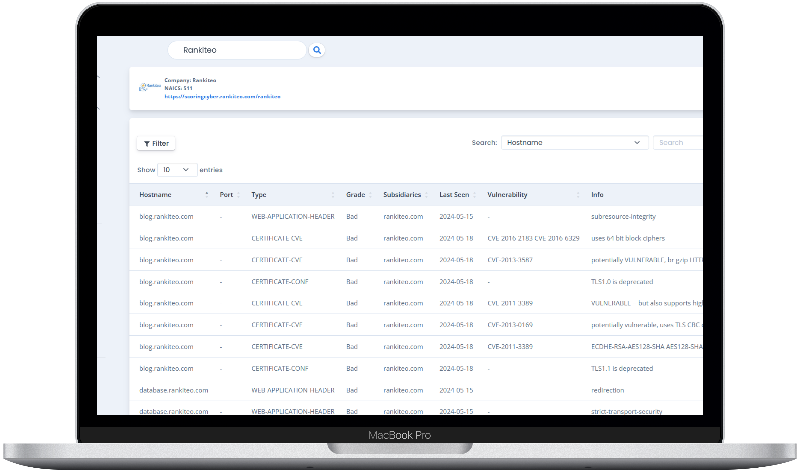
Identify exposed access points, detect misconfigured SSL certificates, and uncover vulnerabilities across the network infrastructure.
Gain visibility into the software components used within an organization to detect vulnerabilities, manage risk, and ensure supply chain security.
Monitor and manage all IT assets and their configurations to ensure accurate, real-time visibility across the company's technology environment.
Leverage real-time insights on active threats, malware campaigns, and emerging vulnerabilities to proactively defend against evolving cyberattacks.





 Rapid
Rapid